
The effectiveness of a human’s internal defense system might rely more on the timing of their last meal than previously understood by modern clinical science. While scientific inquiry has traditionally focused on how chronic nutritional states, such as long-term obesity or persistent malnutrition, impact the immune system, a groundbreaking shift in focus has emerged toward the acute metabolic fluctuations occurring daily. This research explores the transition from a fasting state to a post-meal environment, investigating how the immediate availability of nutrients—specifically lipids—dictates the metabolic priming and functional efficacy of T cells. As the primary soldiers of the adaptive immune system, T cells require significant energy to mount a defense, and the postprandial period provides a critical window for this transformation. The study establishes that these cells are highly sensitive to the “fed-fasted” cycle, suggesting that the nutritional environment at the moment of activation creates a durable metabolic memory that influences performance long after the meal ends.
The Influence of Post-Meal Lipids on Immune Vigor
Nutrient Delivery: The Role of Chylomicrons
When the body transitions from a state of fasting to one of satiety, a complex cascade of metabolic signals begins to circulate throughout the bloodstream, fundamentally altering the functional capacity of lymphocytes. Recent research has moved past the simplistic view that food merely provides fuel, instead identifying specific lipid-rich particles as potent regulators of T cell behavior. Triglyceride-rich chylomicrons, which are large lipoproteins produced by the small intestine immediately after fat consumption, play the most critical role in this process by delivering essential lipid components directly to T lymphocytes. This finding is particularly striking because T cells do not respond with the same vigor when exposed to the glucose or amino acids typically associated with carbohydrate or protein-rich diets. Instead, the presence of these specific fats serves as a precise signal that prepares the immune system to transition from a resting state into a high-performance mode capable of rapid expansion.
Beyond the physical delivery of these nutrients, the absorption of lipids by T cells initiates a series of internal biochemical shifts that effectively flip a metabolic switch within the cell. The mammalian target of rapamycin complex 1, or mTORC1, acts as the central hub for this activity, receiving signals from the incoming chylomicrons and subsequently authorizing the cell to scale up its energy-intensive operations. This signaling pathway is not merely a byproduct of digestion but a sophisticated coordination mechanism that aligns the body’s defensive capabilities with its current resource availability. When the mTORC1 pathway is activated by postprandial lipids, it acts as a metabolic green light, ensuring that the T cells are physically and chemically prepared to mount a vigorous response if they encounter a pathogen during the hours following a meal. This molecular orchestration highlights a previously overlooked link between acute nutritional status and the immediate readiness of the adaptive immune system.
Metabolic Memory: Establishing Cellular Fitness
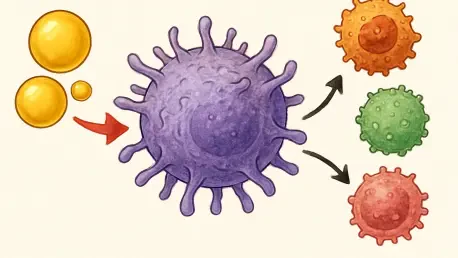
The concept of “metabolic memory” suggests that the nutritional environment present during the initial priming of a T cell can have long-lasting effects on its future performance. Researchers discovered that T cells activated in the presence of post-meal lipids do not just perform better in the moment; they undergo a form of cellular training that allows them to retain a superior functional state. This means that the high-nutrient environment of the postprandial period provides a critical window where cells transition from a quiet, quiescent state to a highly active, proliferating one with greater efficiency. This durable memory ensures that even if the body later enters a fasting state, the cells that were primed during the fed state continue to exhibit higher levels of fitness and readiness. This suggests that the timing of food intake relative to an immune challenge, such as a viral exposure or a clinical treatment, is a vital factor in how effectively the body can mobilize its defenses.
This metabolic advantage is specifically tied to the ingestion of healthy fats, creating a distinction between various types of caloric intake. While a balanced diet is generally recommended for overall health, the specific presence of lipids appears to be the primary driver for this T cell enhancement. In experimental settings, lipid-heavy meals consistently reproduced the observed improvements in immune function, whereas other nutrient groups failed to trigger the same level of cellular priming. This specificity indicates that the immune system has evolved to recognize the surge of fats following a meal as a signal for optimal resource availability. By leveraging these lipids, T cells can maximize their metabolic fitness, ensuring they have the necessary reserves to sustain a prolonged battle against infections or malignancies. This understanding shifts the perspective on dietary fat from being merely a dense energy source to being a critical signaling molecule for the adaptive immune system.
Cellular Reprogramming and Functional Outcomes
Protein Translation: The Molecular Engine
A surprising discovery in the molecular analysis of postprandial T cells was that the observed immune boost is driven by changes at the level of protein translation rather than gene expression. While the underlying mRNA levels remained relatively stable between fasted and fed states, the T cells in the post-meal state showed a significantly higher capacity to synthesize proteins. This allows the cells to rapidly produce essential cytokines, such as interferon-gamma and tumor necrosis factor, which are the primary chemical signals used to coordinate a response against pathogens. Because the translational machinery is already “primed” by the influx of lipids, the cells do not need to wait for new genes to be transcribed before they can start building the proteins required for combat. This represents a form of rapid, nutrient-driven reprogramming that prepares the immune system for immediate action, providing a significant tactical advantage during the early stages of an infection.
This efficiency in protein production is a direct consequence of the mTORC1 signaling triggered by the chylomicrons. By focusing on translation rather than transcription, the T cells can respond to threats with much greater speed, effectively reducing the lag time between pathogen recognition and the deployment of effector molecules. This mechanism ensures that the body’s defensive “soldiers” are not just present, but are fully equipped and ready to engage at a moment’s notice. The ability to synthesize cytokines faster than a fasting cell can make the difference between a controlled infection and a systemic illness. Furthermore, this translational priming appears to be a consistent feature across both human and murine models, suggesting it is a fundamental aspect of mammalian biology. This deep integration of metabolism and immune function underscores the importance of nutritional timing in maintaining a high-performance defense system capable of adapting to immediate environmental challenges.
Structural Resilience: Mitochondria and Energy
The influx of lipids induces physical and structural changes within the T cells that go beyond simple chemical signaling. One of the most notable changes is an increase in mitochondrial mass, which serves as the cellular powerhouse responsible for generating the vast amounts of energy needed during an immune response. Along with this mitochondrial expansion, postprandial T cells exhibit enhanced glucose uptake, allowing them to process fuel more effectively when they are called into action. These structural improvements contribute to a state of “metabolic fitness” that is highly resilient and persists even after the cells are removed from the body and expanded in a laboratory environment. This suggests that the initial exposure to post-meal lipids fundamentally alters the architecture of the cell, making it a more robust and enduring participant in the adaptive immune response, regardless of subsequent changes in the systemic nutritional environment.
This lasting reprogramming of the cell’s internal machinery ensures that the T cells remain potent and effective long after the initial meal has been digested and the lipids have been cleared from the blood. When these primed cells encounter a pathogen, they can sustain their activity for longer periods without succumbing to metabolic exhaustion. In clinical contexts, this structural resilience is highly desirable, as it translates to a more persistent and aggressive defense against tumors and persistent viral infections. The study’s findings indicate that the “fitness” of a T cell is not a fixed trait but is a dynamic quality that can be significantly enhanced through strategic nutritional timing. By understanding how to manipulate these structural variables through diet, researchers can develop new ways to boost the longevity and efficacy of the immune system in both healthy individuals and those fighting chronic diseases, potentially leading to more durable health outcomes.
Translating Metabolic Insights into Clinical Therapy
Immunotherapy Optimization: Enhancing CAR-T Production
The findings of this research have immediate and profound implications for the field of cancer immunotherapy, particularly in the production and administration of chimeric antigen receptor T, or CAR-T, cells. Experiments demonstrated that T cells harvested from donors in a “fed” state were significantly more effective at killing cancer cells and persisted much longer in the body than those taken from donors who were fasting. This suggests that the simple act of ensuring a patient has consumed a lipid-rich meal before their T cells are collected through leukapheresis could be a deciding factor in the quality and success of their subsequent cancer treatment. By starting with cells that are already metabolically primed and possess superior mitochondrial mass, laboratory technicians can manufacture a more potent therapeutic product that is better equipped to survive and fight within the harsh environment of a tumor.
This realization could lead to a fundamental change in how clinical trials and therapeutic collections are scheduled and managed. Currently, the nutritional status of a donor is often ignored or treated as a secondary variable, but these results indicate it should be a primary consideration. Standardizing the metabolic state of patients during cell collection could reduce the variability seen in CAR-T outcomes and provide a more consistent baseline for evaluating new treatments. Moreover, the metabolic environment during the laboratory expansion of these cells can be further optimized by mimicking the postprandial state, ensuring that the final therapeutic dose is as robust as possible. This approach naturally leads to the conclusion that integrating basic nutritional science into advanced biotechnological workflows is a necessary step for the next generation of precision medicine, offering a cost-effective way to improve the survival rates of cancer patients.
Strategic Applications: Viral Defense and Vaccination
Beyond the realm of cancer treatment, the research indicates that the body’s natural defense against viral infections and the overall efficacy of vaccinations may be heavily influenced by meal timing. When T cells are activated in a nutrient-rich environment, they proliferate more aggressively and mount a significantly stronger defense against viral challenges compared to those in a fasted state. This suggest that the timing of a vaccination relative to a person’s meals could subtly influence the strength and duration of the resulting immunity. For individuals with compromised immune systems or elderly populations who often show a diminished response to vaccines, optimizing the metabolic environment at the moment of injection could provide a necessary boost. This insight provides a practical strategy for public health officials to maximize the impact of immunization programs by providing simple dietary guidance to participants.
The investigation established that the immune system does not function in a vacuum but is deeply integrated into the body’s daily metabolic rhythms. Researchers found that the acute presence of postprandial lipids provided a unique window of opportunity to maximize the potency of T cells before they were called to action. Looking ahead, the medical community should consider standardizing nutritional protocols for patients undergoing immune-related procedures to ensure that the resulting responses possess the highest possible metabolic fitness. Investigating how specific dietary fats can be used to prime the immune system before vaccination or cell collection was a key takeaway from this work, pointing toward a future where “nutritional timing” is a standard part of clinical practice. The integration of these metabolic strategies represents a low-cost, high-impact method for enhancing the efficacy of both natural defenses and modern medical interventions. Future trials must focus on creating precise dietary guidelines to align nutrient intake with the specific timing of immune challenges.