
Ivan Kairatov, a veteran in the biopharmaceutical sector with a career rooted in the intricacies of research and development, brings a unique perspective to the intersection of physics and biology. His expertise in industry innovation allows him to bridge the gap between abstract laboratory findings and their potential for transformative medical treatments. Today, we sit down with him to discuss a groundbreaking discovery from the University of Tokyo that challenges our fundamental understanding of how heat behaves within the microscopic world of the living cell. This research suggests that our cells are far more than passive vessels; they are sophisticated thermal regulators that defy conventional expectations of fluid dynamics.
Our conversation delves into the surprising discovery that cells do not dissipate heat as current physical laws suggest, acting instead as highly specialized environments that trap thermal energy. We explore the sophisticated methodology used to map these temperature shifts in real time and discuss the profound implications of viewing heat as an “active signal” rather than a mere metabolic byproduct. Kairatov sheds light on how this thermal retention could redefine our approach to treating chronic conditions like cancer and epilepsy, shifting the focus toward the cell’s internal energy management. By examining the massive gap between the behavior of artificial liposomes and living biological units, we begin to see how the “reality of life” operates on a different physical plane than the one described in traditional textbooks.
Artificial liposomes lose heat rapidly, yet living cells retain it far longer. How do internal biomolecules create this “massive gap” between the established laws of physics and the reality of cellular life?
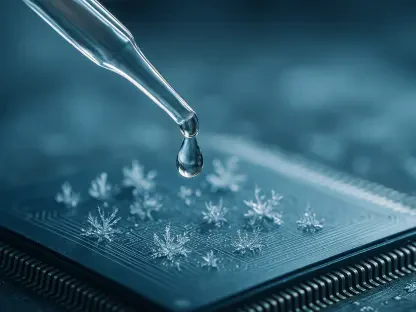
To understand this, we have to move past the idea that a cell is just a simple, fluid-filled sac. For decades, we assumed that because cells are composed mostly of a jellylike fluid, they would obey the standard laws of heat diffusion where thermal energy spreads out and disappears almost instantly. However, when we look at the University of Tokyo’s findings, the artificial liposomes—which are essentially those simple sacs—performed exactly as the textbooks predicted, losing heat with rapid speed. In stark contrast, the living cells exhibited a phenomenon where heat tended to “stay put,” cooling down much more slowly than any current model could explain. This gap exists because the interior of a cell is a dense, crowded, and highly organized environment packed with various biomolecules that act as a barrier to heat dissipation. These molecules create a specialized micro-environment where the diffusion of heat is not just slow, but it is intrinsically tied to the specific location within the cell and the local molecular density. It is a profound realization that the “reality of life” involves a deliberate or inherent trapping of energy that artificial systems simply cannot replicate.
You have mentioned that the heat generated within cells isn’t just waste but acts as a “concentrated energy source.” What are the broader implications for treating conditions like epilepsy, inflammation, or even cancer?
This shift in perspective—viewing heat as an “active signal” rather than a byproduct—is truly a paradigm shift for the medical community. We have seen that spontaneous heat generation in our cells can fluctuate by as much as 1 to 2 degrees Celsius, and these small changes are not accidental; they drive vital functions like the heat shock response, which protects cells from damage under stress. For a condition like epilepsy, where neural activity is hyper-synchronized and intense, understanding how cells manage this thermal energy could lead to entirely new ways of stabilizing neural environments. Similarly, in cancer research, if we can identify how malignant cells use “trapped heat” to power their rapid growth or resist treatment, we can develop therapies that disrupt these internal thermal reservoirs. Even the process of changing neural stem cells into neurons appears to be influenced by these localized temperature shifts, suggesting that if we can master the control of cellular heat, we could potentially direct tissue regeneration or mitigate the runaway inflammation that characterizes so many chronic diseases. It turns out that the warmth we feel is not just the “exhaust” of life, but a finely tuned tool used by the cell to control its own destiny.
The methodology behind this discovery involved high-speed temperature mapping and infrared lasers. How did these specific tools allow researchers to see something “unprecedented” that previous studies and textbooks have completely missed?
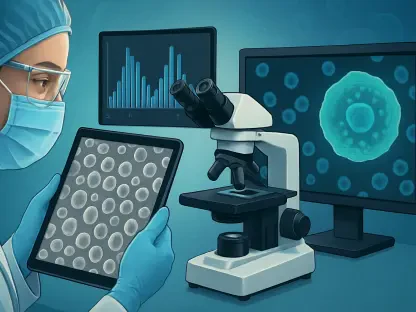
The breakthrough was only possible because of the extreme precision and speed of the instruments used, specifically the high-speed fluorescence lifetime imaging microscope paired with a custom-made thermometer. In the past, our tools weren’t fast enough to catch the subtle, millisecond-by-millisecond cooling process that happens after a cell is heated. By using an infrared laser to pinpoint and heat a specific part of a cell, the researchers were able to monitor the subsequent cooling with millisecond precision, creating a real-time map of temperature distribution that was previously impossible to see. This high-speed mapping revealed that heat does not diffuse in a linear or predictable way through the cellular “jelly” as it does in water. Because they could compare these results directly against artificial liposomes under the same conditions, they were able to prove that the “nonspreading heat” was a unique, intrinsic property of the living cell itself. This methodology allowed them to observe a reality that was so unprecedented that it actually flipped our conventional understanding of physical mechanisms on its head, proving that existing textbooks are simply incomplete when it comes to the thermal life of a cell.
What is your forecast for the future of thermal biology in medical innovation?
I believe we are standing on the threshold of a new era where thermal management becomes as central to medicine as chemical or genetic management is today. As we move toward 2026 and beyond, we will likely see the development of “thermal therapeutics” that specifically target the way heat is trapped or released within diseased cells. I forecast that we will move away from seeing body temperature as a singular, systemic number and instead start looking at “thermal maps” of tissues to diagnose inflammation or early-stage cancer long before traditional symptoms appear. We will redefine heat as a concentrated energy source that can be manipulated to trigger the heat shock response or direct stem cell differentiation on demand. This discovery that heat “stays put” in the cell opens up a new frontier for drug delivery and precision medicine, where we could potentially use the cell’s own internal heat to activate localized treatments. Ultimately, understanding these specialized cellular environments will allow us to develop innovative medical treatments that work with the unique physics of life rather than against them.