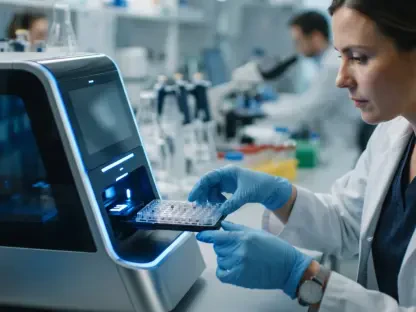

The shift toward human-first data collection aims to prevent the loss of hundreds of millions of dollars caused by unforeseen safety issues in clinical trials. For decades, the pharmaceutical industry relied almost exclusively on animal models, yet nearly ninety percent of drugs that pass animal trials fail when they reach human subjects. This staggering failure rate stems from fundamental biological differences between species, where a molecule that is safe for a mouse might be toxic or ineffective for a human. As we navigate the current landscape, the convergence of biotechnology and microengineering has provided a sophisticated alternative: lab-grown human tissues. These are not merely static cell cultures in a petri dish but dynamic, three-dimensional systems that mimic the complex environment of human organs. By integrating these micro-engineered platforms into the early stages of drug discovery, researchers can identify potential side effects before a single person is ever dosed. This transition represents a fundamental change in how we define safety and efficacy.
Evolution of Bioengineered Models
Organ-on-a-Chip Technology: Bridging the Biological Gap
Organ-on-a-chip systems represent the pinnacle of current microfluidic engineering, utilizing tiny channels to circulate nutrients and oxygen across living human cells. These chips are designed to replicate the mechanical forces found within the body, such as the rhythmic stretching of lung tissue or the shear stress of blood flow in an artery. This mechanical stimulation is crucial because it triggers the same biological responses that occur in a living person, something traditional flat cell cultures simply cannot achieve. By using primary cells derived from actual patients, scientists can create personalized models to test how specific populations will react to a new therapy. This level of precision allows for the detection of rare toxicities that might only appear in certain genetic backgrounds. As these platforms become more standardized, they are being used to model complex diseases like cystic fibrosis and non-alcoholic fatty liver disease with unprecedented accuracy and speed.
Beyond single organs, the field has progressed toward interconnected systems often referred to as human-on-a-chip models. These setups link multiple organ modules—such as the liver, gut, and kidney—through a common circulatory loop to study how a drug is metabolized and excreted. For example, a drug might be non-toxic to the heart but could be transformed by liver enzymes into a dangerous byproduct that causes cardiac arrhythmia. In the past, this cross-organ toxicity was frequently missed until late-stage human trials. Now, these integrated micro-systems allow researchers to observe the full lifecycle of a compound within a human-representative environment. This systemic approach is particularly valuable for studying chronic conditions where multiple organ systems are involved simultaneously. By capturing these complex interactions early, companies can refine drug formulations or adjust dosages to maximize safety. The ability to simulate systemic human physiology on a plastic slide is a cornerstone of modern research.
Biofabrication and 3D Bioprinting: Replicating Architecture
The legislative environment underwent a significant transformation, catalyzed by the FDA Modernization Act 2.0 and subsequent updates. These regulations removed the archaic requirement that every new drug must be tested on animals before entering human clinical trials, opening the door for alternative methods like organ-chips and computer modeling. This shift was driven by the recognition that animal data often provided a false sense of security or led to the abandonment of promising drugs. Regulatory agencies worked closely with biotech firms to establish qualification programs that validated these new technologies for specific use cases. As confidence in these human-based models grew, the reliance on non-human primates declined across the global industry. This was not just a win for ethics but a strategic move that accelerated the pace of medical innovation. Stakeholders prioritized the standardization of protocols to ensure universal acceptance. These steps successfully established a more efficient and humane drug discovery process.