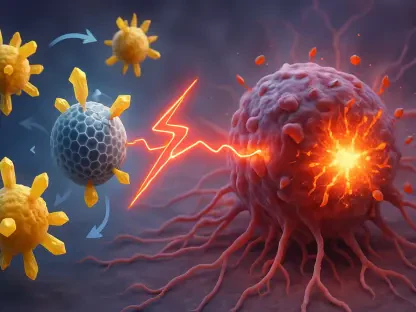

Experimental data shows that these citrus-derived nanoparticles exhibit pH-responsive release, discharging eighty percent of their payload in acidic environments similar to tumor microenvironments. This precision delivery mechanism represents a significant leap forward in addressing the persistent challenge of cervical cancer, particularly the aggressive HeLa cell line. Despite the availability of vaccines and screening programs, cervical cancer remains a primary cause of health complications worldwide, necessitating the development of targeted therapies that minimize the systemic toxicity often associated with conventional chemotherapy. Current medical research has turned its focus toward the natural world, specifically the rich phytochemical profiles of citrus fruits. Citrus unshiu Markovich, a seedless mandarin predominantly grown on South Korea’s Jeju Island, has emerged as a promising candidate due to its high concentration of bioactive flavonoids. While traditional medicine has long utilized the dried peels of this fruit, known as jin-pi, to treat respiratory and digestive issues, the leap to oncology requires a modern technological intervention. By refining these citrus extracts into nanoscale particles, researchers are now exploring whether the enhanced bioavailability and cellular uptake provided by nanotechnology can finally unlock the full anticancer potential of these organic compounds in a laboratory setting.
1. Phase 1: Preparing the Raw Extract
The initial stage of this scientific inquiry begins with the careful dehydration and pulverization of the source material to ensure a high-quality phytochemical profile. The peels of Citrus unshiu Markovich are dried under controlled ambient conditions until they are brittle enough to be processed into a fine, homogeneous powder. This physical transformation increases the surface area of the botanical material, allowing for more efficient extraction of the internal secondary metabolites. Ten grams of this citrus powder are then combined with one hundred milliliters of methanol, serving as a powerful solvent for the various flavonoids and phenolic compounds housed within the peel’s cellular structure. To break down the tough plant cell walls and facilitate the release of active ingredients, the mixture is subjected to an ultrasonic processor for sixty minutes. This process utilizes sound waves to create cavitation bubbles that burst near the surface of the powder particles, effectively forcing the solvent into the material and pulling the desired chemical compounds out into the liquid phase.
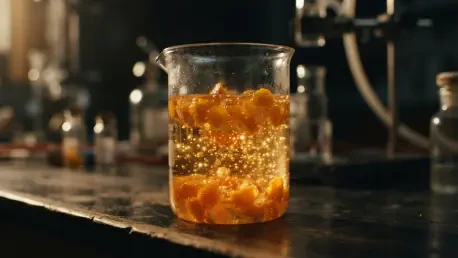
Following the ultrasonic treatment, the mixture undergoes a cold-soaking process, also known as maceration, for a period of twenty-four hours. This extended contact time ensures that the solvent reaches a state of saturation with the citrus phytochemicals, maximizing the yield of hesperidin, naringin, and nobiletin. Once the maceration is complete, the crude liquid must be purified to remove any remaining fibrous plant debris that could interfere with the nanoparticle formation. The mixture is spun in a high-speed centrifuge at twelve thousand revolutions per minute for fifteen minutes, allowing the solids to settle into a dense pellet while the nutrient-rich supernatant remains clear. After filtration, the methanol is carefully removed using a vacuum evaporation system at sixty degrees Celsius. The final step involves freeze-drying the concentrated liquid to yield a stable, orange-brown dry extract. This powder, containing the essence of the citrus peel, is stored at minus twenty degrees Celsius to preserve its antioxidant and anticancer properties until it is ready for conversion into nanoscale delivery vehicles.
2. Phase 2: Formulating the Nanoparticles
The transition from a raw extract to a sophisticated nanoformulation requires a precise self-assembly technique that does not rely on toxic carriers or artificial stabilizing agents. One milliliter of the methanolic peel extract is added dropwise into fifty milliliters of distilled water at a strictly controlled rate of zero point two milliliters per minute. This slow addition is critical; as the hydrophobic molecules in the extract hit the aqueous environment, they begin to cluster together to minimize their contact with water, naturally forming spherical structures. To maintain the uniformity of these developing clusters, the solution is stirred at speeds ranging from two hundred to eight hundred revolutions per minute. This constant agitation prevents the particles from aggregating into larger, unusable clumps, ensuring that the final product remains within the desired nanometer range. The resulting solution takes on a pale yellow-orange hue, signaling the successful dispersion of the citrus compounds throughout the water-based medium.
To further refine the size and stability of these particles, the solution is subjected to high-frequency sound energy via sonication. Operating at thirty kilohertz and one hundred watts for two hours, the sonication process applies mechanical stress to the molecular clusters, breaking them down into highly uniform particles with an average diameter of approximately forty-two point six nanometers. This specific size is significant because particles smaller than one hundred nanometers are more easily internalized by cancer cells through endocytosis. Once the sonication is complete, the solution is concentrated to remove excess water and then freeze-dried a second time. This final processing step transforms the liquid dispersion into a solid, orange-brown nanoparticle powder. This nanoformulation is designed to enhance the solubility and stability of the citrus flavonoids, potentially allowing them to remain active within the human body for longer periods than the raw extract alone could achieve, thereby laying the groundwork for rigorous biological testing.
3. Phase 3: Testing and Analysis
Verification of the nanoparticles’ physical and chemical integrity is essential before proceeding to cellular assays. Field-emission scanning electron microscopy and high-resolution transmission electron microscopy are utilized to visualize the particles, confirming they are predominantly spherical and well-dispersed. Dynamic light scattering further corroborates the size consistency, showing a tight distribution that is ideal for medical applications. Beyond their physical structure, the chemical potency of the nanoparticles is evaluated through various antioxidant assays, such as DPPH and ABTS. These tests measure the ability of the citrus-derived compounds to neutralize free radicals, a key indicator of their potential to mitigate the oxidative stress often found in cancer microenvironments. Ultraviolet-visible spectroscopy and Fourier-transform infrared spectroscopy also confirm the presence of key phenolic compounds like naringin, indicating that the nanoformulation process has successfully preserved the active biological components of the original Jeju Island citrus peels.
The biological effectiveness of the formulation was established through targeted experiments on HeLa cervical cancer cells. Using the MTT assay, the research team determined that the nanoparticles were significantly more toxic to the cancer cells than either the raw extract or the common chemotherapy drug doxorubicin. The data indicated an IC50 concentration of thirty micrograms per milliliter, which served as the benchmark for subsequent genetic and cellular analysis. Flow cytometry revealed that the nanoparticles induced programmed cell death, or apoptosis, in over fifty-four percent of the treated cells after twenty-four hours, a massive increase compared to the sixteen percent observed with the free extract. Furthermore, polymerase chain reaction analysis demonstrated a clear genetic shift; the treatment successfully downregulated the expression of cancer-promoting genes like Bcl-2 and IL-6 while upregulating the tumor suppressor p53 and the pro-apoptotic gene Bax. These results suggested that the nanoparticles did not merely poison the cells but actively re-engaged the body’s natural cell-death machinery to eliminate the malignancy.
The study concluded that the nanoformulation of Citrus unshiu Markovich peels offered a markedly more effective method for treating cervical cancer cells in a laboratory setting than traditional extraction methods. By leveraging the pH-responsive nature of these particles, the researchers identified a potential pathway for targeted drug delivery that prioritized tumor microenvironments while sparing healthy tissue. The findings emphasized the importance of continuing this work through in vivo models to determine how these nanoparticles behave within a complex living system. It was recommended that future investigations explore the efficacy of this citrus-derived technology against other types of malignant tumors and further optimize the stabilization of the particles for long-term storage. Ultimately, the transition from traditional Korean herbal medicine to modern nanotechnology provided a concrete foundation for developing non-toxic, nature-based therapies that could one day complement or replace conventional oncological treatments.