
Ivan Kairatov is a distinguished biopharma expert with an extensive background in research and development, particularly focused on the intersection of medical technology and innovative diagnostics. With years of experience navigating the complexities of drug development and clinical innovation, he offers a unique perspective on how high-throughput technologies are reshaping patient care. His expertise is particularly relevant today as the medical community seeks to move away from invasive diagnostic procedures toward more precise, molecular-driven solutions that improve the quality of life for the most vulnerable patients.
The following discussion explores the current landscape of pediatric inflammatory bowel disease (IBD) and the significant hurdles families face during the diagnostic process. We delve into the transformative potential of blood proteomics, examining how measuring over a thousand proteins simultaneously can reveal hidden disease patterns that traditional tests miss. The conversation also highlights the critical role of machine learning in refining massive datasets into practical clinical tools and looks toward a future where personalized medicine becomes the standard for managing chronic gastrointestinal conditions in children.
The traditional diagnosis for pediatric inflammatory bowel disease has long been a daunting journey for families, involving invasive procedures like endoscopies and imaging. Based on your background in biopharma innovation, how would you describe the current limitations of these methods and the critical need for non-invasive alternatives?
The current diagnostic pathway for a child suspected of having IBD is incredibly taxing, as it relies on a combination of clinical evaluation, imaging, endoscopy, and histopathology. While these tools provide necessary data, the invasive nature of an endoscopy is a significant burden for a young patient and often leads to diagnostic delays that can postpone critical care. This creates an urgent unmet clinical need for reliable blood-based diagnostic tools that can provide clarity without the physical and emotional trauma of surgery or internal scopes. By shifting toward non-invasive methods, we can support earlier and more personalized treatment decisions, which is essential for a chronic, relapsing condition like IBD. The goal is to minimize these invasive procedures while maintaining, or even improving, the accuracy of the initial diagnosis.
This new research shifts the focus from individual markers to broad proteomic patterns. Could you explain the significance of measuring 1,300 proteins simultaneously and how this large-scale data changes our understanding of disease-specific signals?
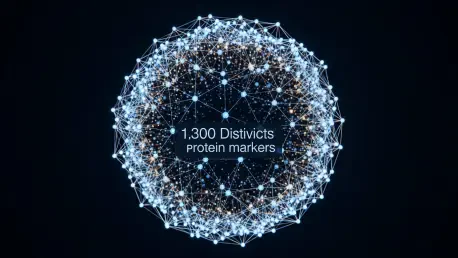
Moving from the study of single protein markers to the large-scale measurement of 1,300 proteins in the blood is a monumental shift in how we approach differential diagnosis. In the initial study group of 47 children, researchers were able to identify distinct protein patterns that would be nearly impossible to detect if each marker were viewed in isolation. These patterns reflect very small, nuanced shifts in the quantities and combinations of many proteins, creating a high-level signal of the disease’s presence. This broad proteomic approach allowed the team to identify 95 proteins that were specifically elevated in children with IBD. By capturing this complexity, we are essentially looking at a high-definition map of the disease rather than a single, blurry data point.
The transition from 1,300 proteins down to a practical four-protein test is a remarkable feat of data science. How did the researchers utilize machine learning to identify the most potent biomarkers among the many proteins involved in IBD?
The process of narrowing down such a vast amount of data requires sophisticated computational power, specifically machine learning, to find the most relevant signals for clinical use. After identifying the 95 proteins elevated in IBD and 70 proteins that helped distinguish between ulcerative colitis and Crohn’s disease, the researchers used machine learning to focus on a set of eight proteins with strong diagnostic performance. To make the test even more practical for everyday clinical settings, they further reduced the signal to just four key proteins. These four proteins were then validated using conventional, clinically available tests to ensure the approach could be scaled. This refinement process is what allows us to take a complex scientific discovery and turn it into a functional tool that a doctor can actually use in a hospital.
Validation is a critical step for any new diagnostic tool to gain clinical trust. With accuracy rates reaching the 80 to 90 percent range, how do the results from the larger validation groups provide confidence in this approach’s clinical viability?
The strength of this research lies in its rigorous validation across two separate and larger groups of 295 and 105 children, respectively. When the four-protein test demonstrated an accuracy in the 80- to 90-percent range for identifying IBD, it proved that the proteomic signal was consistent and reliable across different patient populations. Even more impressive was the separate four-protein test used to differentiate between ulcerative colitis and Crohn’s disease, which achieved a predictive performance of more than 90 percent. These numbers provide the clinical confidence needed to suggest that proteomics represents a much-needed advancement in pediatric care. Seeing such high performance in larger cohorts suggests that these biomarkers are robust enough to handle the biological variability we see in real-world patients.
Beyond just identifying the presence of disease, how do these newly discovered protein patterns help us understand the underlying biology of IBD, and what does this mean for the future of precision medicine?
Identifying these protein patterns does much more than just provide a “yes or no” answer for a diagnosis; it offers a window into how inflammatory pathways are specifically altered in each child. By understanding the distinct signals that separate Crohn’s disease from ulcerative colitis, researchers can better define the underlying pathophysiological mechanisms at play. This deeper biological insight is the foundation for precision medicine, allowing us to develop targeted therapies that address the specific inflammatory drivers in an individual patient. In the long run, this means we aren’t just treating a general disease category, but rather the specific molecular profile of a child’s condition. It represents a shift from a one-size-fits-all treatment plan to a truly personalized healthcare strategy.
What is your forecast for the integration of blood-based proteomics into standard pediatric clinical practice?
I believe that within the next five to ten years, we will see blood-based proteomic panels becoming a routine first-line screening tool for children presenting with gastrointestinal symptoms. While these tests are not yet at the point of completely replacing standard pathologic data, their high accuracy—specifically the 90 percent performance in differentiating disease types—will make them indispensable for reducing diagnostic delays. We will likely see a hybrid model where proteomics guides the initial clinical decision-making and helps prioritize which children truly require more invasive follow-ups. This transition will significantly lower healthcare costs and, most importantly, spare thousands of children from unnecessary invasive procedures while ensuring they get the right treatment much faster.