
The landscape of national security has shifted dramatically as the United Kingdom realizes that biological hazards are no longer peripheral concerns but central pillars of sovereign defense. Since the implementation of the 2023 Biological Security Strategy, the nation has moved away from the fragmented, reactive postures that characterized previous decades. This transformation was necessitated by a global environment where pathogens ignore borders and where technological democratization allows for both immense progress and unprecedented risk. By evaluating recent progress reports, it is evident that the UK is attempting to bridge the gap between high-level policy and operational reality. The focus has shifted toward an integrated doctrine that seeks to anticipate threats rather than merely responding to them after they emerge. This comprehensive framework accounts for a triad of risks: naturally occurring outbreaks, accidental laboratory releases, and the deliberate misuse of life sciences by hostile entities.
Navigating the Risks of a High-Tech Future
Modern biological threats are increasingly characterized by their unpredictability and their ability to disrupt every facet of civil society, from public health to economic stability. Recent incidents, such as the spread of the Marburg virus and the detection of highly pathogenic avian influenza among agricultural workers, have served as stark reminders of the porous nature of modern borders. Furthermore, the return of foot-and-mouth disease to the European mainland has demonstrated that biosecurity is not merely a medical issue but a broader security challenge that requires constant vigilance. The UK government recognizes that domestic safety is intrinsically linked to global stability, as systemic conflicts and poor surveillance in distant regions can trigger massive health crises. This reality necessitates a strategy that accounts for the multi-dimensional nature of pathogens, where local failures in one part of the world can quickly escalate into a national emergency.
Addressing Technological Dual-Use: Engineering Biology and AI
The rapid advancement of engineering biology and artificial intelligence has created a dual-use dilemma that complicates the UK’s ambitions within the life sciences sector. While these technological innovations drive significant economic growth and lead to medical breakthroughs, they also lower the technical barriers for hostile actors who might seek to design or modify dangerous pathogens. This democratization of high-end biological tools is a double-edged sword that requires new regulatory and oversight mechanisms to prevent misuse. Of particular concern is the rise of weaponized disinformation, which is frequently utilized in conflict zones to erode public trust in international health cooperation and vaccine initiatives. As a result, the government has prioritized the monitoring of frontier AI models to ensure they do not accidentally or intentionally facilitate the development of chemical or biological agents that could be used in a domestic or international attack.
Operational Readiness: The Biothreat Radar and Scientific Attribution
To counter these sophisticated and evolving threats, the UK has developed the Biothreat Radar, a decision-making platform that synthesizes open-source data and government assessments in real time. This tool is designed to provide policymakers with a comprehensive overview of the biological landscape, allowing for rapid intervention before a minor incident escalates into a full-scale crisis. Complementing this digital infrastructure is the UK Microbial Forensics Consortium, which provides the high-level scientific capability needed to distinguish between natural, accidental, and deliberate biological events. By coordinating expertise across the human, animal, and food sectors, the UK can now provide the scientific attribution necessary for effective deterrence and rapid response. This integrated approach ensures that the nation remains prepared for a variety of scenarios, ranging from accidental lab leaks to intentional biological strikes, thereby strengthening the overall defense posture.
Strengthening Infrastructure: Building a Resilient Network
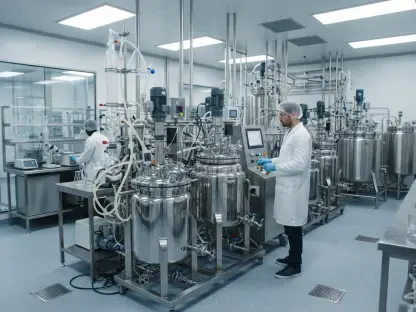
Physical and diagnostic infrastructure remains the cornerstone of the nation’s defensive posture, providing the necessary tools to detect and neutralize biological threats at their source. The government has committed over one billion pounds to a network of national biosecurity centers, which includes a massive transformation of the Animal and Plant Health Agency campus to enhance its research capabilities. This investment reflects a long-term commitment to maintaining world-class facilities that can handle the most dangerous pathogens known to science. By modernizing these sites, the UK ensures that its scientists have the resources required to conduct essential research while maintaining the highest levels of safety and security. Furthermore, these centers serve as hubs for innovation, attracting top-tier talent and fostering collaborations that are essential for staying ahead of emerging biological risks in an increasingly complex and interconnected global environment.
Enhancing Medical Detection: From Labs to the Bedside
On the frontline of medical defense, the expansion of bedside metagenomics to nearly thirty NHS trusts represents a significant leap forward in diagnostic capability. This technology allows clinicians to identify novel or rare pathogens in the very first patients who present symptoms, rather than waiting for large-scale outbreaks to trigger a centralized response. By decentralizing diagnostic power, the healthcare system can initiate isolation and treatment protocols much faster than was previously possible under traditional laboratory models. This shift toward early detection is vital for containing highly infectious diseases before they can spread through the general population. The ability to sequence a pathogen’s genome at the point of care provides real-time data that can be shared across the national health network, ensuring that every hospital is aware of emerging threats. This rapid information sharing is a key component of the nation’s strategy to reduce the impact of future biological incidents.
International Cooperation: One Health and Global Manufacturing
Long-term resilience is built on the One Health approach, which recognizes that human health is inextricably linked to the health of animals and the environment. By integrating biosurveillance across these diverse sectors, the UK aims to identify potential spillover events before they can escalate into human pandemics. This effort extends to the international stage, where the UK leverages its technical resources to influence global security through the WHO Pandemic Agreement and strategic alignments with NATO allies. These partnerships are essential for establishing international norms and ensuring a coordinated response to global health threats. Furthermore, the government is incentivizing public-private partnerships to ensure that the domestic manufacturing of diagnostics and life-saving countermeasures remains agile and capable of scaling up during a crisis. This domestic production capacity is crucial for reducing reliance on fragile global supply chains and ensuring the nation’s self-sufficiency.
Overcoming Institutional Barriers: The Human Factor
Despite the significant technical gains achieved in recent years, the implementation of the biosecurity strategy faces notable hurdles in the form of institutional silos. Organizations such as the UK Health Security Agency, Defense Intelligence, and the Foreign Office often operate in isolation, which can hinder the seamless flow of critical information during a rapidly evolving crisis. To address this, the government is calling for a shift toward parallel thinking and cross-governmental leadership to harness the full breadth of national expertise. Initiatives like the Defense Universities Alliance represent positive steps toward bridging the gap between high-level government strategy and academic centers of excellence. By fostering closer collaboration between scientists and policymakers, the nation can ensure that its defensive strategies are grounded in the latest scientific research. This cultural shift is necessary to create a truly integrated and responsive national biosecurity architecture.
Breaking Down Silos: Integrating Government and Academia
A critical critique of current biosecurity efforts is the heavy technocratic bias, which often overlooks the vital importance of the social and behavioral sciences in managing public health. Relying solely on technological solutions can lead to systemic failures if the human element—such as how various communities react to lockdowns, mandates, or vaccine rollouts—is ignored or misunderstood. Integrating socio-behavioral research into the design phase of biosecurity systems is essential for ensuring that technical solutions are effective in real-world scenarios. By understanding the human terrain, the UK can better manage the social complexities of a crisis and maintain public trust, which is often the most fragile component of any national response. This approach moves beyond simple surveillance and focuses on the underlying social dynamics that drive human behavior during times of extreme stress, ultimately making the nation’s defenses more resilient against both biological and social disruption.
Future Perspectives: Strategic Adaptation and Resilience
The evolution of national biosecurity required a departure from traditional thinking and the adoption of a more holistic, proactive framework. Stakeholders recognized that future resilience depended on the successful integration of social sciences with advanced diagnostic technology to create a more responsive system. It became clear that the next logical step involved the creation of a permanent inter-agency task force dedicated to simulating complex biological scenarios that combined physical pathogens with digital disinformation campaigns. This forward-looking approach prioritized the development of adaptive policy frameworks that could be modified in real time based on emerging data from the Biothreat Radar. Furthermore, the government established new incentives for local biotech firms to maintain surge capacity for vaccine production, ensuring that the nation was never again caught without essential medical supplies. These collective efforts transformed biosecurity from a niche concern into a core element of national sovereignty.