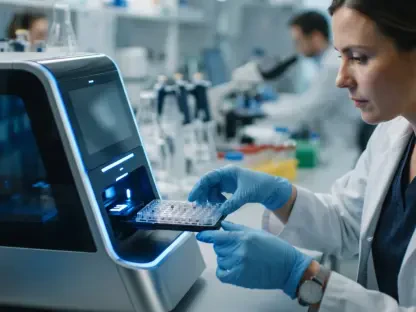

Modern laboratory environments are undergoing a quiet yet profound transformation as the reliance on manual pipette-wielding technicians gives way to a new era of robotic precision and high-throughput automation. This evolution is not merely a convenience but a structural necessity in a landscape where the complexity of biological assays and the volume of diagnostic testing have far outpaced the physical capabilities of human operators. Liquid handling workstations have emerged as the foundational technology driving this shift, providing the accuracy and reproducibility required for everything from routine clinical screenings to the most advanced genomic research. As of 2026, the industry has firmly established that the removal of human variability is the single most effective way to ensure the integrity of scientific results. These systems, which once occupied niche roles in the largest pharmaceutical firms, are now becoming standard equipment across academic and commercial sectors alike. The current market value reflects a growing consensus that precision in fluid transfer is the linchpin of successful drug discovery and patient diagnostics. By moving away from labor-intensive manual processes, laboratories are fundamentally redefining their operational boundaries and setting a new baseline for what is achievable in the life sciences.
The Evolving Role and Financial Worth of Liquid Handling Workstations
Core Value Propositions and Definitions
A liquid handling workstation is a sophisticated laboratory tool designed to automate the transfer and processing of liquids ranging from microliters to milliliters. These systems are used to manage samples across various vessels like microplates, tubes, and reservoirs with extreme precision. They eliminate the variability inherent in manual pipetting, which remains the leading cause of errors in life science research. Beyond mere liquid transfer, these workstations provide a standardized workflow that allows laboratories to scale their operations quickly. By using integrated hardware and software, they ensure that every sample is treated identically, meeting the strict regulatory standards required in medical and pharmaceutical fields. This consistency is vital for maintaining sample integrity during complex biological experiments. The primary appeal of these systems lies in their ability to reduce human intervention in repetitive tasks. This shift allows scientists to focus on data analysis and experimental design rather than the mechanical aspects of liquid transfer. Consequently, these platforms are viewed as the fundamental infrastructure for any facility aiming for high reproducibility and operational excellence.
The hardware configuration of a modern workstation is typically modular, allowing for the integration of various dispensing heads, grippers, and peripheral devices such as shakers or thermal cyclers. This modularity ensures that the system can evolve alongside the needs of the laboratory, accommodating new assay types or increased sample volumes without requiring a total system replacement. Sophisticated air-displacement or positive-displacement technologies are utilized to handle liquids of varying viscosities, ensuring that even volatile or sticky substances are moved with negligible loss. Furthermore, these machines often incorporate liquid-level sensing capabilities, which prevent cross-contamination by ensuring the dispensing tips only touch the surface of the fluid. This level of mechanical sophistication is what separates a true workstation from a simple automated pipette. As laboratories face increasing pressure to produce faster and more accurate results, the demand for these multi-functional platforms has surged, making them indispensable in the pursuit of high-quality scientific data and robust clinical outcomes.
At the software level, liquid handling workstations operate through intuitive interfaces that allow researchers to program complex multi-step protocols without extensive coding knowledge. These software suites often include pre-validated templates for common procedures such as PCR setup, serial dilutions, and plate replication, which significantly reduces the time required for onboarding new equipment. The software also plays a critical role in data logging and traceability, recording every volume transferred and every sample moved. In an era of heightened regulatory scrutiny, particularly in clinical and forensic environments, this automated record-keeping is a vital feature for ensuring audit readiness. The integration of advanced error-handling logic also means that the system can pause and alert an operator if it detects an issue, such as a missing tip or a depleted reservoir. By combining high-end mechanical engineering with intelligent software controls, these workstations have moved beyond being simple robots to becoming reliable, autonomous partners in the laboratory workflow, capable of operating with minimal supervision.
Financial Trajectory and Forecast Through 2035
The financial outlook for the liquid handling workstation market shows a steady and accelerating adoption curve over the next ten years. Starting at a base value of approximately $852.74 million in 2025, the market is expected to climb to $921.81 million by 2026 and nearly a billion dollars by 2027. This consistent upward movement reflects the essential nature of the equipment in modern science. The projected 8.1% compound annual growth rate is a strong indicator of the market’s resilience and importance. Unlike some laboratory upgrades that are considered discretionary, these workstations are increasingly categorized as mission-critical infrastructure. As throughput requirements in genomics and drug screening continue to rise, the financial investment in these systems follows suit. By 2035, the market is expected to more than double its current value, reaching over $1.85 billion. This growth is underpinned by a global consensus that manual liquid handling is insufficient for the demands of precision medicine and high-volume diagnostics. This financial progression highlights a broader trend of industrialization within the biological sciences.
This sustained financial growth is also being driven by a reduction in the total cost of ownership as technology matures and manufacturing processes become more efficient. While the initial capital expenditure remains high, laboratories are increasingly recognizing the long-term return on investment achieved through reduced reagent waste and decreased labor costs. Many facilities are moving toward a model where the workstation pays for itself within two to three years by preventing the loss of expensive samples and maximizing the productivity of highly skilled researchers. Furthermore, the expansion of the “automation-as-a-service” model and more flexible leasing options are making these systems accessible to smaller biotech startups and regional diagnostic centers. This democratization of the technology is expected to fuel a second wave of market expansion in the late 2020s and into the 2030s. As the market reaches the $1.85 billion mark, the focus is likely to shift from basic adoption to widespread replacement cycles as older systems are swapped for next-generation platforms featuring enhanced connectivity and intelligence.
The investment landscape is further bolstered by the rapid expansion of the biopharmaceutical sector, which remains the primary consumer of high-end liquid handling systems. With an increasing number of biologic drugs and cell therapies entering the clinical pipeline, the need for precise and scalable liquid handling has never been greater. Institutional investors and venture capital firms are also pouring money into companies that develop these automation solutions, recognizing them as the “picks and shovels” of the modern biotech gold rush. This influx of capital is accelerating research and development cycles, leading to faster iterations of hardware and software. Consequently, the market is not just growing in size but also in technological depth. By 2030, the liquid handling sector will likely be characterized by a high degree of integration where the workstation is a node in a larger, interconnected laboratory ecosystem. This structural shift ensures that the market will remain robust even in fluctuating economic conditions, as the global demand for healthcare innovation and food safety continues to drive scientific advancement.
Primary Growth Drivers and Laboratory Benefits
The Shift Toward Automation and Error Reduction
The most significant driver of market expansion is the global push toward laboratory automation, with over 72% of advanced labs already integrating automated workflows. Facilities that adopt these systems report that manual pipetting errors are reduced by nearly 85%. This massive improvement in reliability is a primary reason why laboratories prioritize these investments over other types of equipment. Operational efficiency is another major benefit, with facilities reporting improvements of approximately 68% to 70% after installing automated workstations. By handling repetitive tasks, these systems allow labs to process more samples in less time without increasing headcount. This efficiency is crucial for laboratories trying to remain competitive in a fast-paced research environment. Contamination mitigation is also a critical factor, particularly in sensitive fields like proteomics and cell culture. Automated systems often operate in closed or highly controlled environments, which reduces the risk of sample contamination by 66%. This protection ensures that months or even years of research are not invalidated by microscopic human errors or environmental exposure.
Standardization across global research sites is made possible through the use of shared automated protocols. When different labs use the same workstation models and software settings, they can replicate experiments with much higher fidelity. This improvement in reproducibility addresses one of the most significant challenges currently facing the global scientific community. Furthermore, the health and safety of laboratory personnel are significantly improved through the reduction of repetitive strain injuries. Manual pipetting is one of the leading causes of carpal tunnel syndrome and other ergonomic issues among scientists. By delegating thousands of pipette strokes to a robot, labs can maintain a healthier workforce and reduce long-term liability costs. The ability of workstations to handle hazardous materials, including infectious pathogens and radioactive isotopes, also removes human operators from potentially dangerous environments. This combination of increased productivity, enhanced safety, and superior data quality creates a compelling case for automation that transcends simple cost-benefit analyses, positioning these systems as ethical and operational imperatives in modern science.
The integration of advanced sensors and monitoring systems further enhances the error-reduction capabilities of modern liquid handling workstations. These systems can now detect bubbles, clots, or insufficient volumes in real-time, allowing the process to be corrected before a valuable reagent is wasted or a sample is compromised. In many high-throughput environments, a single failure in a 384-well plate can result in the loss of thousands of dollars and several hours of work. Automation provides a level of vigilant monitoring that is impossible for a human to maintain over long shifts. Moreover, the detailed electronic logs generated by these systems provide a level of accountability that is essential for forensic labs and clinical diagnostics. Every action is timestamped and recorded, creating a transparent digital trail of the sample’s journey. This transparency not only helps in troubleshooting but also speeds up the validation process for new assays. As the industry moves toward 2030, these workstations will likely become even more autonomous, using feedback loops to optimize their own performance and further widening the gap between manual and automated laboratory practices.
Industry-Specific Demand in Genomics and Pharma
The rise of precision medicine and personalized healthcare has placed immense pressure on genomics laboratories to process vast amounts of complex data. Currently, about 62% of these labs use automated workstations to manage the intricate sample preparation needed for Next-Generation Sequencing. These platforms allow for processing speeds that are nearly 50% faster than traditional manual methods. In the clinical sector, high-throughput requirements are driving 64% of diagnostic facilities to increase their spending on precision equipment. The need for rapid, large-scale testing has become a matter of public health priority, especially following global health crises. Automated liquid handling ensures that these facilities can maintain quality and consistency across massive sample volumes. Pharmaceutical research remains a dominant force in the market, with over 75% of high-throughput screening activities relying on automation. These workstations allow researchers to test thousands of chemical compounds against biological targets simultaneously. This capability significantly shortens the time it takes to identify viable drug candidates, potentially lowering the cost of drug development.
Beyond healthcare, these systems are making inroads into the chemical industry for quality assurance and product formulation. Precise volumetric delivery is essential when creating new chemical products or testing for contaminants in food and environmental samples. As these industries modernize, the demand for versatile liquid handling platforms continues to expand. In the environmental sector, workstations are increasingly used to monitor water quality and soil health, where the ability to process hundreds of samples for trace contaminants is a major operational advantage. Similarly, in the food and beverage industry, automation helps ensure that products meet strict safety standards by streamlining the testing for pathogens and chemical residues. These non-clinical applications are growing at a steady pace, diversifying the market and providing a buffer against fluctuations in any single industry. The adaptability of liquid handling hardware means that a machine originally designed for blood testing can, with minor adjustments, be repurposed for environmental monitoring or agricultural research, highlighting the broad utility of the technology.
The demand for high-throughput screening is also evolving to include more complex biological models, such as organ-on-a-chip and 3D cell cultures. These models require precise, low-volume liquid handling to maintain the delicate environment necessary for cell growth and drug interaction studies. Standard pipetting techniques are often too jarring or imprecise for these advanced systems, making high-end automated workstations the only viable option for research. This intersection of microfluidics and automation is a key growth area, as it allows pharmaceutical companies to perform more accurate toxicity testing earlier in the drug development process. By identifying failures sooner, companies can save millions in downstream costs. This “fail-fast” strategy is a cornerstone of modern drug discovery and is almost entirely dependent on the speed and precision of automated liquid handling. As we look toward the 2030s, the role of these workstations in accelerating the path from a lab bench to a pharmacy shelf will only become more pronounced, solidifying their place in the global research infrastructure.
Market Segmentation and Regional Performance Metrics
Analysis by System Type and End-User Application
The market is divided into automated and semi-automated workstations, with fully automated systems holding a dominant 66% market share. These systems are the gold standard for high-volume laboratories because they are fully programmable and can integrate with other equipment like centrifuges and incubators. Their higher growth rate reflects a clear industry preference for complete robotic autonomy, particularly in environments where 24/7 operation is required. Semi-automated workstations represent about 34% of the market and serve as a vital entry point for mid-sized labs and academic institutions. They offer a balance between manual control and robotic precision, improving accuracy by roughly 55% compared to manual pipetting. These systems provide a more affordable alternative for facilities that do not yet require full-scale automation but need to improve their throughput and consistency. Medical laboratories constitute the largest application segment, accounting for 29% of the market share. The focus in this sector is on clinical diagnostics and pathology, where reducing contamination and maintaining high volume is critical. The high growth rate in this segment is tied directly to the modernization of diagnostic front lines in hospitals worldwide.
Research institutions and pharmaceutical companies together make up a significant portion of the remaining market. Pharmaceutical firms use automation to power their R&D engines, while academic centers rely on these tools for foundational research in molecular biology. Each of these segments benefits from the workstation’s ability to handle complex protocols with minimal human oversight. In academic settings, the use of automation is increasingly seen as a pedagogical tool, training the next generation of scientists on the equipment they will encounter in the private sector. Furthermore, the rise of contract research organizations has created a new class of high-volume users who require the maximum level of automation to stay profitable. These organizations often operate dozens of workstations simultaneously, creating a demand for centralized management software that can coordinate activities across multiple platforms. This diversity in system types and end-users ensures that the market remains balanced, with different segments driving innovation in different directions—from the ultra-precise, low-volume needs of proteomics to the high-speed, high-volume requirements of routine clinical screening.
The categorization of end-users is also expanding to include emerging fields such as forensic science and synthetic biology. In forensics, the integrity of the chain of custody is paramount, and automated workstations provide the necessary documentation and contamination control to satisfy legal standards for DNA evidence. Synthetic biology, on the other hand, requires the assembly of complex genetic sequences, a process that is highly repetitive and requires the precision that only a robot can provide. These new applications are pushing manufacturers to create more specialized modules, such as those optimized for magnetic bead cleanup or highly sensitive protein assays. As the market matures from 2026 to 2030, we can expect to see further fragmentation into highly specialized sub-markets, where a workstation is no longer just a general-purpose tool but a specialized instrument tailored to a specific scientific niche. This trend toward specialization will likely drive higher profit margins for manufacturers who can provide integrated solutions rather than just generic hardware, further fueling the total market value toward the $1.85 billion goal by 2035.
Regional Market Shares and Geographic Growth Trends
North America is the current market leader, holding a 38% share of the global total. This dominance is due to a mature biotechnology sector and a high concentration of major pharmaceutical companies in the United States and Canada. Furthermore, 75% of large research labs in the region have already deployed automated platforms, setting a high standard for the rest of the world. The availability of significant research funding from both government and private sources has allowed North American institutions to stay at the forefront of automation technology. Europe follows with a 29% market share, with a particular emphasis on quality assurance and standardized workflows. Laboratories in this region use automation to comply with strict regulatory frameworks while advancing drug discovery initiatives. Over 65% of European research facilities have adopted some form of liquid handling automation to maintain their competitive edge. The presence of major laboratory equipment manufacturers in countries like Germany, Switzerland, and the United Kingdom further supports the strong regional market, as local support and expertise are readily available to research facilities.
The Asia-Pacific region is the fastest-growing market, driven by massive healthcare investments in China, India, and Japan. Interestingly, nearly 58% of all newly established labs in this region are installing automated systems from day one, skipping the traditional manual stages entirely. This rapid infrastructure development makes Asia-Pacific a key area for future market expansion. The growth is fueled by a desire to reach international parity in drug development and a pressing need to improve diagnostic services for massive populations. Governments in the region are offering various incentives for the adoption of high-tech medical equipment, which is lowering the barrier for local institutions. Additionally, the rise of domestic manufacturers in China and India is increasing competition and driving down costs, making automation more accessible to smaller clinics. This shift toward self-sufficiency in laboratory technology is a major trend that will likely redefine the global competitive landscape by the late 2020s, with the Asia-Pacific region potentially rivaling the market share of North America by the mid-2030s.
The Middle East and Africa represent a smaller portion of the market at 8%, but they are currently focused on modernization. About 40% of upgraded diagnostic facilities in these regions are now incorporating automated technology to improve disease monitoring and public health responses. This shift is essential for enhancing diagnostic accuracy in developing economies, where the shortage of trained laboratory technicians can be partially mitigated through automation. In the Middle East, particularly in the Gulf states, there is a strong push to develop domestic biotechnology hubs, leading to the construction of world-class research facilities equipped with the latest liquid handling technology. Latin America is also showing signs of growth, particularly in Brazil and Mexico, as these countries expand their pharmaceutical manufacturing capabilities. While these regions currently represent a smaller slice of the global pie, their high growth rates signify that the demand for automated liquid handling is a truly global phenomenon. This geographic diversification provides market stability, as localized economic shifts are offset by growth in other parts of the world, ensuring a steady climb toward the $1.85 billion forecast.
Industry Challenges and the Rise of Smart Laboratory Technology
Navigating Cost, Training, and Integration Barriers
Despite the clear benefits, high installation and maintenance costs remain a significant barrier for many smaller laboratories. Roughly 46% of small labs cite the initial setup price as the primary reason they have not yet adopted automated workstations. This financial hurdle often limits the democratization of automation to larger, well-funded institutions. Beyond the purchase price, the ongoing costs of consumables, such as specialized pipette tips and proprietary reagents, can strain the budgets of academic research groups. Operational complexity is another challenge, as managing multi-application workflows can be difficult for many users. About 54% of laboratories report struggling to optimize a single workstation for multiple different protocols. This complexity can lead to workflow disruptions if the system is not managed by an experienced technician or a specialized automation engineer. For many labs, the fear of “down-time” is a major deterrent, as a malfunction in a central workstation can bring the entire laboratory’s production to a screeching halt, highlighting the need for robust service contracts and redundant systems.
There is also a notable technical training gap, as 41% of operators find it challenging to integrate and program these robots effectively. Automation requires a different skill set than traditional bench science, creating a need for specialized education in both biology and robotics. Manufacturers are responding by developing more intuitive software with drag-and-drop interfaces, but the learning curve remains a hurdle for many veteran scientists who are accustomed to manual methods. Furthermore, the rapid pace of technological change means that even trained operators must constantly update their skills to keep up with new software versions and hardware modules. This “human element” is often overlooked in the push for automation, yet it is critical for the long-term success of any installation. Labs that fail to invest in proper training often find that their expensive workstations are underutilized or used incorrectly, leading to frustration and a poor return on investment. Addressing this skills gap will be essential as the market expands into 2027 and beyond, with a likely increase in third-party training and consulting services.
Software compatibility continues to be an issue, with 44% of users reporting that their liquid handling software does not communicate well with other laboratory systems. As labs become more digital, the ability for instruments to “talk” to Laboratory Information Management Systems is becoming essential. Overcoming these “software silos” is a priority for the next generation of workstation designs. Currently, many labs are forced to manually export and import data between different platforms, which introduces the very risk of human error that automation was intended to eliminate. The industry is moving toward open-source standards and API-driven integrations, but the transition is slow and hampered by proprietary interests. As we approach 2030, the demand for “plug-and-play” compatibility will likely become a major competitive differentiator for workstation manufacturers. Those who can offer seamless integration into the broader digital laboratory ecosystem will be well-positioned to capture a larger share of the market, while those who maintain closed systems may find themselves sidelined in the era of the connected laboratory.
Competitive Landscapes and the Integration of Emerging Tech
The market is led by established giants like Hamilton and Eppendorf, who together hold about 43% of the market share. Hamilton is recognized for high-end robotic systems that significantly reduce manual intervention, while Eppendorf is known for its user-friendly software and versatility. These companies set the pace for innovation by constantly upgrading their hardware and digital interfaces to meet the evolving needs of the scientific community. Other key players are focusing on specific niches, such as improving dispensing accuracy or creating faster workflow execution modules. Companies like PerkinElmer and Aurora Biomed are introducing smarter sensors and flexible automation modules to stay competitive. The prevailing strategy across the industry is to make systems more compact, accurate, and easier to operate. This competition is driving a rapid cycle of innovation, where features that were considered cutting-edge five years ago are now standard on even mid-range models. The result is a market that is highly dynamic, with manufacturers constantly seeking new ways to add value and differentiate their products in a crowded field.
A major upcoming trend is the convergence of liquid handling with artificial intelligence and machine learning. Approximately 64% of laboratories are exploring AI to manage workflows, which could allow workstations to self-correct during a run. In the near future, a system might detect a clogged tip or an empty reservoir and adjust its protocol in real-time without needing a human to intervene. AI can also be used to optimize liquid handling parameters for new reagents, significantly reducing the time required for protocol development. By analyzing historical data, these smart systems can predict when a component is likely to fail and schedule maintenance before a breakdown occurs. This transition to predictive and prescriptive automation is expected to be a major theme of the market from 2027 to 2035. As these technologies mature, the liquid handling workstation will transform from a passive tool into an intelligent assistant capable of managing entire experimental cycles with minimal oversight. This will not only improve efficiency but also allow for a level of experimental complexity that was previously unattainable.
Cloud connectivity and the Internet of Things are also transforming the market, with 48% of new installations featuring cloud integration. This allows laboratory managers to monitor experiments remotely and receive alerts for predictive maintenance before a system fails. Researchers can start a protocol from home or check the status of a run on their smartphones, providing a level of flexibility that is highly valued in modern research environments. Furthermore, cloud-based platforms allow for the easy sharing of protocols between different labs, facilitating global collaboration and standardizing research methods. This connectivity also enables manufacturers to provide remote diagnostics and software updates, improving system uptime and reducing service costs. As the industry moves toward 2035, the “smart” laboratory will become the standard, with liquid handling workstations serving as a central node in a vast, interconnected data network. This shift toward data-driven science will ensure that the market for these workstations remains at the heart of the global scientific endeavor for decades to come, driving the total market value to its projected peak.
From the observation of these industry shifts, it became clear that the successful integration of liquid handling automation required a multi-faceted approach that prioritized both technological upgrades and human capital development. Laboratories that proactively addressed the barriers of cost and training by seeking out modular, scalable systems and investing in staff education found themselves better positioned to capitalize on the 8.1% growth rate that characterized the market through the late 2020s. The move toward smart laboratory technology was not just a trend but a fundamental reorganization of the scientific workflow, where artificial intelligence and cloud connectivity were leveraged to eliminate the last vestiges of human error. For stakeholders looking to stay competitive, the path forward involved embracing the “automation-first” mindset and ensuring that new equipment could seamlessly communicate within a larger digital ecosystem. Ultimately, the transition to high-precision, automated environments proved to be the defining factor in achieving the reproducibility and throughput necessary for the next generation of scientific breakthroughs. Managers who viewed these workstations as mission-critical infrastructure rather than optional upgrades achieved the highest returns, setting a clear example for the rest of the global research community.