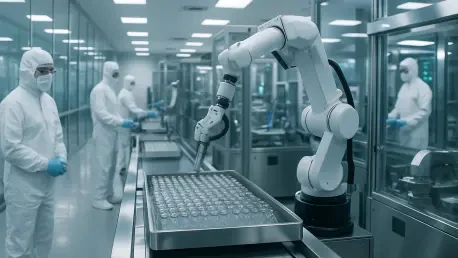

The industrial landscape of the American Midwest is undergoing a profound transformation as Ohio emerges as a primary center for advanced pharmaceutical production, fueled by a substantial $267 million investment from Hikma Pharmaceuticals. This massive infusion of capital serves as a cornerstone of a broader $1 billion initiative designed to repatriate the manufacturing of essential medicines to the United States, effectively mitigating risks associated with global supply chain disruptions. By expanding its operational footprint within the state, the company is positioning the region as a critical defensive shield against national drug shortages while demonstrating that traditional manufacturing hubs can successfully pivot to high-stakes healthcare sectors. The strategy involves a sophisticated dual-track approach across two major Ohio locations to address a wide spectrum of clinical requirements. In Columbus, significant funds are dedicated to enhancing research and the production of oral medications, while the modernized Bedford facility concentrates on IV bags and sterile injectable drugs.
Strengthening the American Supply Chain
A primary objective of this statewide expansion is to resolve the structural vulnerabilities that have historically plagued the medical supply chain in the United States. For decades, the nation relied heavily on a complex network of foreign factories, a dependency that frequently resulted in critical shortages of life-saving medications during times of global instability. By aggressively increasing domestic production capacity, regional leaders and corporate partners are establishing a more resilient framework that prioritizes patient safety and immediate availability. This strategic pivot toward on-shoring essential pharmaceuticals represents a vital step in insulating the American healthcare system from the unpredictable nature of international trade disputes and logistics failures. The presence of these facilities ensures that when domestic demand spikes, the response is immediate and localized, rather than dependent on the arrival of overseas shipments through congested ports.
To sustain these high-tech manufacturing environments, Ohio developed a robust and integrated system for training specialized personnel capable of navigating the complexities of biotech production. Through strategic partnerships between community colleges, state development agencies, and private industry, the region established a steady pipeline of talent proficient in cleanroom protocols and advanced automation. This concerted investment in human capital allowed the state to rank among the highest in the country for biotechnology expertise, providing a compelling incentive for further corporate investment. Modern pharmaceutical manufacturing requires more than just machinery; it demands a workforce that understands the rigorous regulatory and technical standards of the 2020s. By prioritizing education in stem fields and vocational training specific to life sciences, the state successfully transformed its labor market to meet the demands of an industry that values precision and reliability.
The Growth of the Discovery Corridor
The surge in pharmaceutical activity across the state catalyzed the development of what industry experts call the Ohio Discovery Corridor, a dense network of innovation. This specialized economic zone creates a seamless connection between Cleveland, Columbus, and Cincinnati, fostering a collaborative environment where research institutions and manufacturing plants work in tandem. This corridor illustrates the successful transition of the region from its legacy as a heavy industrial center into a sophisticated hub for biotechnology and life sciences. Instead of basic manufacturing, the focus shifted toward complex, automated drug production that utilizes state-of-the-art robotics and real-time monitoring systems. This evolution allowed the state to compete directly with established technology hubs on the East and West Coasts by offering lower operational costs combined with a high density of specialized infrastructure and logistical advantages that are unique to the American heartland.
Beyond the immediate economic benefits, the concentration of these facilities provides a logistical advantage that traditional hubs often struggle to match due to urban congestion and high real estate prices. The Discovery Corridor utilizes Ohio’s central location and extensive transportation networks to distribute finished products rapidly to hospitals and clinics nationwide. This geographic efficiency is a key component of the state’s appeal, as it allows for a more streamlined distribution model that reduces the time between production and patient delivery. Moreover, the integration of digital twin technology and advanced data analytics within these new facilities set a new standard for manufacturing efficiency in the region. By leveraging these modern tools, companies managed to optimize their output while maintaining the strict quality controls required for sterile injectables and oral medications, proving that high-volume production and high-quality standards are not mutually exclusive.
Establishing Long-Term National Health Security
In the long run, these massive investments are about more than just constructing new buildings or creating thousands of high-paying jobs for local residents. They are focused on establishing a strategic reserve of manufacturing power that serves as a cornerstone of national security and public health resilience. By centering these high-capacity operations in the heart of the country, Ohio is leading a new era of healthcare innovation characterized by a commitment to the Made in America label. This localized manufacturing capability ensures that the United States maintains a decisive edge in medical preparedness, allowing for rapid scaling of production during health emergencies. Furthermore, the presence of such a high concentration of pharmaceutical expertise attracts ancillary businesses, including specialized packaging firms and laboratory equipment suppliers, which further solidifies the state’s position as a self-sustaining ecosystem for the global life sciences industry.
The historical shift toward domestic drug manufacturing in the Midwest addressed the critical needs of the American healthcare landscape while revitalizing local economies. Decision-makers recognized that diversifying the manufacturing base was a necessary step toward achieving long-term stability and reducing foreign reliance. They implemented comprehensive strategies that combined infrastructure development with educational reform, ensuring that the state remained at the forefront of the industry. This proactive approach provided a blueprint for other regions seeking to modernize their industrial sectors through technology and innovation. By the time these facilities reached full operational capacity, the state secured its role as a vital contributor to national health security and economic growth. The lessons learned from this transition suggested that future developments required a continued focus on specialized infrastructure and a deep commitment to workforce adaptability to remain competitive.