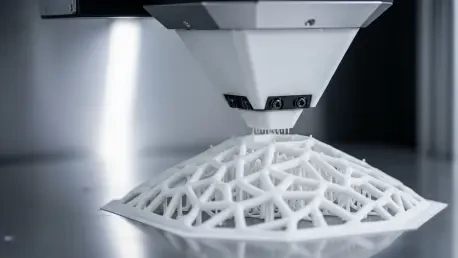

Global manufacturing is undergoing a radical shift as organizations transition from centralized, inventory-heavy models toward on-demand, distributed production systems. The reliance on traditional supply chains has frequently resulted in bottlenecks, but the maturation of additive manufacturing technologies is finally providing a viable alternative for high-volume functional parts. Stratasys is leading this charge by moving beyond the historical constraints of rapid prototyping, focusing instead on creating a production-ready ecosystem that addresses cost and material limitations. By integrating hardware, software, and advanced materials into a unified workflow, the company enables sectors like aerospace and automotive to manufacture end-use components with unprecedented reliability. This strategic pivot ensures that 3D printing is no longer a niche tool for designers but a primary manufacturing asset capable of scaling alongside traditional methods like injection molding. By creating a standardized, repeatable process, industrial players can now confidently integrate these technologies into their core operations to achieve greater speed and design flexibility.
Optimizing Hardware: Engineering Performance
One major pillar of this evolution involves the refinement of hardware to prioritize functional utility over purely aesthetic features. The J850 Core printer exemplifies this shift, serving as a dedicated workhorse for engineering teams that require high-performance prototyping without the added cost of full-color capabilities. By focusing on durability and repeatability, this system allows engineers to rapidly iterate designs and produce essential factory tools, such as jigs and fixtures, with high precision. This streamlined approach makes industrial-grade additive manufacturing more accessible to a broader range of companies, reducing the overhead typically associated with complex multi-material systems. It empowers manufacturers to maintain high standards of quality while significantly shortening the time between design and deployment on the assembly line, thus ensuring that internal support structures keep pace with evolving production needs. The focus on core functional strength over visual flair represents a significant step in democratizing industrial-grade tools for daily use.
Optimizing Hardware: Medical Material Innovations
Innovation in materials is equally critical, particularly within the healthcare sector where the demand for personalized patient care continues to rise. The introduction of P3 MED Silicone 25A represents a significant breakthrough, offering a biocompatible material that effectively mimics the physical properties of traditionally injection-molded silicone. This advancement allows for the scalable production of custom medical devices, including hearing aids and prosthetics, while adhering to the most stringent safety and regulatory standards. By eliminating the necessity for expensive and time-consuming metal molds, this material technology dramatically reduces lead times for complex medical components. Manufacturers can now produce small-to-medium batches of high-quality, personalized solutions that were previously cost-prohibitive. This shift not only improves patient outcomes but also demonstrates how specialized material science is bridging the gap between digital design and practical, life-saving applications across the global medical technology landscape.
Simplifying Workflows: Automated Design Applications
Simplifying the digital interface is another essential step in scaling industrial production, as complex CAD software often acts as a barrier for factory floor personnel. Stratasys has addressed this by introducing automated design applications within its GrabCAD suite, specifically tailored to automate the creation of industrial tools. These applications allow manufacturing engineers to generate drill guides, clamping jaws, and other essential fixtures directly within the print workflow without needing deep expertise in traditional 3D modeling. This democratization of design tasks ensures that the speed of the production cycle is not hindered by a reliance on specialized CAD departments for every minor tool modification. By embedding these automated capabilities into the daily routine, the technology becomes a more versatile and approachable asset for workers, enabling them to solve immediate mechanical challenges with minimal friction. This empowerment of the workforce is vital for creating a truly responsive and agile modern manufacturing environment.
Simplifying Workflows: Integrated Factory Operations
This focus on software interoperability creates a cohesive digital environment where solving production problems becomes a streamlined, integrated process. By incorporating these tools into an existing software platform, the transition from a conceptual design to a physical part is simplified, making additive manufacturing a standard component of daily factory operations. This integration helps eliminate the silos that traditionally separated design teams from the manufacturing floor, fostering a more collaborative atmosphere where quality control and operations are tightly linked. As a result, the technology is viewed not as a niche specialty but as a robust manufacturing tool that enhances productivity across various stages of the supply chain. This unified digital workflow ensures that every part produced is backed by data-driven precision, allowing companies to scale their 3D printing capabilities while maintaining the rigorous consistency required for industrial-grade manufacturing. The outcome is a more reliable and efficient bridge between digital concepts and physical results.
Driving Efficiency: Industrial Grade Materials
To compete effectively with traditional manufacturing methods on a massive scale, the economic viability of materials is a paramount consideration for large-scale industrial players. The implementation of SAF technology and PA12 powder addresses this need by providing a cost-effective alternative for high-volume production runs that were once the sole domain of injection molding. This powder-based material is specifically engineered to lower the total cost of ownership, making it financially sustainable for businesses to produce thousands of functional parts with high dimensional accuracy. The resilience of PA12 ensures that printed components can withstand the rigorous demands of end-use applications in sectors like consumer goods. By optimizing material usage within the SAF process, Stratasys allows manufacturers to achieve efficiency that rivals traditional techniques while offering digital flexibility. Projecting growth from 2026 to 2030 confirms the long-term economic benefits of this shift.
Driving Efficiency: Agile Manufacturing Standards
Looking back at the recent advancements, the transition to high-volume 3D production represented a fundamental shift in how global companies approached mechanical engineering and logistics. The industry successfully moved toward actionable solutions that replaced traditional bottlenecks with automated, data-driven workflows and superior material performance. Organizations that integrated these additive systems into their primary production lines observed significant reductions in lead times and a marked increase in part customization capabilities. The focus shifted toward deepening the integration between AI-driven design and physical manufacturing to further enhance efficiency. Leaders in the sector recognized that the true value of this technology resided not just in the printer itself, but in the entire digital-to-physical ecosystem that supported it. This paradigm shift ultimately established a new standard for industrial agility and cost-effectiveness that defined the era of manufacturing excellence. The path forward was paved by the bold integration of these diverse technologies.