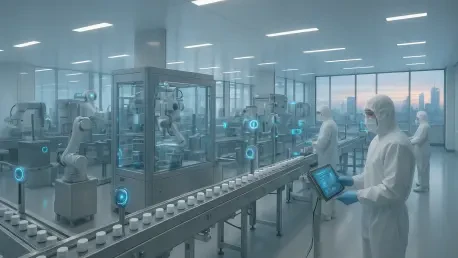

Maintaining medicinal consistency across a global network requires navigating a labyrinth of geopolitical shifts and varying international regulatory expectations. The journey of a pharmaceutical product from a manufacturing plant to a patient’s local pharmacy is an intricate operation governed by a sophisticated, invisible infrastructure. Far beyond a simple assembly line, this ecosystem functions as a data-driven framework designed to manage the immense complexity of modern medicine. Excellence in this field is not accidental; it is the result of a deliberate synergy between stringent supply chain management, advanced technological integration, and a deeply embedded culture of human accountability. By focusing on these pillars, manufacturers ensure that every milligram of medicine produced meets a singular standard of safety and efficacy, regardless of where it is distributed. This systemic resilience has become the hallmark of the modern industry, ensuring that every tablet is a promise kept.
Building the Foundation of Global Integrity
Securing the Global Supply Chain: Vetting Raw Materials
Pharmaceutical quality begins long before a single dose is synthesized, starting with the meticulous vetting of raw materials. Because a finished product is only as reliable as its constituent parts, manufacturers employ a rigorous qualification process for every global supplier. This involves not only testing the chemical benchmarks of the materials but also auditing the supplier’s own management systems. By auditing the source of active pharmaceutical ingredients and excipients, companies establish a baseline of reliability that transcends national borders. In 2026, the reliance on blockchain-based tracking and automated verification has streamlined this vetting process, allowing for instantaneous verification of purity and origin. This initial stage of procurement serves as the first line of defense, filtering out potential contaminants or substandard components that could compromise the safety of the entire production batch during the subsequent synthesis stages.
Implementing Defensive Perimeters: Controlled Storage Protocols
By front-loading quality through intensive sampling and controlled storage, the organization creates a defensive perimeter that prevents substandard ingredients from ever entering the production stream. Every batch of incoming material undergoes a battery of tests designed to verify identity, potency, and purity. Controlled storage environments are strictly monitored to prevent degradation before the manufacturing process even begins. These facilities utilize sensor arrays to track temperature, humidity, and light exposure in real time, ensuring that the physical and chemical properties of the raw materials remain unchanged. This proactive approach eliminates the risks associated with reactive quality control, where problems are often discovered only after significant resources have been expended. By investing in these foundational controls, pharmaceutical firms can maintain a high degree of confidence in the integrity of their output, ensuring that the initial inputs match the rigorous specifications.
Monitoring Production: Real-Time Multi-Stage Checkpoints
Modern production has shifted from simple end-of-process testing to a continuous checkpoint philosophy that permeates every level of manufacturing. High-tech equipment tracks variables in real time, ensuring that every stage of production remains within tightly controlled tolerances. This move toward Process Analytical Technology allows for the constant measurement of critical quality attributes directly within the production line. Sensors and sophisticated analytical tools provide a granular view of the chemical and physical transformations occurring at any given moment. If any parameter fluctuates even slightly, the system triggers an immediate investigation or automated correction. This dense network of oversight ensures that the final product is the result of thousands of verified, data-backed decisions. This fail-safe approach guarantees that by the time a medication is cleared for distribution, its chemical composition has been validated at every critical juncture of its lifecycle.
Utilizing Digital Gatekeepers: Software-Driven Quality Profiles
The implementation of these multi-stage checkpoints involves a sophisticated layer of software that integrates data from disparate sources into a cohesive quality profile. Each checkpoint serves as a digital gatekeeper, only allowing the process to proceed if all conditions are met perfectly. This eliminates the possibility of human oversight in complex multi-step reactions. In 2026, the use of edge computing and artificial intelligence has further enhanced these systems, allowing for predictive modeling that can foresee potential deviations before they occur. By analyzing historical data and current environmental factors, the systems can make micro-adjustments that maintain the process within the sweet spot of optimal production. This level of technical oversight creates a highly resilient manufacturing environment where quality is baked into the process rather than being an afterthought. It transforms the factory into a self-correcting machine that prioritizes safety above all else.
Managing Global Complexity and Future Precision
Adapting to Environments: Resilient Global Operations
Maintaining consistency across a global network requires navigating a labyrinth of geopolitical shifts and varying international regulatory expectations. Consistency is treated as a dynamic target; a process that works perfectly in one climate may require subtle calibration when transferred to a facility in a different jurisdiction. Environmental factors such as ambient humidity and temperature can affect the stability of certain formulations, necessitating localized adjustments to the manufacturing environment. To address this, manufacturers build diversified supply chains that can adapt to disruptions without sacrificing quality. This systemic approach moves beyond following a recipe and instead focuses on managing a learning organization that can maintain a unified standard across diverse operational environments. By decentralizing certain manufacturing steps while centralizing quality oversight, firms can ensure that their global reach does not lead to a dilution of their core safety standards.
Harmonizing Compliance: Navigating Diverse Regulatory Standards
The resilience of these systems is also tested by the need to comply with multiple regulatory bodies simultaneously. A facility may need to satisfy the requirements of the FDA, EMA, and other national health authorities all at once. This requires a highly flexible quality management system that can accommodate different reporting standards and audit styles. Leading organizations have developed unified compliance frameworks that serve as a master standard, exceeding the requirements of any single regulator to ensure global acceptance. This redundancy in compliance acts as a buffer against shifting political landscapes or sudden changes in local laws. Furthermore, the adoption of digital twins—virtual replicas of physical manufacturing plants—allows engineers to simulate process changes and regulatory updates in a risk-free environment. This ensures that when a new protocol is rolled out globally, it has already been stress-tested against the specific conditions of every facility in the network.
Engineering Perfection: High-Risk Aseptic Environments
The pinnacle of pharmaceutical engineering is found in high-precision environments, such as those used for sterile injectable medicines. In these aseptic zones, every detail is regulated, down to the physical speed at which personnel move to avoid disrupting airflow patterns. These facilities utilize specialized HVAC systems that create positive pressure environments, preventing contaminated air from entering the cleanroom. In 2026, advanced robotics and isolator technology have further minimized human contact with the product, significantly reducing the risk of microbial contamination. Every piece of equipment is designed for easy sterilization and is subjected to rigorous cleaning protocols. The movement of materials into and out of these zones is strictly controlled through airlocks and specialized transfer systems. This level of precision illustrates the extreme lengths taken to mitigate even the smallest risks. It is a world where good enough does not exist.
Advancing Patient Safety: Future Standards and Continuous Learning
The successful maintenance of pharmaceutical quality at scale required a comprehensive shift toward integrated, data-driven strategies that prioritized both technological precision and human accountability. Organizations that implemented these multi-layered systems were able to navigate the complexities of global distribution without compromising on safety or efficacy. Moving forward, the industry had to continue to refine these frameworks by incorporating more autonomous decision-making tools and enhancing the transparency of the entire supply chain. It was essential for manufacturers to collaborate more closely with international regulatory bodies to harmonize standards further and reduce regional discrepancies. This collective effort focused on the development of more sustainable manufacturing practices that did not sacrifice the rigorous quality benchmarks. By fostering a culture of continuous learning, the pharmaceutical sector was better prepared for shifting global demands and future health challenges.