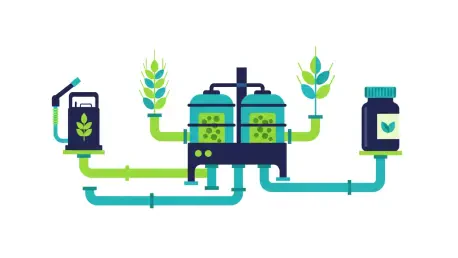

The evolution of bioprocessing technology has moved far beyond the sterile confines of pharmaceutical laboratories where it once exclusively served the production of high-value medicine. Today, the same sophisticated engineering principles used to manufacture monoclonal antibodies are being rapidly integrated into much broader industrial sectors, from large-scale food production to the synthesis of sustainable biofuels. This transition represents a fundamental shift in manufacturing philosophy, where biological systems are no longer treated as unpredictable natural phenomena but as highly controlled environments for molecular synthesis. By applying pharmaceutical-grade rigor to lower-margin products, modern industry is finding new ways to achieve consistency and efficiency that were previously unattainable. This technological migration is not just about changing equipment; it is about retooling the entire economic and regulatory framework of high-volume manufacturing to meet the growing global demand for sustainable and high-quality goods. As these methods mature, they are creating a unified industrial landscape where biology serves as the primary engine for material and energy production, bridging the gap between niche laboratory research and the massive scale of international commerce.
Foundations: The Core of Technological Transfer
The shared infrastructure between diverse biological sectors serves as the backbone of this industrial transformation, ensuring that technical gains in one area quickly benefit others. Whether a facility is cultivating mammalian cells for a blockbuster drug or producing food-grade enzymes for the dairy industry, the fundamental hardware—most notably the bioreactor—remains remarkably consistent across applications. This uniformity allows engineers to apply decades of research into fluid dynamics and gas transfer rates, originally perfected for the pharmaceutical industry, to the production of common household ingredients. As a result, the barriers between specialized biotechnology and general manufacturing are dissolving, allowing for a more rapid exchange of technical innovations. This cross-pollination ensures that advancements in impeller design or oxygen sparging techniques developed in one sector can quickly be validated and deployed in another, streamlining the path toward commercial-scale bio-manufacturing for a wide range of emerging products.
Upstream and downstream processing steps now exhibit a high degree of technical symmetry, reflecting a maturation of the field where processes are standardized for maximum yield. For example, the production of industrial amylases or proteases often utilizes fed-batch fermentation techniques that are conceptually and operationally identical to the methods used in the pharmaceutical industry to produce therapeutic proteins. The logic of nutrient feeding, temperature ramping, and metabolic monitoring carries over seamlessly, ensuring that the microbial hosts remain in an optimal state for product expression. Similarly, the recovery phases involving centrifugation and ultrafiltration rely on the same mechanical principles, regardless of whether the final output is a life-saving treatment or an enzyme used in textile manufacturing. This consistency allows for a shared pool of engineering expertise, where professionals can move between sectors without needing to relearn the core physics of their trade, thereby accelerating the deployment of new biological manufacturing solutions.
Industrial Maturation: The Case of Precision Fermentation
Industrial enzyme manufacturing has become the primary testing ground for this technological transfer, demonstrating that high-precision controls are economically viable even for products with lower price points. When producing cellulases or lipases at a commercial scale, the requirements for managing pH levels and dissolved oxygen are just as rigorous as those for producing high-value biologics, as even minor deviations can significantly impact final product activity. The scientific literature and professional standards used in these sectors now draw directly from pharmaceutical methodologies, creating a unified body of industrial knowledge that prioritizes process stability and reproducibility. This trend is particularly evident in the rise of precision fermentation companies that use modified microorganisms to produce dairy proteins or leather alternatives. These firms are adopting pharmaceutical-style validation protocols to ensure their products meet strict food safety and quality standards while maintaining the high throughput necessary for global distribution.
The movement toward precision fermentation represents a broader industrial strategy to replace traditional chemical synthesis with cleaner, biological alternatives that offer superior specificity. By viewing a fermenter as a controlled factory for molecular construction, manufacturers can produce complex molecules with a level of purity that was once prohibitively expensive. This approach allows for the creation of identical-to-nature proteins and fats that do not require the environmental overhead of traditional agriculture. As the cost of gene editing and metabolic engineering continues to decrease, the range of molecules that can be produced through bioprocessing is expanding rapidly. This expansion is forcing a re-evaluation of global supply chains, as production facilities can now be located closer to end consumers, reducing the carbon footprint associated with transportation and storage. The integration of these advanced biological tools is effectively turning traditional factories into living systems that are both more efficient and more adaptable to changing market demands.
Process Analytics: Advanced Monitoring and Real-Time Control
One of the most significant shifts in modern industrial bioprocessing is the widespread adoption of Process Analytical Technology, a framework that emphasizes building quality directly into the manufacturing process through continuous monitoring. Originally developed to enhance drug safety and reduce the risk of batch failure, this methodology allows manufacturers to track vital nutrients and metabolites in real time rather than relying on traditional, time-consuming laboratory tests performed after the fact. This proactive approach enables automated control systems to make instantaneous adjustments to the fermentation environment, ensuring that the microorganisms remain in peak productive health. By reducing the variability inherent in biological systems, advanced analytics significantly lower the cost of production by minimizing waste and increasing the total yield per batch. As sensors become more robust and affordable, even smaller-scale producers are integrating these advanced analytics into their workflows, turning what was once a luxury into a standard industrial requirement.
Raman spectroscopy has emerged as a cornerstone of this new analytical landscape, offering a non-invasive way to analyze complex chemical signatures within a bioreactor without the interference typically caused by water. In the industrial sector, this technology is currently being validated for use with specialized organisms such as marine microorganisms and oleaginous yeast, which are used to produce omega-3 fatty acids and biofuels. By applying sophisticated chemometric models to the data gathered by Raman probes, operators can accurately predict lipid and biomass concentrations throughout the entire growth cycle. This capability is crucial for optimizing the timing of harvests and ensuring that the final product meets specific concentration requirements. Furthermore, the ability to monitor these parameters without extracting samples reduces the risk of contamination, a vital consideration when running long-duration fermentations that require absolute sterility to remain economically viable for the producer.
Spectroscopic Innovation: Enhancing Safety and Precision
Near-Infrared spectroscopy is also gaining significant traction across the industrial bioprocessing landscape, particularly within the food and beverage sectors where rapid characterization of ingredients is essential. Brewing and dairy facilities are now deploying these sensors to track total dissolved solids, water content, and protein levels in real time as liquids move through various stages of production. This push for advanced monitoring is driven not only by a desire for efficiency but also by increasingly stringent food safety regulations that demand comprehensive documentation of every step in the manufacturing chain. By providing a continuous data stream, this technology allows facilities to detect deviations early, preventing large quantities of product from being wasted and ensuring that every item on the shelf meets the promised nutritional profile. The integration of spectroscopic tools into standard pipelines represents a bridge between high-tech bioprocessing and traditional food science, creating a more transparent and controlled supply chain.
The utilization of real-time data extends beyond mere monitoring and into the realm of predictive maintenance and automated process optimization. By feeding the data streams from various sensors into machine learning algorithms, manufacturers can predict when a filter might clog or when a microbial culture is about to enter a declining growth phase. This level of foresight allows for preemptive actions that keep production lines running smoothly, avoiding the costly downtime associated with unexpected failures. Furthermore, the ability to correlate environmental conditions with final product quality allows engineers to fine-tune their processes with unprecedented precision. As these digital twins of biological processes become more accurate, the gap between theoretical lab results and actual factory performance continues to shrink. This digital transformation is an essential component of the broader bioprocessing revolution, providing the data-driven foundation necessary for scaling up complex biological systems to meet global industrial needs.
Downstream Processing: Innovations in Separation and Purity
Modern downstream processing has been revolutionized by the application of membrane technology, which provides a universal solution for the separation and concentration of biological products. Tangential Flow Filtration stands at the center of this innovation, utilizing a crossflow logic where the liquid stream moves parallel to the membrane surface rather than directly through it. This design prevents the buildup of a filter cake of cells or debris, which otherwise causes clogging and reduces efficiency in large-scale operations. For industrial-scale cell harvesting and product recovery, this method offers a scalable and predictable way for handling high volumes of fermented broth. The ability to concentrate sensitive proteins or enzymes without exposing them to extreme heat or harsh chemicals ensures that the biological activity remains intact, which is critical for the effectiveness of the final product. As membrane materials become more durable and resistant to fouling, their role in industrial bioprocessing continues to expand across multiple sectors.
In the dairy industry specifically, membrane filtration techniques have fundamentally changed how raw materials are handled and transformed into specialized ingredients for the global market. Ultrafiltration is now commonly used to fractionate whey proteins with extreme precision, allowing processors to create high-protein concentrates that serve as the foundation for sports nutrition and clinical supplements. Simultaneously, nanofiltration processes help in the demineralization of dairy streams and the reduction of lactose content, catering to a growing market of health-conscious consumers. These advanced separation techniques enable the creation of high-value ingredients from what were previously considered waste products, significantly improving the economic sustainability of dairy processing plants. By adopting the same filtration standards used in the pharmaceutical industry, dairy manufacturers can guarantee a level of purity and consistency that was previously impossible at such a massive scale, opening up new opportunities in the global ingredients market.
Sustainable Energy: Purity Challenges in Biofuel Production
The biofuels sector is another area where membrane innovation is playing a critical role in ensuring that renewable energy sources meet the purity standards required for modern high-performance engines. Clarifying fermented fuels requires the removal of microbial sludge and other impurities from the broth, a process that must be highly efficient to remain cost-competitive with traditional fossil fuels. The engineering challenges associated with this—such as managing membrane fouling over long run times and optimizing transmembrane pressure—mirror the hurdles faced by biopharmaceutical engineers when purifying complex molecules. By leveraging shared knowledge in membrane dynamics, biofuel producers have been able to refine their purification steps, reducing energy consumption and increasing the overall throughput of their facilities. This convergence of engineering goals ensures that as the demand for sustainable energy grows, the bioprocessing tools used to produce it are robust enough to handle the pressure of global supply chains.
Beyond the clarification of the fuel itself, bioprocessing technology is also being used to capture and recycle the carbon dioxide produced during the fermentation process. Advanced gas separation membranes and specialized bioreactors can convert this waste gas into additional biomass or chemical feedstocks, creating a more circular production model. This approach not only improves the overall carbon intensity of the fuel but also provides additional revenue streams for the manufacturer. The integration of carbon capture directly into the bioprocessing workflow highlights the versatility of these engineering solutions in addressing environmental challenges. As regulatory frameworks continue to incentivize low-carbon technologies, the ability to maintain high purity while maximizing resource recovery will become a defining characteristic of successful biofuel operations. This ongoing innovation in downstream processing is essential for making renewable energy a central pillar of the modern industrial economy.
Sustainability: The Shift Toward Single-Use Systems
Single-use infrastructure, once seen as an expensive luxury reserved for high-margin drug manufacturing, is now finding a home in specialty enzyme production and emerging bio-based startups. These systems utilize disposable bioreactor bags and fluid paths made from medical-grade plastics, which eliminate the need for the complex, water-intensive cleaning and sterilization cycles required for traditional stainless steel equipment. This modular approach provides a significant advantage for facilities that need to switch between different product lines rapidly, such as a contract manufacturer producing various enzymes for different industrial clients. By reducing the downtime between batches and lowering the initial capital expenditure for new facilities, single-use technology is lowering the barrier to entry for innovative companies. This flexibility is essential in a fast-paced manufacturing landscape where the ability to respond to market trends and shift production priorities can define the long-term success of a business.
The adoption of disposable systems has initiated a vital debate regarding the long-term sustainability of bioprocessing, particularly as industrial producers face intense environmental scrutiny. While pharmaceutical companies have historically prioritized speed and sterility over waste management, industrial manufacturers must operate within a framework that emphasizes a circular economy. This pressure has led to the development of innovative vendor take-back programs, where used plastic components are decontaminated, shredded, and recycled into lower-grade industrial materials rather than being sent to a landfill. This shift in waste management strategy reflects a maturing industry that recognizes the need to balance the operational benefits of single-use technology with its ecological footprint. As new bio-based plastics and more recyclable polymers enter the market, the conflict between convenience and sustainability is being addressed through better engineering and more responsible supply chain management practices.
Specialized Frontiers: The Convergence of Biological Manufacturing
Environmental bioprocessing represents one of the most specialized and impactful applications of these technologies, particularly through the deployment of Membrane Bioreactors for advanced wastewater treatment. These systems function by combining biological degradation—where microorganisms break down organic pollutants—with high-efficiency membrane separation to ensure the final effluent is free of solids and pathogens. The operation of these systems is technically similar to the perfusion bioreactors used in advanced cell culture, as both aim to maintain a high concentration of biomass while allowing a purified liquid stream to pass through continuously. This allows municipalities and industrial facilities to treat water more effectively in a smaller physical footprint, making it an ideal solution for urban areas or resource-constrained environments. By treating wastewater as a resource to be processed rather than a waste product to be discarded, this application of bioprocessing tech is helping to secure global water supplies.
The traditional silos that once separated pharmaceutical, food, and environmental biotechnology are rapidly collapsing, driven largely by increased workforce mobility and the declining costs of high-end equipment. Professionals who were originally trained in the rigorous, highly regulated environments of drug manufacturing are now bringing those high standards into the food and environmental sectors, elevating the quality of production across the board. As the cost of advanced sensors and automated control systems continues to drop, even industries with razor-thin profit margins can afford the precision tools that were once the exclusive domain of elite research laboratories. This democratization of technology means that the same level of scientific oversight applied to a life-saving vaccine is now being used to ensure the purity of a plant-based burger or the efficiency of a municipal water treatment plant. This shared pool of talent and technology is creating a more resilient and versatile industrial base capable of tackling complex global challenges.
Navigating the inherent friction between strict regulatory requirements and the need for economic efficiency remained the final hurdle for the integration of bioprocessing technology across all industrial sectors. While industrial manufacturers did not always require the same level of exhaustive validation documentation as their counterparts in the pharmaceutical world, they certainly benefited from the yield optimization and process stability that these high-end technologies provided. Decision-makers throughout the manufacturing landscape eventually recognized that the initial investment in advanced monitoring and automated systems paid for itself through reduced batch failure rates and higher-quality outputs. By adopting a proactive stance toward technological integration, businesses across the food, fuel, and environmental sectors positioned themselves to thrive in an economy that increasingly prioritized biological solutions over chemical ones. Ultimately, the successful transfer of these tools established a new baseline for global production, where the precision of bioprocessing served as the indispensable workhorse for a sustainable and efficient future.