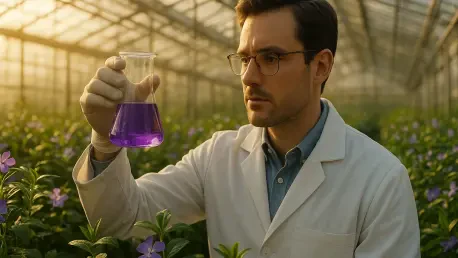

By utilizing the natural reducing and capping agents found in Catharanthus roseus, researchers have developed a one-pot synthesis method that avoids the toxic solvents of industrial production. This breakthrough focuses on the Madagascar periwinkle, a plant traditionally valued for its life-saving alkaloids, now repurposed as a biological factory for advanced iron oxide and zinc oxide nanoparticles. In the current landscape of 2026, the push for sustainable agriculture has reached a critical juncture, making these biogenic materials essential for reducing harmful chemical runoff and soil degradation. By extracting specific secondary metabolites, scientists are creating a dual-action tool that both protects crops from pathogens and strengthens their internal physiology. This shift toward nature-based nanotechnology represents a pivotal moment in how the global community manages long-term food security and the growing demand for low-toxicity, biodegradable agricultural inputs.
The Phytochemical Basis: Natural Laboratory Processes
The efficiency of this biological synthesis relies on a sophisticated cocktail of phenolics and flavonoids naturally synthesized within the periwinkle tissue. When researchers introduce metal salt precursors into the plant extract, these specific phytochemicals act as powerful reducing agents. They donate electrons to the metal ions, facilitating their transformation into stable, zero-valent nanoparticles that cluster into functional oxides. This process is inherently superior to chemical synthesis because it operates under ambient conditions and produces no toxic byproducts. By utilizing the plant’s metabolic pathways, the reaction achieves a high degree of purity without the need for synthetic catalysts. The concentration of these biomolecules determines the rate of particle formation, allowing for a controlled synthesis process that can be fine-tuned for specific agricultural needs. This reliance on renewable biological resources significantly lowers the carbon footprint of production.
Achieving Stability: The Role of Capping Agents
Beyond the initial reduction of metal ions, the remaining organic compounds in the periwinkle extract serve as critical capping agents. These molecules form a protective organic layer around each newly created nanoparticle, preventing the individual units from clumping together or aggregating. This organic envelope is essential for maintaining a high surface-area-to-volume ratio, which directly influences how effectively the particles interact with plant tissues and microbial membranes. Without this stable coating, nanoparticles would lose their biological activity and settle out of solution, making them useless for field applications. Furthermore, this plant-derived shell ensures that the particles remain physically stable for extended periods, even when stored in liquid concentrates. Because the capping layer is composed of natural metabolites, it eventually breaks down into harmless organic matter once the particles have performed their function. This ensures that the application of nanotechnology does not lead to a build-up of persistent residues.
Analytical Verification: Crystalline Structure and Purity
To ensure the integrity of the synthesized materials, scientists utilized Fourier-Transform Infrared Spectroscopy to map the interaction between the plant extracts and the metal cores. This analytical technique identified the specific organic functional groups from the periwinkle that had successfully bonded to the nanoparticle surfaces, providing a definitive chemical fingerprint of the green synthesis. Following this, X-ray diffraction was employed to verify the crystalline nature of both the iron oxide and zinc oxide structures. By measuring how the materials scattered X-ray beams, the researchers confirmed that the internal atomic arrangement matched the known profiles for these specific oxides. This verification was crucial to ensure that the process yielded high-purity crystalline materials rather than unrefined mixtures. Having a precise understanding of the lattice structure allows for better prediction of how these particles will behave when they encounter the complex biochemical environments.
Physical Characterization: Morphology and Size Distribution
The physical dimensions and surface morphology of the biogenic particles were further scrutinized using high-resolution scanning electron microscopy and dynamic light scattering. Microscopy allowed for direct observation of the spherical shape of the nanoparticles, which is a key factor in how they penetrate leaf surfaces and disrupt bacterial cell walls. Meanwhile, light scattering tests provided a detailed view of the size distribution within the liquid medium, confirming that the majority of the particles remained within the optimal nanometer range for cellular uptake. Maintaining a consistent size is essential for the efficacy of foliar sprays, as particles that are too large cannot pass through the stomatal openings of the plants. These rigorous checks demonstrated that the periwinkle-mediated synthesis could reliably produce high-quality materials that meet the strict standards of modern agricultural technology. This consistency ensures that the resulting product provides a predictable biological response.
Antimicrobial Action: Disrupting Pathogenic Metabolism
The antimicrobial potential of these green nanoparticles against pathogens like Staphylococcus aureus and Escherichia coli marks a significant advancement in crop protection. Zinc oxide nanoparticles, in particular, demonstrated an exceptional ability to inhibit bacterial growth through a multi-faceted attack mechanism. These particles generate reactive oxygen species upon contact with moisture and light, inducing severe oxidative stress that physically compromises the bacterial cell membrane. This structural damage leads to the leakage of vital internal contents and the eventual death of the pathogen. Additionally, the gradual release of zinc ions from the nanoparticle surface interferes with the bacteria’s internal metabolic pathways and enzymatic functions. Because the nanoparticles disrupt multiple cellular targets simultaneously, the likelihood of bacteria developing resistance is much lower than with traditional chemical treatments. This makes biogenic particles an invaluable tool for managing persistent agricultural diseases.
Physiological Priming: Strengthening Internal Plant Defenses
Beyond their role as antimicrobial agents, these nanoparticles function as powerful stimulants for the plant’s internal defense systems. When applied as a foliar spray, the nanoparticles act as a priming agent that trains the crop to better handle environmental stressors. The study recorded a significant boost in the activity of enzymes like catalase and peroxidase, which are responsible for neutralizing harmful oxygen radicals during heat or drought. Furthermore, the treatments led to a dramatic increase in secondary metabolites, such as anthocyanins and flavonoids, which act as natural antioxidants and UV shields. For example, treatment with iron oxide nanoparticles resulted in a massive rise in flavonoid content compared to untreated controls. This biochemical enhancement not only makes the plant more resilient to the changing climate of 2026 but also improves the overall nutritional value of the harvest. By strengthening these internal pathways, the nanoparticles allow crops to maintain high yields even under suboptimal conditions.
Field Implementation: Managing Soil and Timing Variables
As the agricultural sector looked toward wider adoption, the focus shifted to the practical nuances of field implementation. Researchers found that the effectiveness of these nanoparticles was influenced by localized soil chemistry and the specific pH levels of irrigation water. Consequently, the development of site-specific application guidelines became a priority to ensure that the iron and zinc remained bioavailable to the crops. It was also determined that the timing of the foliar application played a critical role in maximizing the priming effect, with the best results occurring when the spray was used during the early vegetative stages. This strategic timing allowed the plants to build up sufficient reserves of protective proteins and proline before the onset of seasonal stressors. Agronomists suggested that integrating these biogenic tools into a comprehensive crop management plan would yield the most sustainable results. This proactive management style ensured that the benefits of nanotechnology were fully realized.
Strategic Scaling: Bio-Based Solutions for Global Farming
The successful integration of medicinal plant chemistry and nanotechnology paved the way for a more standardized approach to bio-based manufacturing. The industry focused on creating stabilized liquid concentrates that could be distributed easily for use with existing farm equipment, making the technology accessible to all growers. Long-term monitoring confirmed that the biodegradable nature of the periwinkle-derived coating prevented the accumulation of toxic residues, ensuring the safety of local ecosystems. Scientists recommended that future research continue to explore the synergy between different plant extracts and metal oxides to broaden the spectrum of treatments. This collaborative effort solidified a new paradigm in sustainable farming, where natural biological resources replaced synthetic chemicals. By refining dosage levels, the agricultural community moved closer to a future where high-tech food production and environmental preservation were no longer mutually exclusive goals.