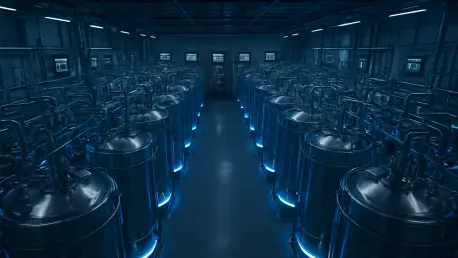

Utilizing brewery-style fermentation tanks to cultivate cocoa cells allows manufacturers to maintain 100 percent supply-chain stability regardless of unpredictable weather patterns. This innovative methodology, pioneered by Boston-based biotechnology leader GALY, arrives at a critical juncture for global agriculture. Traditional farming currently faces a relentless barrage of climate-driven crop failures and extreme price volatility that threatens the very existence of beloved commodities. By leveraging cellular agriculture, scientists can now grow plant products directly within controlled industrial environments, effectively decoupling production from the inherent risks of geography and soil health. This technological shift represents more than just a scientific breakthrough; it is a fundamental redesign of how the world sources essential resources. As the industry moves toward a more resilient future, the focus has sharpened on creating high-demand materials like cocoa without the environmental and ethical baggage of traditional harvesting.
Transforming the Chocolate Industry
The Strategic Case: Lab-Grown Cocoa
Cocoa was strategically selected as the primary commercial target due to a mounting crisis in the chocolate industry, where aging tree stocks and shifting climate patterns in West Africa have led to unprecedented cost spikes. The biological limits of the Theobroma cacao tree, which requires specific tropical conditions and years to reach maturity, make it particularly vulnerable to the warming global atmosphere. In contrast, the biomanufacturing platform offers a way to create customizable cocoa by giving producers precise control over the four pillars of chocolate quality: genetics, elicitation, fermentation, and roasting. This level of oversight is impossible in a traditional field, where external factors like soil composition and rain frequency dictate the final flavor profile. By moving production into the lab, the industry can finally achieve a level of consistency that has eluded confectioners for decades, ensuring every batch meets the exact specifications required for production.
With a comprehensive biological library featuring over 200 distinct seed cell lines, the company can provide consistent flavor profiles while offering total traceability throughout the entire production cycle. This scientific depth allows for the recreation of rare or endangered cocoa varieties that are currently too difficult or expensive to farm traditionally. Having already cleared major regulatory hurdles with the FDA, the company is on track to ship its first commercial batches during the latter half of 2026, providing a high-tech solution to a centuries-old supply problem that has recently reached a breaking point. These early shipments represent a proof-of-concept for the entire biomanufacturing sector, demonstrating that lab-grown ingredients can meet the rigorous quality standards of the global food industry. Manufacturers are increasingly looking toward these alternatives to stabilize their margins against a volatile market that shows no signs of stabilizing on its own.
Scaling Through Industrial Integration
Rather than building expensive new factories from the ground up, the company employs a clever asset-light strategy by retrofitting existing fermentation infrastructure to suit its needs. This involves identifying idle breweries or facilities located near sugar mills where the necessary inputs for cell growth are already readily available. By utilizing this existing industrial footprint, the firm can minimize capital expenditure and significantly speed up the transition from experimental phases to mass production. This approach not only saves time and money but also provides a sustainable path for older industrial regions to participate in the burgeoning bioeconomy. The ability to repurpose steel tanks that once held beer to now grow cocoa cells is a testament to the versatility of fermentation technology. It allows the company to scale rapidly without the logistical nightmares of massive construction projects, ensuring they can respond to the growing market demand with agility and financial prudence.
The scale-up process follows a modular roadmap designed to reduce risk, moving carefully from small-scale pilot systems to 50-kiloliter commercial units. This measured expansion ensures that production capacity grows in lockstep with actual market demand, allowing for technical validation at each stage before committing to full-scale industrial output. Each 50-kiloliter unit is a self-contained production ecosystem that can be replicated across different geographic locations, further de-risking the supply chain by distributing production closer to major manufacturing hubs. This decentralized model reduces the carbon footprint associated with international shipping and allows for a more responsive supply chain that can pivot based on local market needs. By the time the technology reaches its peak efficiency, the platform is expected to be 10 times faster and 500 times more productive than conventional field agriculture. Such massive gains in efficiency are essential for meeting the luxury needs of a growing population.
Economic Viability and Market Growth
Financial Milestones: Premium Positioning
The financial roadmap for this technology is quite ambitious, with revenue projected to climb from an initial $4 million in 2027 to over $400 million by the early 2030s. To reach these significant milestones, the company is focusing on a top-down market entry strategy that first targets the high-end food-service sector. This includes luxury hotels, Michelin-starred restaurants, and professional pastry chefs who are often willing to pay a premium for ingredients that offer superior consistency and ethical transparency. These early adopters prioritize the story behind their ingredients as much as the flavor, making lab-grown cocoa an attractive option for brands looking to differentiate themselves in a crowded marketplace. By securing a foothold in the premium segment, the company can build brand prestige and refine its processes before attempting to compete on price in the broader market. This strategy ensures that the technology is perceived as a high-quality innovation rather than just a substitute.
Once the brand is firmly established as a premium ingredient, the plan is to expand into the broader consumer packaged goods market to reach a much larger audience. This phase involves providing sustainable cocoa to global chocolate brands and private-label manufacturers who are under increasing pressure from consumers to address deforestation and labor issues in their supply chains. The promise of a stable, pesticide-free, and ethically sound cocoa source is a powerful incentive for these massive corporations to integrate biomanufactured cells into their recipes. As production costs continue to drop through technological optimization and economies of scale, lab-grown cocoa will become increasingly competitive with traditionally farmed beans. This transition will likely be gradual, with many companies initially using a blend of lab-grown and farm-grown cocoa before moving toward fully biomanufactured products. The ultimate goal is to make sustainable chocolate the standard rather than the exception.
Expanding the Biomanufacturing Portfolio
While cocoa serves as the immediate commercial focus, the long-term vision for this platform is to become completely product-agnostic. This means the underlying technology can be adapted to produce a wide range of high-value plant materials that are currently facing environmental or logistical challenges. The technology has already demonstrated significant success in the realm of cotton production, where it can tune physical traits such as cellulose quality and fiber length through precise biological programming. Unlike traditional cotton farming, which is incredibly water-intensive and relies heavily on pesticides, lab-grown cotton can be produced with a fraction of the environmental impact. This versatility proves that the biocrafting method is not a niche solution for the chocolate industry but a broad platform capable of transforming various sectors of the global economy. By mastering complex plant cells, the company is positioning itself as a central player in the future of sustainable material sourcing.
Future targets for the platform include other essential but vulnerable crops like coffee, vanilla, citrus, and even high-value spices like saffron. These materials are currently resource-intensive, geographically limited, and prone to extreme price swings caused by political instability or climate events. By expanding the portfolio to include these sensitive ingredients, the company can provide a reliable buffer for global food and fragrance manufacturers. This diversification suggests that biomanufacturing will eventually serve as a necessary and permanent complement to traditional farming rather than a complete replacement. It will secure the supply of the world’s most sensitive ingredients, ensuring they remain accessible even as traditional cultivation becomes more difficult. As the library of programmed cell lines grows, the potential for designer plants with enhanced nutritional properties also increases. This opens up new markets for functional foods and advanced bio-materials previously impossible to produce.
A New Standard for Global Supply Chains
Solving the Triple Bottom Line
The shift toward a biocrafting model directly addresses the triple bottom line of modern business, which emphasizes environmental health, economic stability, and social responsibility. By removing the need for labor-intensive harvests in volatile regions, the technology effectively mitigates the ethical risks often associated with traditional cocoa and cotton production, such as child labor and poor working conditions. This creates a much cleaner narrative for corporations that are increasingly being held accountable for the actions of their distant suppliers. Furthermore, the environmental benefits are staggering, targeting an 80 percent reduction in land use, water consumption, and carbon emissions compared to conventional methods. Because the cells are grown in sterile, laboratory-grade settings, the process also eliminates the need for harmful pesticides and removes the risk of natural contaminants like mycotoxins. This focus on purity provides a level of quality assurance that soil-based farming cannot match.
This holistic approach to sustainability has already garnered significant industry recognition and prestigious awards from major global players in both the fashion and food sectors. These high-level partnerships signal a growing corporate consensus that the traditional commodity model is no longer sufficient for a world facing rapid environmental changes and shifting social expectations. Investors and stakeholders are increasingly looking for companies that offer tangible solutions to long-standing systemic problems, and biomanufacturing fits this requirement perfectly. By aligning financial success with positive environmental and social outcomes, the company is setting a new standard for what a modern industrial enterprise should look like. The adoption of these technologies by household names validates the commercial viability of lab-grown products and paves the way for wider acceptance. As more companies join the movement, the pressure on traditional supply chains to modernize and become more transparent will only grow.
Bridging the Gap: Lab to Retail
The industrialization of biology represents a pivotal moment in how human society interacts with nature to fulfill its growing needs. By focusing on a high-value entry point like cocoa and leveraging existing industrial assets, the transition from laboratory innovation to global retail is becoming economically feasible for the first time. The primary value proposition lies in the marriage of extreme efficiency and total supply-chain de-risking, which allows brands to operate without the constant fear of sudden ingredient shortages or price hikes. As this technology matures, it offers a reliable alternative to the traditional farm-to-table model, ensuring that the world’s most beloved products remains available and consistent. This shift is not about replacing nature, but rather about learning to work with its fundamental building blocks in a more controlled and sustainable manner. The result is a more stable global economy that is less dependent on the whims of a changing climate and more focused on technological ingenuity.
The initial success of lab-grown cocoa provided a clear blueprint for manufacturers looking to future-proof their operations against global instability. Industry leaders recognized the importance of diversifying their sourcing strategies and invested heavily in biomanufacturing partnerships to secure their long-term supply. This transition proved that moving beyond traditional soil-based agriculture was not only possible but necessary for maintaining economic resilience. Moving forward, companies prioritized the integration of cellular agriculture into their broader sustainability frameworks to meet both regulatory and consumer demands. Proactive collaboration with biotechnology firms allowed brands to gain a first-mover advantage in the emerging market for biocrafted goods. Stakeholders throughout the value chain worked together to establish clear standards for quality and transparency, ensuring that these high-tech ingredients maintained the trust of the public. These decisive actions transformed the commodity landscape into a more stable and ethical system.