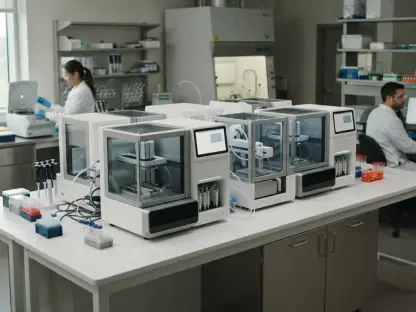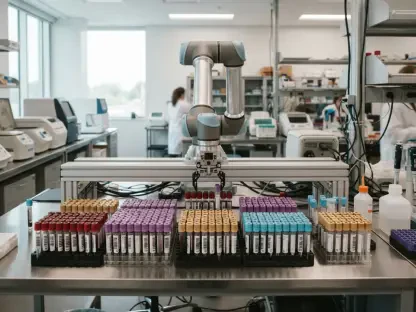

Over the past few years, applying AI to drug discovery has become a crowded, well-funded field. In antibody and protein design alone, companies building what some call AI-native design platforms include Generate:Biomedicines, Absci, Nabla Bio, Chai Discovery, BigHat Biosciences, and AbCellera, alongside broader players such as Isomorphic Labs and Insilico Medicine. Investors are paying up. In July 2026, Chai Discovery closed a $400 million Series C led by Index Ventures at a $3.8 billion valuation, for a company BioCentury describes as two years old.
A recent, smaller deal captures the moment. On November 4, 2026, MindWalk Holdings announced a multi-year agreement with Teva Pharmaceuticals Australia to deploy its data and analysis platform for a defined scope of antibody-discovery work, which MindWalk expects to generate recurring revenue.
No single arrangement defines the field. What is useful about this one is that it sits at the intersection of four shifts now reshaping how drugs are discovered: the problem has moved from generating biological data to governing it, models tuned to biology are competing with general-purpose AI, one-off projects are giving way to platform partnerships, and human scientific review is being written into the workflow rather than assumed. Each is worth examining, and each comes with caveats the marketing tends to skip.
Read on to explore four shifts reshaping AI-driven drug discovery and learn:
- Why governed biological data is becoming a strategic asset;
- How specialized AI models are changing protein and antibody design;
- Why platform partnerships are replacing one-off discovery projects;
- Where human scientific review and clinical validation remain essential.
From data scarcity to data governance
For most of its history, biology was data-poor. Now sequencing, assays, and high-throughput screening generate more information than most organizations can connect, and the harder problem is keeping it coherent across the years a program runs. Genomic data, assay results, literature, and lab outputs typically sit in separate systems, which makes institutional knowledge easy to lose between phases and hard to audit. Data quality still holds back AI. In the Pistoia Alliance’s 2025 Lab of the Future survey of more than 200 experts, 38% pointed to low-quality or poorly curated datasets as a blocker to AI, down from 52% in 2024.
Several companies are responding by building a governed data layer that ties these streams together, often paired with their own wet labs so they can test predictions in-house. Absci, Nabla Bio, and Generate:Biomedicines all combine generative models with integrated laboratory validation, and MindWalk pitches its platform in similar terms, arguing that durable value sits in the curated data layer rather than in any one model. The logic is reasonable, since models change faster than well-curated biology does. The limit is that such a layer is only as good as the data and curation behind it, which is slow and expensive work, so the benefit is real in principle but far from automatic.
Specialized models versus general-purpose AI
A recurring argument in the field is that general-purpose large language models are poorly suited to molecular biology because they lack a grasp of biological function. The alternative is models built on biological data, and the field has produced several distinct approaches: protein language models trained on sequences and structures, used by firms such as Nabla Bio; structure-prediction systems in the lineage of AlphaFold, central to Isomorphic Labs and to tools like Chai Discovery’s; and generative diffusion models, which Generate:Biomedicines uses to design proteins from scratch. The computing behind these systems has grown to match. By one account, the infrastructure behind a modern antibody-design campaign now resembles a large-language-model training run, drawing on cloud compute and AI accelerators at scale.
Whether domain-specific models reliably beat general ones is not settled. General models and specialized tools have both produced real advances, and some of the strongest results come from combining them. For antibody work, the goal is better prediction of binding affinity and specificity, where candidates succeed or fail.
A model is still only as good as the biology encoded in it, and its predictions require laboratory confirmation. Even landmark results carry that caveat. When David Baker’s lab at the University of Washington published antibodies designed from scratch with RFdiffusion in Nature in late 2025, Baker noted that the designs do not yet have clinical properties, such as sufficiently high binding affinity, to progress as a drug. Strong computational prioritization narrows the odds, but it cannot guarantee that a candidate reaches the clinic.
Platform and partnership economics
The business model is shifting alongside the science. Providers are moving away from fee-for-service projects toward platform relationships billed as recurring revenue, on the rationale that a platform grows more useful as it accumulates data across a client’s portfolio. The deal flow is real and often large. Absci has an antibody collaboration with AstraZeneca and has delivered designed candidates for Almirall, Nabla Bio has signed collaborations with AstraZeneca, Bristol Myers Squibb, and Takeda, and the MindWalk and Teva Australia agreement is a smaller, recurring-revenue version of the same pattern. Capital has followed the model, with Chai Discovery raising a $400 million round in 2026 and several peers raising large sums to fund platform-scale infrastructure.
For a pharmaceutical buyer, this resembles any build-versus-buy decision, with an added sensitivity. Biological data and discovery know-how are among a drug company’s most valuable assets, so who holds and governs that data, and on what terms it can be moved or exited, matters as much as the analytics. Recurring-revenue platforms also deepen a client’s dependence on one provider, which is a trade-off to weigh rather than a pure gain, and they serve the vendor’s revenue predictability as much as the client’s workflow.
Human oversight and the clinical test
Across the field, AI outputs are treated as hypotheses for experienced scientists to validate, not conclusions to act on directly. That human-in-the-loop posture reflects both regulatory reality and the limits of current models, and it is one reason the technology is being absorbed into existing scientific workflows rather than replacing them. Deals increasingly make this explicit. The Teva agreement, for instance, runs under the pharmaceutical company’s own security, governance, and scientific-review requirements.
The real test is clinical, and the field is only now reaching it. Generate:Biomedicines, which raised $400 million in a February 2026 IPO, has an AI-designed antibody in Phase 3 trials for asthma; Absci reported early Phase 1 data in 2026; and Insilico Medicine’s rentosertib became the first generative-AI-discovered drug to enter Phase 3. These are genuine milestones, but they are early, and most AI-designed candidates have yet to prove themselves in patients. AI in drug discovery has a track record that mixes real advances with inflated claims, and the next few years of trial readouts will settle the question more than any announcement can.
Conclusion
For business readers, the useful move is to separate the pattern from the pitch. The pattern is clear: governed biological data is becoming a strategic asset, specialized models are competing with general ones, platform and partnership deals are replacing one-off work, and human review remains central in a regulated field. Individual announcements, including the MindWalk and Teva deal, reflect these shifts rather than proving that any one company’s approach has won.
What will distinguish the winners is evidence, specifically antibodies and other molecules that move through trials and reach patients, produced faster or against targets that conventional methods could not reach. Until that evidence accumulates, the sensible posture is interest without credulity. The field is real and advancing, the economics are shifting in durable ways, and the biggest claims remain unproven. Decisions about which platform to back, or which company to believe, are best made on that basis.