
Weight loss is often celebrated as a definitive victory for personal health, yet new research suggests that the journey toward a lower number on the scale can sometimes compromise the body’s internal foundation. Ivan Kairatov, a distinguished biopharma expert with extensive experience in research and development, joins us to discuss a striking study from UC San Francisco that highlights the hidden risks of “yo-yo” dieting. By examining the long-term physical impact of weight cycling, Kairatov sheds light on why the future of metabolic health must prioritize muscle preservation over simple weight reduction. This conversation explores how repeated fluctuations in body mass can lead to significant muscle depletion and what this means for the next generation of weight-loss therapies.
How do weight fluctuations specifically alter the composition of thigh muscle compared to individuals who maintain a relatively stable body weight over time?
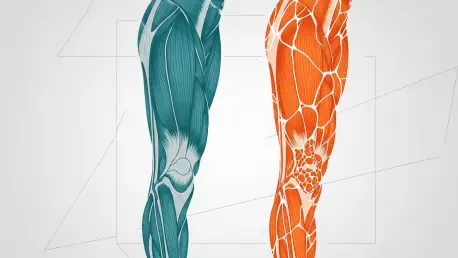
The data reveals a stark and somewhat alarming contrast between those who maintain a steady weight and those caught in a cycle of loss and gain. Over a four-year period, individuals whose weight repeatedly fluctuated lost nearly four times as much thigh muscle volume as those whose weight remained stable. We are looking at a 3.7% loss in muscle for the weight cyclers compared to a mere 1% in the stable group, even though both groups ended the study at roughly the same weight they started with. It creates a concerning biological reality where the body sheds muscle during the “down” phase but fails to regain it during the “up” phase, leading to a leaner frame that is ironically much weaker. This sensory shift toward frailty happens silently, leaving individuals with less functional power despite their efforts to manage their size.
Could you elaborate on the technology used to uncover these changes and what this data reveals about the relationship between fat and muscle quality?
To capture these subtle but profound shifts, the research team utilized artificial intelligence to analyze MRI scans from 1,433 middle-aged participants enrolled in the Osteoarthritis Initiative. This wasn’t a surface-level assessment; the AI allowed for a granular measurement of thigh muscle volume, the fat residing within those muscles, and the fat surrounding the knee joint. By processing such a massive dataset over four years, the researchers could see exactly how weight cycling degrades the structural integrity of the limb. It reveals that the “quality” of our legs isn’t just about how they look, but about the ratio of active muscle to infiltrating fat. Seeing these high-resolution changes helps us understand that weight management is a complex metabolic dance where the muscle often pays the ultimate price for instability.
Given the current explosion in GLP-1 weight-loss medications, how should this research inform our approach to these modern therapies?
Although this specific study didn’t track patients on GLP-1 drugs, the insights are incredibly timely as these medications become the new standard for obesity treatment. As more people cycle on and off these potent therapies, we must address the risk that they are losing tremendous amounts of muscle alongside the fat they wish to shed. The goal of biopharma innovation shouldn’t just be to lower a number on the scale, but to ensure that the weight lost is the “right” kind of weight. We need to be thinking about protective measures, such as incorporating resistance training or secondary therapies, to prevent the metabolic frustration of muscle loss. If we don’t protect the lean mass during these therapeutic windows, we risk trading one health crisis for another in the form of physical fragility.
Why is it crucial to look beyond the scale and consider factors like arthritis and bone health when evaluating the success of a weight-loss journey?
We have to stop viewing fat loss as a solitary metric of success and start seeing it as one piece of a much larger, intricate puzzle that includes bones, joints, and muscles. When someone loses 3.7% of their thigh muscle volume through weight cycling, they are directly undermining the support system for their knees, which can accelerate the progression of arthritis. The scale is a blunt instrument that completely ignores how weight loss ripples through the body’s structural components. If we only focus on the reduction of fat, we miss the collateral damage being done to our physical mobility and long-term skeletal health. True wellness is found in a balanced body composition where the skeletal and muscular systems are robust enough to support a healthier, lighter frame.
What is your forecast for the future of weight management and metabolic health in light of these findings?
I believe we are entering a “muscle-centric” era of medicine where the primary objective will shift from total weight loss to high-quality body composition. In the coming years, we will likely see weight-loss protocols that are inextricably linked with muscle-preserving technologies, whether through targeted nutrition, specialized exercise prescriptions, or new drug formulations. The industry will move away from the “yo-yo” trap by prioritizing the maintenance of lean tissue as the gold standard for metabolic success. Ultimately, we will define health not by how much someone has lost, but by how much of their vital, functional strength they have managed to keep. This shift will ensure that the 1,433 participants in future studies show the 1% stability rather than the nearly 4% decline we currently observe in those struggling with weight cycles.