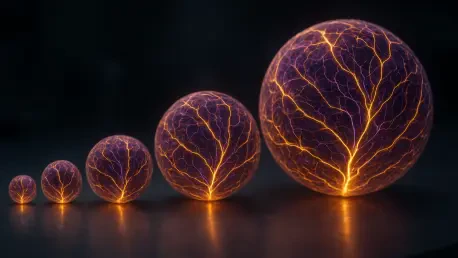

The discovery of a cell-intrinsic developmental clock suggests that laboratory-grown brain tissues record and recall their age regardless of their external environment. For years, scientists wondered if the maturation of human brain organoids was dictated by the nutrient-rich media of the petri dish or if a more profound, predetermined schedule resided within the cells themselves. These three-dimensional structures, derived from human induced pluripotent stem cells, have revolutionized the way researchers study the intricacies of the central nervous system. By mimicking the architecture and cellular diversity of a developing fetal brain, organoids offer a window into neurogenesis that was previously inaccessible. However, the observation that these miniature models transition from early neuroepithelial stages to complex neuronal networks on a timeline mirroring human gestation has shifted the focus toward internal biological timers. This internal rhythm persists even when external conditions vary, indicating a robust genetic blueprint.
Genetic Programs: The Mastery of Temporal Precision
Recent breakthroughs in single-cell RNA sequencing have allowed researchers to track the transcriptomic signatures of organoids over extended periods. This granular data reveals that the transition from progenitor cells to mature neurons follows a remarkably consistent sequence, governed by specific transcription factors that activate at precise intervals. It appears that the epigenetic landscape of the stem cells retains a memory of the developmental trajectory, ensuring that the biological clock starts ticking the moment differentiation begins. Even when these organoids are subjected to different growth factors or physical constraints, the fundamental stages of cortical layer formation remain synchronized with the natural human timeline. This level of autonomy suggests that the early stages of human brain development are far less dependent on maternal or systemic cues than previously assumed. Instead, the cells are hardwired with a temporal map that guides their maturation through months of growth in a controlled laboratory setting.
The implications of such a rigid internal schedule extend beyond basic biology into the realm of evolutionary conservation. Researchers have noted that while chimpanzee and macaque organoids follow their own species-specific timelines, human organoids consistently take longer to reach equivalent developmental milestones. This suggests that the internal clock is a defining characteristic of the species, regulating the slow, deliberate maturation process that is thought to contribute to human cognitive complexity. By comparing these divergent rhythms, scientists are identifying the specific genetic sequences responsible for slowing down the human developmental pace. Understanding how these sequences function could unlock new methods for accelerating or decelerating tissue growth in a clinical context. Furthermore, the stability of this clock provides a reliable baseline for experiments, as any deviation from the expected maturation timeline can be used as a sensitive indicator of genetic mutations or environmental toxins.
Advancing Systemic Integration and Regenerative Research
Looking forward, the ability to predict and potentially manipulate the developmental clock opens new doors for personalized medicine. By using patient-derived stem cells, clinicians can grow organoids that reflect the specific genetic background of an individual, allowing them to observe how neurodevelopmental disorders manifest over time. Because the internal clock remains intact, these models accurately reflect the window during which specific symptoms might emerge in a developing fetus or infant. This allows for the testing of interventions at precise chronological points, potentially stopping the progression of a disorder before it results in permanent structural changes. Furthermore, the consistency of the clock across different batches of organoids enhances the reliability of high-throughput drug screening. Pharmaceutical companies can now test the efficacy of a compound on specific developmental stages with the confidence that the tissue age is consistent across all samples, reducing the noise in clinical trials.
The exploration of cell-intrinsic timing moved the scientific community closer to creating standardized protocols for organoid-based research. The focus transitioned from merely growing tissue to precisely timing intervention strategies that addressed late-onset neurological conditions. Researchers began integrating microfluidic systems with organoids to simulate aging more accurately, allowing for the study of neurodegeneration in a way that respected the internal biological rhythm. These advancements facilitated a deeper understanding of how the human brain maintained its developmental trajectory across various lifespans. Moving forward, the next logical step involved the integration of these clocks into multi-organ systems to observe how different tissues synchronized their maturation. This approach provided a more holistic view of human biology and offered a roadmap for developing advanced regenerative therapies. Ultimately, the realization that cells carried their own history paved the way for more sophisticated models that respected temporal complexity.