
A therapeutic candidate conceived entirely by artificial intelligence has received a pivotal green light from the U.S. Food and Drug Administration (FDA) to begin human trials, signaling a potential paradigm shift in the protracted battle against Parkinson’s Disease. Insilico Medicine, a clinical-stage company specializing in generative AI for drug discovery, announced that its novel compound, ISM8969, has officially obtained Investigational New Drug (IND) clearance. This critical regulatory milestone moves the AI-designed molecule out of the digital and preclinical realms and into the clinical arena, igniting hope for a new generation of treatments for complex neurodegenerative disorders. The clearance not only validates the company’s pioneering approach but also sets the stage for a groundbreaking Phase I study that could reshape the future of pharmaceutical research and development for one of the world’s most challenging neurological conditions. This development represents the convergence of advanced computation and biotechnology, a synergy that promises to accelerate the journey from scientific concept to patient care.
A New Frontier in Neurological Treatment
At the heart of this medical innovation is ISM8969, a novel, orally administered therapeutic engineered to inhibit a protein complex known as the NOD-, LRR- and pyrin domain-containing protein 3 (NLRP3) inflammasome. In recent years, extensive research has implicated the hyperactivation of NLRP3 as a primary catalyst for the chronic neuroinflammation that drives the relentless progression of diseases like Parkinson’s. When overstimulated, this inflammasome triggers a destructive cascade, flooding the central nervous system with pro-inflammatory cytokines and chemokines that lead to progressive tissue and neuronal damage. The therapeutic strategy behind ISM8969 is to precisely target and suppress this pathway, thereby modulating the harmful inflammatory response. The ultimate objective is to create a more favorable environment within the brain, one that promotes neuronal survival and preserves function, potentially slowing or halting the disease’s devastating course. This targeted approach represents a significant departure from treatments that only manage symptoms, aiming instead to address a root cause of the pathology.
A distinguishing and critically important feature of ISM8969, achieved through the sophisticated AI design process, is its engineered ability to penetrate the brain. The molecule was specifically optimized to cross the formidable blood-brain barrier, a selective membrane that protects the brain but also prevents most drugs from reaching their intended targets within the central nervous system (CNS). This brain-penetrant property confers a significant advantage for treating CNS disorders and is a testament to the power of generative chemistry in solving long-standing pharmaceutical challenges. In addition to this key characteristic, the drug exhibits a balanced druggability profile and has demonstrated marked efficacy against inflammation in various preclinical disease models. Its potential was formally recognized in December 2024 when it was nominated as a best-in-class preclinical candidate, underscoring the scientific community’s confidence in its design and therapeutic promise long before it reached the precipice of human trials.
The Engine of Innovation Artificial Intelligence in Pharma
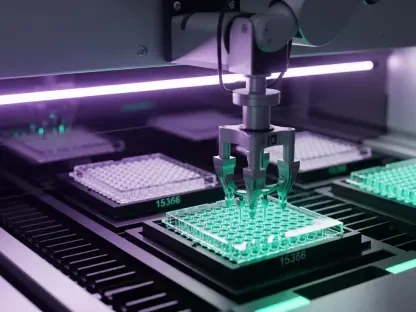
The creation of ISM8969 is a direct outcome of Insilico Medicine’s proprietary end-to-end AI platform, which includes the generative chemistry engine known as Chemistry42. This platform redefines the drug discovery process by leveraging sophisticated algorithms to design, synthesize, and test novel molecular structures with unprecedented speed and precision. Unlike conventional methods that rely on extensive screening of vast chemical libraries, this AI-driven system intelligently generates molecules tailored to specific biological targets and desired properties. The transformative impact of this technology on development timelines is profound. Where traditional early-stage drug discovery takes an average of 4.5 years to move from concept to a viable preclinical candidate, Insilico’s AI approach has consistently compressed this period to an average of just 12 to 18 months. This dramatic acceleration is not just a measure of speed but a fundamental enhancement of the entire research and development ecosystem, enabling faster progress against urgent medical needs.
This remarkable efficiency extends to resource optimization, representing a significant shift in the economics of pharmaceutical research. The company’s methodology has proven capable of identifying highly promising therapeutic candidates after synthesizing and testing only 60 to 200 molecules per program. This stands in stark contrast to conventional approaches, which often require the synthesis and evaluation of thousands of compounds, consuming vast amounts of time, materials, and capital. The platform’s robust productivity is further evidenced by Insilico’s achievement of nominating 20 distinct preclinical candidates between 2023 and the end of 2025. According to Dr. Carol Satler, Senior Vice President for Clinical Development, the company hopes to “induce a genuine paradigm shift with AI breakthrough in novel drug discovery.” This advancement of an AI-designed drug into human trials for a major neurodegenerative disease serves as a powerful validation of this vision, positioning artificial intelligence not as an auxiliary tool but as a new industry standard for inventing the medicines of tomorrow.
Charting the Course from Code to Clinic
With the FDA’s IND clearance secured, ISM8969 is now set to advance into a meticulously planned Phase I clinical trial. The primary objectives of this initial human study are to rigorously assess the drug’s safety, tolerability, and pharmacokinetic profile—the way it is absorbed, distributed, metabolized, and ultimately excreted by the body. This trial will be conducted in a cohort of healthy volunteers, a standard practice for first-in-human studies that allows for a clean evaluation of the drug’s fundamental properties without the confounding variables of an active disease state. A key outcome of this crucial phase will be the identification of the optimal dose level or range to be recommended for subsequent, more extensive investigations. These future trials will involve patients with Parkinson’s Disease, where the drug’s efficacy in treating the underlying neuroinflammation will be put to the test. The successful completion of this Phase I study is the next critical step in translating a digitally conceived molecule into a tangible therapy for patients.
To ensure the swift and comprehensive global development of ISM8969, Insilico Medicine has entered into a strategic co-development collaboration with Hygtia Therapeutics. Under the terms of this agreement, Insilico has granted Hygtia worldwide rights to conduct the full spectrum of research, development, registration, manufacturing, and commercialization activities for the drug. The partnership is structured as an equal collaboration, with both Insilico and Hygtia holding 50% of the global rights and interests in the program. As part of the arrangement, Insilico is eligible to receive up to $66 million, a sum that includes upfront payments as well as payments contingent on the achievement of specific developmental milestones. This collaboration is a component of Insilico’s larger, highly successful business strategy, which has seen the company forge partnerships with global pharmaceutical leaders like Sanofi, Lilly, and Exelixis. The significant value of these deals, with the top three license-out agreements totaling up to $2.1 billion, underscores the immense confidence the pharmaceutical industry has placed in the assets generated by Insilico’s pioneering AI platform.