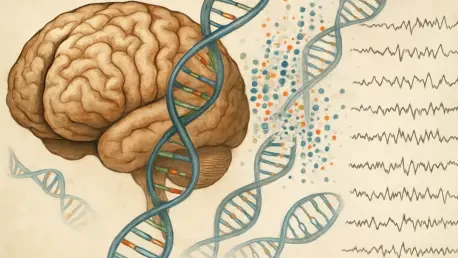

The genetic landscape of common epilepsies has long been a subject of intense investigation, yet recent breakthroughs in molecular research are finally beginning to peel back the layers of this architectural complexity. From the early twin studies of the 1930s to modern genome-wide association studies (GWAS) involving tens of thousands of participants, we are moving toward a more nuanced understanding of how polygenic risk influences seizure disorders. These insights are not merely academic; they represent a fundamental shift in how we might eventually diagnose, stratify, and treat the nearly 50 million people worldwide living with epilepsy.
The following discussion synthesizes the latest evidence regarding inheritance patterns, the convergence of rare and common genetic variants, and the significant molecular overlap between epilepsy and psychiatric conditions. By exploring the favorable heritability of specific subtypes and the challenges of ancestral diversity in genomic data, we can begin to map out a future for precision psychiatry and neurology.
Twin studies show that genetic generalized epilepsy has significantly higher concordance rates in identical twins compared to focal epilepsy. How do these distinct inheritance patterns influence your search for risk factors, and what biological mechanisms explain why one subtype is more genetically driven than the other?
The stark contrast in concordance rates—77% for monozygotic twins in genetic generalized epilepsy (GGE) versus only 40% in focal epilepsy—fundamentally changes our search strategy. In GGE, the high concordance suggests a much stronger “genetic pull,” which we now quantify as SNP-heritability being approximately three times larger than that of focal epilepsy. This high heritability informs us that GGE is a more “pure” polygenic trait, where the cumulative effect of common variants accounts for a vast portion of the risk. Biologically, GGE often involves systemic disruptions in thalamocortical circuits, whereas focal epilepsy is more heterogeneous and can be influenced by localized structural lesions or acquired brain insults. Consequently, our search for GGE risk factors focuses on global regulatory mechanisms, while focal epilepsy research must account for a more complex interplay between lower genetic loading and environmental or structural triggers.
Certain ion channel genes are implicated in both rare, high-impact mutations and common variant associations across different epilepsy types. Can you explain how these two genetic signals converge within the brain, and what are the specific steps for translating these shared pathways into new, targeted therapies?
This convergence is perhaps our most exciting find, as we see genes like SCN1A and SCN8A appearing in both ultra-rare mutation studies and large-scale GWAS. It suggests that these specific biological “highways”—primarily those governing ion channel function and the balance between excitatory and inhibitory signals—are central to epilepsy regardless of the mutation’s rarity. To translate this, we must first use functional genomics to see how common variants subtly dial the activity of these channels up or down, similar to how a rare mutation might break them entirely. Once we identify the specific protein-truncating variants, such as those in the GATOR1 complex that regulate the mTORC1 pathway, we can repurpose or design small molecules to restore that signaling balance. The goal is to move from broad-spectrum anti-seizure medications to precise modulators that target the specific synaptic or ionic dysfunction identified in a patient’s unique genomic profile.
Genetic generalized epilepsy appears to have a much more favorable ratio of heritability to polygenicity than focal epilepsy or other brain disorders. Why does this subtype yield more genetic hits despite having smaller study groups, and what metrics should researchers use to prioritize future investment in these studies?
GGE is remarkably “cost-efficient” from a research perspective because its genetic signal is concentrated rather than spread thin across the entire genome. In recent studies, just 7,407 GGE cases yielded 22 significant genetic loci, whereas more than double the number of focal epilepsy cases—16,384 to be exact—yielded no significant associations. This suggests that the genetic architecture of GGE is less “diluted” by environmental factors than focal epilepsy or even psychiatric disorders like schizophrenia. To prioritize investment, researchers should look at “explained heritability per sample unit”; our projections show that by scaling GGE studies to sizes common in other fields, we could capture 50% of the common genetic variance. This makes GGE a prime candidate for rapid discovery, as the statistical “yield” for every thousand new patients recruited is significantly higher than in almost any other area of neuropsychiatric genetics.
There is a substantial genetic overlap between epilepsy and psychiatric conditions such as schizophrenia and major depression. How can clinicians use these molecular insights to identify patients at high risk for comorbidities, and what are the practical challenges when a single variant influences multiple neurological outcomes?
The discovery that most variants associated with GGE are also linked to major psychiatric disorders explains why we so often see depression or anxiety alongside seizures at the bedside. Clinicians can begin to view these not as secondary reactions to having a chronic illness, but as different manifestations of the same underlying molecular vulnerability. However, the challenge lies in the “mixed direction” of these effects; a specific variant might increase the risk for epilepsy while actually being protective against another condition, or it might increase risk for both. This means we cannot simply use a single genetic marker to predict a patient’s entire psychiatric profile. Instead, we must develop more sophisticated cross-disorder polygenic scores that can alert a neurologist that a patient with a specific genetic profile has a high probability of developing treatment-resistant depression, allowing for earlier intervention.
Polygenic risk scores show promise for stratification, yet over 90% of current genomic data comes from populations of European ancestry. What specific measures are needed to bridge this diversity gap, and what benchmarks must these scores reach before they can be safely implemented for routine clinical decisions?
The fact that over 92% of our GWAS data comes from European-descendant individuals is a critical roadblock that prevents these scores from being equitable or accurate for the global population. To bridge this gap, we need coordinated international efforts to fund biobanks in underrepresented regions and ensure that the “All of Us” type of initiatives prioritize ancestral diversity in their recruitment. Before these scores can enter routine clinical use, they must achieve a discriminative performance that goes beyond mere statistical significance; they need to reliably predict outcomes like post-seizure risk with high sensitivity. Currently, we see a hazard ratio of 1.73 per standard deviation increase in risk scores, which is promising and comparable to tools used in cardiology, but we need more longitudinal data to prove that acting on these scores actually improves patient survival or seizure control.
Future diagnostic models may integrate genomic data with neuroimaging, electronic health records, and artificial intelligence. How would such a multimodal approach function in a real-world clinical setting, and which specific data points are most critical for improving the precision of these integrated tools?
In a real-world setting, a patient presenting with their first unprovoked seizure would not just receive an EEG, but would have their genomic data cross-referenced with their cortical thickness measurements from an MRI. AI algorithms would then pull data from electronic health records, such as early developmental milestones or previous cognitive assessments, to build a personalized risk profile. The most critical data points for precision include the specific “hotspot” loci like the 15q13.3 deletion—which carries a massive odds ratio of 36.04—combined with polygenic scores and longitudinal seizure frequency data. This multimodal “dashboard” would allow a neurologist to decide within minutes whether to start aggressive medication immediately or to monitor the patient, based on a calculated probability of recurrence and drug resistance.
What is your forecast for epilepsy genomics?
I believe that within the next decade, epilepsy genomics will transition from a tool used primarily for rare pediatric syndromes to a foundational pillar of adult neurology. We are on the verge of a “discovery explosion” where, by reaching critical mass in our sample sizes, we will map the majority of the common genetic architecture for generalized epilepsies. This will likely lead to a reclassification of epilepsy not by where the seizure starts in the brain, but by the specific molecular pathway—be it an ion channel or a synaptic protein—that is malfunctioning. Ultimately, my forecast is that “idiopathic” epilepsy will disappear from our vocabulary, replaced by precise, genetically-defined diagnoses that dictate exactly which therapy will work for which patient from day one.