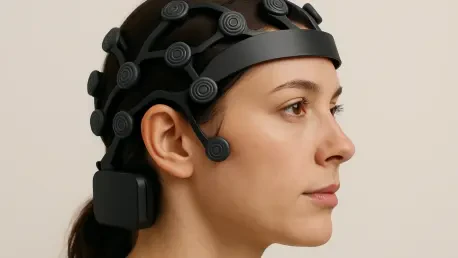

The silent architecture of the human brain often begins to shift long before a patient ever sets foot in a neurologist’s office, yet we have traditionally lacked the tools to catch these whispers of change. In 2026, the intersection of high-fidelity wearable sensors and sophisticated machine learning has finally moved beyond simple step-counting, transforming consumer smartwatches into proactive guardians of cognitive and emotional longevity. As neurological and mental health disorders now affect nearly a third of the global population, the shift from reactive clinical diagnostics to continuous, non-invasive monitoring represents a fundamental pivot in how society approaches the aging process and psychological resilience.
The Evolution of Wearable Neuro-Monitoring Systems
Wearable neuro-monitoring has transitioned from a niche academic interest to a centerpiece of the broader technological landscape. Historically, tracking brain health required intermittent, high-cost clinical interventions like MRIs or formal neuropsychological assessments, which only provide a “snapshot” of a patient’s condition. Modern systems, however, rely on the principle of continuous data acquisition, using the hardware already present on millions of wrists to build a dynamic, living map of a user’s neurological state. This evolution is driven by the urgent need to address the rising global burden of conditions like Alzheimer’s and clinical depression, which often go undetected during their most treatable early stages.
These systems do not attempt to read thoughts; instead, they analyze the physiological and behavioral “exhaust” of the brain. By monitoring how the central nervous system regulates the body in real-time, these devices identify the subtle friction caused by emerging pathology. This shift is significant because it democratizes neurological care, moving it out of the laboratory and into the context of daily life. The result is a technology that functions less like a medical test and more like a continuous background process, bridging the gap between wellness tracking and serious medical diagnostics.
Core Components and Data Synthesis Methods
Digital Biomarkers and Passive Data Streams
The efficacy of modern brain health monitoring rests on the collection of “digital biomarkers”—objective, quantifiable behavioral and physiological data captured through passive streams. Unlike traditional medical records that rely on subjective patient reporting, these streams collect data on heart rate variability (HRV), sleep architecture, and physical activity levels without requiring any active input from the user. For instance, HRV serves as a direct window into the autonomic nervous system, revealing how the brain manages stress and recovery, while fine-grained motion sensors detect changes in gait or dexterity that might signal early motor-neuron decline.
What makes this implementation unique is the move toward high-resolution longitudinal tracking. By observing these metrics over months rather than days, the technology establishes a personalized “norm” for each individual. This baseline is critical because “healthy” looks different for everyone; a heart rate or sleep pattern that is normal for one person might be a red flag for another. By focusing on deviations from the individual’s own history rather than a generic population average, these wearable systems provide a level of specificity that traditional clinical tools often struggle to match.
AI-Driven Predictive Modeling and Analysis
The true intelligence of these systems lies in their ability to synthesize multi-modal data through machine learning algorithms. Raw data from a smartwatch is essentially noise until AI-driven models identify the hidden correlations between disparate metrics. These models can determine, for example, how a specific combination of sedentary behavior and disrupted REM sleep predicts a decline in executive function several days later. Current performance metrics show an impressive 12.5% average error rate in these predictions, suggesting that the algorithms are becoming remarkably adept at forecasting internal states from external data.
This predictive modeling is a significant departure from the “if-then” logic of older health apps. Modern AI utilizes deep learning to recognize non-linear patterns, allowing it to build a holistic picture of cognitive and emotional health. While competitors might focus on a single metric like sleep duration, these advanced systems analyze the interplay between environmental triggers and physiological responses. This creates a feedback loop where the system becomes more accurate the longer it is worn, refining its understanding of the user’s unique neurological signatures and providing increasingly reliable health forecasts.
Emerging Trends in Environmental and Physiological Integration
A major shift in the industry involves the integration of external “exposome” data—factors such as air quality, ambient noise, and weather conditions—into the health algorithm. Research has increasingly shown that neurological efficiency is not isolated from the environment; for example, high levels of particulate matter can cause immediate, measurable shifts in cognitive processing speed. By layering local environmental data over physiological metrics, these systems can distinguish between a decline caused by internal health shifts and one caused by external stressors, providing a much more accurate assessment of true brain health.
Furthermore, there is a growing emphasis on “sleep variability” as a primary indicator of health, moving away from the simplistic metric of total sleep hours. Variability—the consistency of sleep onset, offset, and phase distribution—reflects the robustness of the circadian rhythm and the brain’s ability to regulate emotion. A user might sleep eight hours every night, but if the timing and quality of those hours fluctuate wildly, the AI identifies this as a sign of autonomic instability. This nuanced approach allows the technology to flag emotional dysregulation or cognitive fatigue long before the user feels “burnt out.”
Real-World Applications in Clinical and Preventive Care
In practical terms, these tools are finding their most profound application in the early detection of cognitive decline among aging populations. Projects like “Providemus alz” demonstrate how wearable data can be used to screen for Alzheimer’s risk in a community setting. By identifying subtle changes in memory-related behavioral patterns—such as increased wandering or decreased social interaction—clinicians can intervene with preventative strategies years before traditional symptoms emerge. This proactive approach is a game-changer for healthcare systems, as it shifts the focus from managing end-stage disease to preserving existing cognitive function.
Beyond aging, these systems are being deployed to manage mood disorders like depression and clinical anxiety. In these cases, the wearable acts as an objective observer, noting the physiological precursors to a depressive episode, such as a drop in physical activity or an increase in resting heart rate. For patients, this provides a sense of agency and an “early warning system” that helps them implement coping mechanisms before a crisis occurs. This integration of tech into preventive care reduces the overall burden on the healthcare infrastructure by keeping patients stable and out of emergency wards.
Critical Challenges and Technical Limitations
Despite the progress, significant hurdles remain, particularly regarding the disparity in accuracy between emotional and cognitive forecasting. Current models are much better at predicting mood (5-10% error) than they are at predicting complex cognitive functions like memory or logic (10-20% error). This gap exists because emotions have immediate, strong physiological markers, whereas cognition is a more diffuse process that is harder to pin down with current sensor technology. Relying too heavily on these scores without understanding their limitations could lead to false positives or unnecessary user anxiety.
Moreover, the “black box” nature of AI predictions poses a challenge for clinical adoption. Doctors are often hesitant to trust an algorithm if they cannot see the underlying reasoning for a high-risk alert. There are also persistent concerns regarding data privacy and the transition from “wellness” tracking to “medical” diagnostics, which involves navigating complex regulatory landscapes. Ensuring that this deeply personal neurological data is both secure and ethically used is paramount to maintaining public trust in the technology.
Future Outlook and the Paradigm of Personalized Prevention
Looking forward, the industry is moving toward ultra-long-term longitudinal studies to further sharpen the accuracy of these predictive “smoke detectors.” The goal is to move beyond 24-month windows to decade-long tracking, which would allow the AI to identify the very first biological markers of neurodegeneration. As sensor technology becomes even more miniaturized and energy-efficient, we can expect to see these monitors integrated into everything from earbuds to eyeglasses, providing a continuous, 360-degree view of the human experience.
The ultimate vision is a world where neurological shifts are caught so early that the concept of “clinical symptoms” becomes obsolete for many conditions. By treating the brain as a dynamic system that requires constant calibration rather than a static organ that only breaks once, wearable technology is paving the way for a society where mental well-being is managed with the same precision as a professional athlete’s physical performance. This shift toward personalized prevention promises to extend the “brain span” of the global population, ensuring that cognitive health matches our increasing lifespans.
Summary and Final Assessment
The transition from reactive medicine to proactive, wearable-based brain health monitoring was a necessary evolution in an era defined by neurological complexity. By synthesizing passive environmental and physiological data, these devices have proven that the indicators of our mental and cognitive well-being are hidden in plain sight, waiting for the right algorithms to decode them. The ability to forecast emotional states with high precision and provide early warnings for cognitive decline marks a significant milestone in neurotechnology. While technical limitations in cognitive accuracy and data transparency still exist, the current state of the art is already capable of providing life-changing insights for millions of users.
Ultimately, these systems had to evolve into personalized guardians that understand an individual’s unique baseline rather than relying on broad population metrics. The success of projects like “Providemus alz” showed that the path forward lies in integrating high-resolution data with long-term monitoring. For the healthcare industry, the actionable next step involved moving beyond the experimental phase and standardizing these digital biomarkers for clinical use. As these tools become more integrated into the primary care pipeline, they will likely become as standard as the blood pressure cuff, providing a critical safety net for the most complex organ in the human body.