


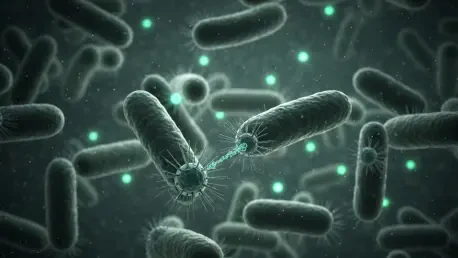

I’m Ivan Kairatov, and my work takes me deep into a world most people never see, yet it’s critical to all of us: the microbial ecosystem inside our wastewater treatment plants. For decades, we’ve thought of these facilities as simple filters, removing pollutants and a few known bacteria. But our recent research using advanced genomic sequencing paints a much more dynamic picture. We’re discovering that viruses are not just passive particles being washed away; they are active, influential players that shape the very biology of the water. This interview explores how these tiny entities can be both a tool for cleaning our water and a potential vector for public health risks like antibiotic resistance, challenging the very foundation of how we monitor water safety.
Your study describes viruses as active participants rather than “passive passengers.” Can you elaborate on the specific viral-bacterial interactions you uncovered? What was the most surprising discovery from the metagenomic sequencing that led you to this conclusion about their active role?
What we found was truly fascinating and shifts the entire paradigm. We always knew viruses were present, but the assumption was that they were just along for the ride. Our metagenomic analysis of 28 different samples across the treatment process revealed a bustling, active ecosystem. We identified a staggering 99 families of viruses constantly interacting with their bacterial hosts. The most surprising discovery was a direct link we established between viruses and bacteria in the phylum Pseudomonadota, which is home to many well-known, multidrug-resistant pathogens. These viruses aren’t just floating by; they are targeting, infecting, and exchanging genetic material with bacteria, actively influencing their evolution and function within the treatment plant itself.
The research challenges the reliability of E. coli as a biological indicator, suggesting Pseudomonas aeruginosa might be a better proxy for viral behavior. Could you walk us through how you established this correlation and what a shift in monitoring standards might look like in practice?
For years, E. coli has been the gold standard, the canary in the coal mine for water contamination. But our data showed its presence had almost no correlation with the abundance of the dominant viral communities we were tracking. It was like trying to understand wolf populations by only counting squirrels. However, when we looked at Pseudomonas aeruginosa and Aeromonas caviae, the pattern was unmistakable—their numbers rose and fell in near-perfect lockstep with the key viruses. This suggests these bacteria and viruses share a similar fate during the treatment process. In practice, a shift in standards would mean augmenting or even replacing E. coli testing with monitoring for these alternative pathogens. This wouldn’t require reinventing the wheel, but it would involve adopting new testing protocols that give plant operators a much clearer, more accurate picture of the viral risks that are currently going undetected.
You refer to viral functions as a “double-edged sword.” Could you provide a specific example of a viral gene you found that aids pollutant degradation but also poses a risk by potentially spreading antibiotic resistance? How can plant operators begin to navigate these competing outcomes?
It’s a delicate balance, and that’s exactly what makes this so complex. We identified numerous viruses carrying what we call auxiliary metabolic genes. For example, some of these genes are directly involved in breaking down tough industrial chemicals and other xenobiotics, which is a huge benefit for the cleaning process. However, we found that the same viruses carrying these helpful genes often target bacteria known for antibiotic resistance. By integrating their DNA, the virus can inadvertently make these resistant bacteria stronger or more competitive. It’s a classic trade-off. For plant operators, this means the goal can no longer be simple eradication. They need to think more like ecosystem managers, perhaps adjusting treatment conditions to favor the beneficial viral activities while disrupting the interactions that promote the spread of resistance genes.
Your team found that two viral groups, Peduoviridae and Casjensviridae, were consistently abundant through all treatment stages. Based on this persistence, could you outline the step-by-step process for how these viruses could be developed into reliable new biological indicators for treatment performance?
Their persistence is precisely what makes them so promising. The first step, which we’ve accomplished, was identifying them as consistently present from raw sewage all the way to the final, treated effluent. The next critical step is to develop targeted, rapid, and affordable molecular assays to quantify them—think of it as a highly specific headcount for these viruses. Following that, we need to conduct broader studies across different types of treatment plants to establish a baseline and correlate their abundance levels with the removal of other known pathogens and overall treatment efficiency. Once we have that robust data, we can establish a clear threshold. Plant operators could then monitor for Peduoviridae and Casjensviridae as a routine quality control check, giving them a reliable, real-time signal of how well their entire system is handling the full spectrum of viral contaminants.
What is your forecast for the future of wastewater surveillance? Based on your findings, how do you see technologies like metagenomics reshaping public health policy and water reuse safety standards over the next decade?
I believe we are on the cusp of a revolution in public health. Over the next decade, metagenomics will transition from a specialized research tool to a standard component of municipal water management. Instead of just screening for a handful of known pathogens, we will be conducting comprehensive biological audits of our water systems. This will allow us to move from a reactive to a predictive model of public health, identifying emerging threats like new antibiotic resistance genes or viral pathogens before they cause outbreaks. For water reuse, this is a game-changer. It will provide the confidence needed to safely recycle water on a massive scale by ensuring we are managing the entire microbial ecosystem, not just the few organisms we decided to look for yesterday. Our safety standards will become far more sophisticated, dynamic, and truly reflective of the complex biological reality in our water.







