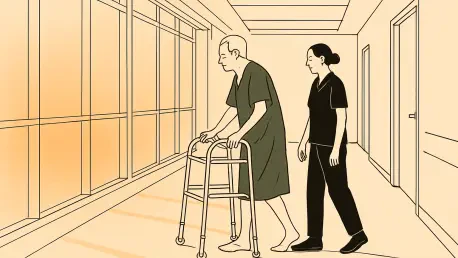

Imagine a simple stroll down the hallway revealing the future of a patient’s recovery from major hip surgery—sounds almost too straightforward to be true, doesn’t it? Yet, a pioneering study from Kyushu University in Japan has uncovered that the speed at which someone walks before undergoing total hip arthroplasty (THA), a procedure to replace a damaged hip joint, might just be the most telling predictor of their long-term success. With hip osteoarthritis impacting over 500 million people globally, causing debilitating pain and limited mobility, THA often becomes the final solution for many. However, recovery outcomes vary widely, and clinicians have long grappled with pinpointing the ideal timing for surgery. This research, published in The Journal of Bone and Joint Surgery, shifts the conversation by highlighting preoperative walking speed as a practical, reliable gauge for outcomes 5 to 10 years post-surgery, offering a fresh lens on personalized care.
This finding isn’t just a small step; it’s a potential leap forward in orthopedic practice. By focusing on a 10-meter walking test conducted the day before surgery, the study found that patients clocking at least 1 meter per second (m/s) were significantly more likely to report satisfying recovery years down the line. Unlike subjective pain assessments or static X-ray images, this metric provides an objective snapshot of physical capability. It’s a discovery that could reshape how doctors approach surgical decisions, moving away from guesswork toward measurable, everyday indicators. As this insight unfolds, it invites a deeper look into why walking speed holds such predictive power and how it could transform patient care in meaningful ways.
Why Walking Speed Matters
A New Predictor for Hip Surgery Outcomes
Preoperative Assessment
The notion that a brief walk could forecast recovery success after THA might seem surprising, but the Kyushu University study offers compelling evidence. By conducting a 10-meter walking test the day before surgery, researchers identified a critical benchmark: patients achieving a speed of at least 1.0 m/s were far more likely to experience positive outcomes 5 to 10 years later. This metric isn’t just about speed; it reflects overall physical resilience and functional capacity, elements vital to navigating the challenges of post-surgical recovery. Unlike other preoperative factors that often yield inconsistent results, this simple test emerged as a standout predictor, providing a clear, actionable insight for clinicians. Its ease of implementation means it could quickly become a routine part of evaluations, offering a window into a patient’s potential journey after surgery.
Outperforming Traditional Metrics
What makes walking speed particularly noteworthy is how it overshadows more traditional indicators like pain intensity or X-ray assessments of joint damage. Historically, these measures have guided decisions about surgical timing, yet their ability to predict long-term satisfaction has often fallen short. In contrast, the study demonstrated that gait speed consistently correlated with better patient-reported outcomes, regardless of other variables like age or symptom duration. This shift in focus from subjective or static data to dynamic, functional performance signals a broader trend in orthopedic research toward metrics that capture real-world ability. Walking speed, as a straightforward and reproducible measure, offers a practical edge, suggesting that what matters most might not be the extent of damage visible on a scan, but how a patient moves through their daily life before stepping into the operating room.
Shifting Perspectives in Orthopedic Care
Functional Metrics Over Static Data
The emphasis on walking speed reflects a growing recognition in orthopedic circles that functional assessments can reveal more about recovery potential than conventional tools. Pain reports, while important, can be influenced by personal perception, and X-ray findings often fail to account for how a patient actually feels or functions. Walking speed, however, captures a tangible aspect of physical health, serving as a proxy for strength, balance, and overall mobility—key factors in bouncing back after THA. This perspective challenges long-held assumptions, urging clinicians to prioritize observable performance over static snapshots of joint condition. It’s a pivot that could redefine preoperative planning, aligning surgical decisions more closely with a patient’s lived experience and capacity for recovery.
A Step Toward Personalized Medicine
Moreover, the reliance on walking speed aligns with the push toward personalized medicine in healthcare. Every patient brings a unique set of circumstances to the table, and a one-size-fits-all approach to THA timing often misses the mark. By integrating a metric as accessible as gait speed, doctors can tailor recommendations to individual needs, identifying who might benefit most from surgery now versus later. This approach also opens the door to targeted interventions before surgery, potentially boosting outcomes for those below the 1.0 m/s threshold. Such customization underscores the evolving nature of orthopedic care, where data-driven, individual-focused strategies aim to maximize success. Walking speed, in this light, becomes not just a predictor, but a tool for crafting more effective, patient-centered treatment plans.
Measuring Recovery Success
Patient-Reported Outcomes
Standardized Tools for Evaluation
To understand the true impact of walking speed on recovery, the Kyushu study leaned on two trusted questionnaires: the Oxford Hip Score (OHS) and the Forgotten Joint Score-12 (FJS-12). The OHS zeroes in on pain levels and hip function, while the FJS-12 gauges how aware patients are of their artificial joint and any lingering discomfort. Patients scoring at least 42 on the OHS and 50 on the FJS-12 were classified as having achieved a meaningful recovery, meeting established benchmarks for acceptable symptom states. These tools provided a robust framework for capturing patient satisfaction years after surgery, shifting the focus from clinical observations to personal experiences. Their use in the study highlights the importance of subjective feedback in assessing surgical success, offering a comprehensive picture of what recovery truly feels like for those who’ve undergone THA.
Linking Speed to Satisfaction
What’s striking from the findings is how closely preoperative walking speed tied to high scores on these questionnaires. Patients who walked at or above 1.0 m/s before surgery consistently reported better outcomes, a pattern that held across both assessment tools. This connection stood out even when other factors, such as body mass index or the length of time since surgery, were considered. It suggests that walking speed isn’t just a random data point—it’s a window into a patient’s readiness to reclaim mobility and comfort post-surgery. This consistent link reinforces the idea that physical performance before an operation can set the stage for long-term results, providing a clearer path for clinicians to predict who will thrive after THA and who might need additional support to reach similar heights.
Broader Insights on Recovery Metrics
Beyond Numbers to Real Lives
While scores and thresholds are vital, they only tell part of the story—recovery is ultimately about improving quality of life. The study’s focus on patient-reported outcomes through the OHS and FJS-12 underscores that successful THA isn’t just about a functioning joint, but about patients feeling whole again, able to move without constant reminders of their surgery. Walking speed’s predictive power ties directly to this goal, hinting at how well someone might return to daily activities or shed the burden of joint awareness. This human-centered approach to measuring success moves beyond cold metrics, emphasizing the lived impact of surgery. It’s a reminder that behind every data point is a person seeking relief and normalcy, and tools like gait speed can help ensure their journey post-surgery aligns with those hopes.
Consistency Amidst Complexity
Recovery after THA is influenced by a web of factors—age, overall health, and even psychological readiness all play a role. Yet, amidst this complexity, walking speed emerged as the sole consistent predictor of positive outcomes across both questionnaires in the study. Other variables, while relevant in specific cases, lacked the same reliability, often varying in their influence from one patient to another. This standout finding cuts through the noise, offering a singular, dependable marker that clinicians can lean on. It simplifies an otherwise intricate decision-making process, providing a focal point for evaluating surgical candidacy. As orthopedic care continues to navigate the multifaceted nature of recovery, having such a steady indicator could prove invaluable in streamlining approaches to patient assessment and care planning.
Implications for Clinical Practice
Shaping Future Care
Practical Integration Into Routine Evaluations
The beauty of walking speed as a predictor lies in its simplicity, making it a feasible addition to preoperative assessments for THA. Unlike complex diagnostics or subjective pain scales, a 10-meter walking test requires minimal equipment and time, yet yields powerful insights. Clinicians could easily incorporate this measure into routine checkups, using the 1.0 m/s threshold as a guide to determine surgical timing. This practicality means that hospitals and clinics, regardless of resource levels, can adopt this approach without overhauling existing protocols. It’s a low-barrier tool with high potential impact, capable of refining how decisions are made about who undergoes surgery and when. As this metric gains traction, it could become a standard step in preparing patients, ensuring that each case is evaluated with a clear, objective benchmark in mind.
Enhancing Decision-Making for Surgeons
Beyond just integration, walking speed offers a way to sharpen clinical decision-making in a field where uncertainty often looms large. Surgeons frequently face dilemmas about whether a patient is ready for THA or if delaying surgery might yield better results. With gait speed as a reliable indicator, there’s now a concrete data point to inform those tough calls. A patient falling below the critical threshold might be flagged for further evaluation or preparatory care, while those meeting or exceeding it could proceed with greater confidence in their recovery prospects. This added layer of clarity reduces guesswork, aligning surgical plans more closely with likely outcomes. It’s a shift that empowers medical teams to act with precision, potentially sparing patients from suboptimal timing and fostering better long-term results through informed, evidence-based choices.
Pre-Surgery Interventions
Building Speed to Boost Outcomes
One of the most exciting possibilities arising from this research is the potential for preoperative rehabilitation programs tailored to improve walking speed. For patients who test below the 1.0 m/s mark, targeted interventions—such as physical therapy focused on strength and gait training—could help them cross that threshold before surgery. These programs wouldn’t just aim to enhance speed; they’d build overall physical resilience, better equipping individuals to handle the demands of recovery. Such proactive steps could make a tangible difference in outcomes, turning a concerning preoperative metric into an opportunity for improvement. By addressing mobility limitations upfront, clinicians might set the stage for smoother recoveries, reducing variability in results and helping more patients achieve the satisfying post-surgical life they envision.
Long-Term Benefits of Early Action
Taking action before surgery to optimize walking speed doesn’t just offer immediate gains; it could reshape the entire recovery trajectory. Patients who undergo these interventions may enter the operating room in stronger physical condition, which often correlates with faster healing and fewer complications. Moreover, establishing a foundation of improved mobility pre-surgery might encourage sustained activity afterward, reinforcing long-term joint health and functionality. This forward-thinking approach reflects a broader shift toward preventive and preparatory care in orthopedics, where the focus isn’t solely on the procedure itself but on the full continuum of a patient’s journey. As research continues to validate such strategies, the hope is that more individuals undergoing THA will benefit from tailored plans that start well before the surgeon’s scalpel, paving the way for enduring success.
Reflecting on a Path Forward
Paving the Way for Enhanced Strategies
Looking back, the Kyushu University study carved out a significant milestone in orthopedic research by spotlighting preoperative walking speed as a key predictor of recovery after THA. Its identification of the 1.0 m/s threshold provided a practical yardstick that stood firm against a backdrop of variable factors. Moving forward, the challenge lies in translating this insight into actionable change—encouraging widespread adoption of gait testing in clinical settings. Hospitals and care teams might consider pilot programs to refine how this metric is applied, ensuring it complements existing protocols. Additionally, investing in pre-surgery rehab initiatives could amplify the benefits, giving patients a head start on their recovery. As the field evolves, continued exploration of functional predictors like walking speed promises to refine surgical timing and care, ultimately lifting outcomes for countless individuals battling hip osteoarthritis.