
The meticulous and often grim process of postmortem examination, a cornerstone of forensic science for centuries, is undergoing a profound transformation driven by the integration of advanced medical imaging technology. For generations, the scalpel has been the primary tool for uncovering the secrets held by the deceased, but today it is being joined by the high-resolution power of computed tomography (CT) scanners. This technological evolution has given rise to the virtual autopsy, a non-invasive method that creates a detailed, three-dimensional digital model of a body. Far from rendering the traditional autopsy obsolete, this innovation serves as a powerful complementary tool, enhancing the accuracy, objectivity, and efficiency of death investigations. By combining the strengths of both a hands-on physical examination and sophisticated digital analysis, forensic pathology is entering a new era where the path to uncovering the truth is clearer and more comprehensive than ever before. This hybrid approach promises to not only solve complex cases with greater precision but also to align the practice with modern ethical and societal expectations.
A New Diagnostic Paradigm
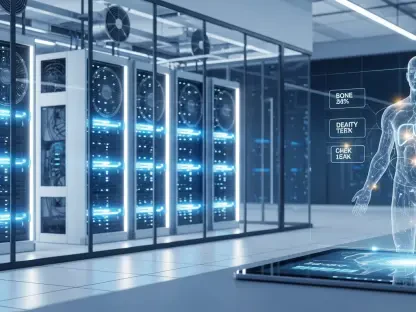
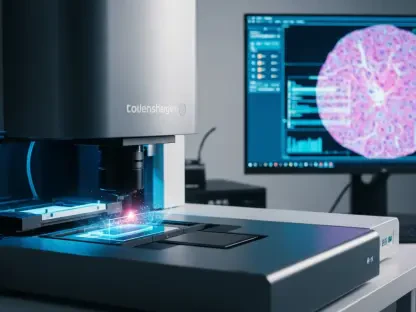
At its core, a virtual autopsy involves using a CT scanner to capture thousands of cross-sectional images of a body, which are then compiled by a computer to create an interactive 3D model. This digital rendering allows a forensic pathologist to conduct a “virtual dissection,” meticulously exploring the body’s internal structures without making a single incision. They can peel back layers of tissue, isolate organ systems, and rotate the skeletal structure to examine it from every conceivable angle. This shift from a purely physical procedure to one that begins with digital analysis represents a fundamental change in the forensic workflow. It introduces an unprecedented level of detail and a non-destructive method of initial examination, preserving the body’s original state while providing a wealth of preliminary information. This technological integration is not merely an upgrade; it is a redefinition of how postmortem investigations are initiated and conducted, offering a more nuanced and less invasive gateway to understanding the cause and manner of death.
Beyond its diagnostic capabilities, the virtual autopsy introduces a critical layer of objectivity and permanence to the forensic process. A traditional autopsy is inherently subjective, relying heavily on the individual pathologist’s skill, experience, and interpretation, with findings documented through notes and photographs. In contrast, the data from a PMCT scan is a complete, unalterable digital record of the body at a specific moment in time. This digital file can be securely stored indefinitely, reviewed by multiple experts for second opinions or quality assurance, and used as a powerful educational tool for training the next generation of forensic specialists. Furthermore, the clear, unambiguous visual evidence generated by 3D reconstructions can be presented in court, making complex pathological findings more accessible and understandable to judges and juries. This enhanced level of transparency and reproducibility strengthens the integrity of the entire medicolegal system, ensuring that evidence is not only discovered but also robustly and objectively documented.
Unveiling Hidden Evidence with Advanced Imaging
One of the most celebrated advantages of postmortem computed tomography lies in its unparalleled ability to detect complex and subtle bone fractures that are often missed during a conventional autopsy. In anatomically intricate regions such as the cranium, facial bones, and pelvic girdle, fine fracture lines can be easily obscured by soft tissue swelling, internal bleeding, or the sheer difficulty of physical dissection in these areas. PMCT bypasses these physical barriers entirely. Its high-resolution imaging and three-dimensional reconstruction capabilities allow examiners to virtually “clean” the skeleton of overlying tissues and inspect it with meticulous detail. This process can reveal hairline cracks, depressed fractures, and the precise pattern of fragmentation, providing crucial insights into the nature and direction of the force applied. This level of skeletal detail is a significant leap forward, particularly in cases involving blunt force trauma, child abuse, or gunshot wounds, where accurately mapping every fracture is vital to reconstructing the event.
The logistical and societal benefits of incorporating PMCT into forensic practice are equally compelling. The scanning process itself is remarkably swift, often taking less than an hour, a stark contrast to the several hours required for a full traditional autopsy. This speed is a critical asset in mass fatality incidents, such as plane crashes or natural disasters, where the rapid identification of victims and documentation of injuries are paramount for both investigative and humanitarian reasons. Moreover, the non-invasive nature of the virtual autopsy addresses profound ethical and cultural considerations. For families whose religious or personal beliefs prohibit invasive procedures, PMCT offers a respectful alternative that can still provide essential answers. This alignment with societal values helps to reduce the distress of bereaved families and fosters greater public trust in the forensic process, demonstrating that the pursuit of justice can be conducted with compassion and sensitivity.
The Enduring Value of Traditional Examination
Despite the revolutionary power of imaging technology, the traditional autopsy remains an indispensable component of a thorough death investigation due to its unique strengths, particularly in the analysis of soft tissues. While PMCT excels at visualizing dense structures like bone, its ability to differentiate subtle variations in soft tissues—such as organs, muscles, and skin—is more limited. A pathologist’s direct visual and tactile examination is still the gold standard for assessing organ pathology, identifying the subtle color changes associated with bruising (contusions), and evaluating damage to ligaments and blood vessels that may be crucial to understanding the full context of an injury. The texture, consistency, and smell of tissues can provide vital clues that a scanner simply cannot detect. This hands-on assessment is essential for a complete picture, ensuring that evidence hidden within the body’s softest components is not overlooked in the digital analysis.
Furthermore, the physical autopsy is the only method for collecting the biological samples necessary for ancillary laboratory testing, which is often the key to solving a case. Imaging can identify abnormalities, but it cannot determine their underlying cause at a microscopic or chemical level. Tissue samples must be taken for histological analysis to differentiate between ante-mortem injuries and post-mortem artifacts, identify disease processes like cancer or infection, and estimate the age of an injury. Similarly, toxicology requires samples of blood, urine, and vitreous humor to detect the presence of drugs, alcohol, or poisons. In cases of suspected infection, microbiological cultures are necessary. These essential diagnostic procedures are entirely dependent on the physical collection of evidence, underscoring the fact that a complete forensic investigation often extends far beyond what can be seen, either with the naked eye or on a computer screen.
Forging a Hybrid Future
The consensus emerging within the global forensic community advocates not for a replacement of one method with another, but for a synergistic integration of virtual and traditional autopsies into a unified, hybrid workflow. This integrated model, which is quickly becoming the new gold standard in forensic medicine, leverages the distinct advantages of each technique to produce a more comprehensive and defensible investigative outcome. The process typically begins with a full-body PMCT scan, which serves as a non-invasive primary survey of the deceased. This initial digital exploration acts as a “roadmap,” allowing the forensic pathologist to identify key areas of injury, detect hidden fractures, and gain a holistic understanding of the body’s condition before any physical intervention. This approach ensures that the subsequent traditional autopsy is not a blind exploration but a targeted, evidence-guided procedure.
Following the virtual autopsy, the pathologist can conduct a more focused physical examination. The findings from the PMCT scan direct the dissection, enabling the examiner to concentrate on specific areas of interest to confirm digital findings, assess associated soft tissue damage, and collect necessary biological samples for further analysis. This two-step process mitigates the individual weaknesses of each method; the virtual autopsy provides a comprehensive and objective skeletal overview, while the traditional autopsy offers detailed soft tissue analysis and the means for laboratory testing. By combining these powerful tools, forensic experts created a more robust, accurate, and efficient system of investigation. This hybrid model represented a forward-looking path that balanced technological innovation with the irreplaceable value of hands-on examination, ultimately enhancing the pursuit of truth and justice.