
The daunting reality for thousands of individuals is that a diagnosis of end-stage liver failure begins a desperate race against time, a wait for a life-saving organ that, for many, will never arrive. This critical shortage of donor organs has created a persistent crisis in modern medicine, with over 12,000 patients in the United States currently on the waiting list for a liver transplant. To address this profound unmet need, a groundbreaking research initiative at the University of California San Diego is pioneering a solution that could render organ waiting lists obsolete. Bolstered by a substantial grant of up to $25.8 million from the Advanced Research Projects Agency for Health (ARPA-H), this ambitious project aims to harness the power of 3D bioprinting to create fully functional, patient-specific human livers. The ultimate vision is to produce “made-to-order” organs grown from a patient’s own cells, a breakthrough that would not only provide a limitless supply of organs but also eliminate the lifelong need for immunosuppressant drugs that prevent rejection.
The Team and the Technology
A Multidisciplinary Approach
At the helm of this monumental endeavor is Professor Shaochen Chen, a distinguished expert in 3D bioprinting from the UC San Diego Jacobs School of Engineering, whose work represents the culmination of more than two decades of dedicated innovation. Recognizing that a challenge of this magnitude cannot be solved in isolation, he has assembled a comprehensive, multidisciplinary team of specialists from across the university. This collaborative powerhouse integrates profound expertise in liver biology, advanced liver imaging techniques, the complexities of hepatobiliary surgery, and the sophisticated application of artificial intelligence. This ensures a holistic and deeply integrated approach to the problem. Key collaborators such as Dr. Gabriel Schnickel, chief of the Division of Transplantation and Hepatobiliary Surgery, provide invaluable clinical insight, while researchers David Berry, Ahmed El Kaffas, and Padmini Rangamani contribute specialized knowledge essential for replicating the liver’s intricate biological systems, ensuring the final product is not just a structure, but a living, functioning organ.
Further fortifying the initiative is a crucial strategic partnership with Allele Biotechnology, a San Diego-based company with profound expertise in personalized stem cell generation and the large-scale manufacturing of diverse cell types essential for the bioprinting process. This collaboration is instrumental in bridging the gap between laboratory-grade experimentation and clinical-grade reality. Allele Biotechnology, under the leadership of CEO Jiwu Wang, provides critical infrastructure, including specialized cell manufacturing facilities that operate under the strict Good Manufacturing Practice (GMP) standards required by regulatory agencies. This ensures that the cells used in the bioinks are safe, consistent, and suitable for human transplantation. The company’s role is not merely as a supplier but as an integral partner in developing the robust, scalable, and reproducible processes that will be essential to transition this revolutionary technology from a research concept into a life-saving medical therapy available to patients in need across the country.
High-Speed, AI-Enhanced Bioprinting
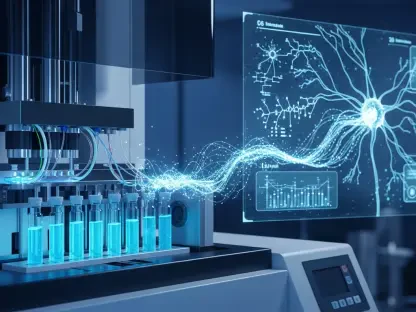
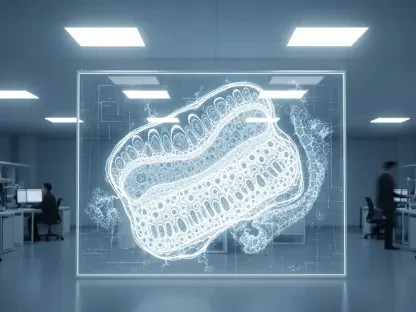
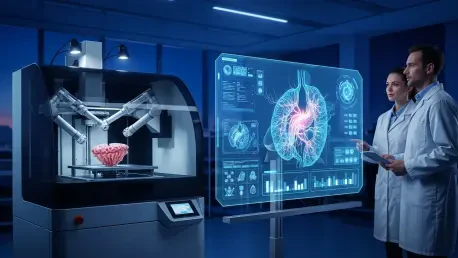
The core technology developed by Professor Chen’s laboratory represents a significant departure from conventional 3D printing methodologies, which typically involve the slow, layer-by-layer extrusion of material. Instead, this innovative system employs digitally controlled patterns of light to rapidly solidify cell-laden biomaterials, commonly referred to as “bioinks.” This light-based approach allows for unprecedented fabrication speed, enabling the construction of complex, multi-cellular biological tissues in a matter of seconds rather than the hours required by traditional methods. More importantly, this technique provides the nano-scale precision necessary to replicate the fine microarchitecture of living organs. This includes the intricate arrangement of different cell types and, most critically, the highly complex and essential networks of blood vessels that are vital for supplying nutrients and oxygen. This ability to meticulously recreate the natural structure of liver tissue is a fundamental requirement for ensuring the printed organ can perform its myriad metabolic and detoxification functions once transplanted into a patient.
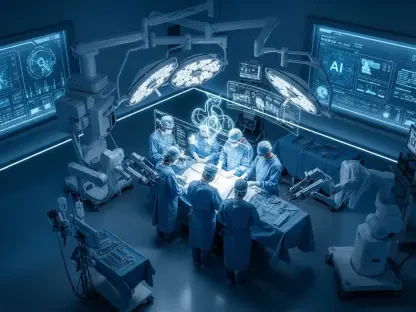
A recent and pivotal advancement in this bioprinting platform has been the sophisticated integration of artificial intelligence into both the design and manufacturing processes, tackling one of the greatest obstacles in tissue engineering. The challenge of scaling up from small tissue samples to full-sized, transplantable organs has long been hindered by the inability to engineer the sophisticated vascular networks required for the organ’s survival and function. To overcome this, the research team is leveraging AI algorithms to design and optimize these complex vascular trees, ensuring that every part of the printed liver receives adequate blood supply. The AI helps model the branching patterns and vessel diameters needed to sustain a large tissue mass, a task that is virtually impossible to achieve through manual design alone. This synergy of high-speed bioprinting and AI-driven design is the key that may finally unlock the potential to manufacture viable, full-scale human organs capable of being successfully transplanted.
The Journey and the Destination
Building on Years of Breakthroughs
The scientific foundation for this ambitious project was meticulously solidified through years of progressive research that pushed the boundaries of what was thought possible in tissue engineering. Professor Chen’s team systematically refined both the bioprinting process itself and the complex composition of the bioinks required to not only structure but also sustain living human cells throughout fabrication and beyond. A major milestone was achieved in 2016 when the lab successfully demonstrated the ability to print lifelike human liver tissue models. Although these initial constructs were only a few millimeters in size, they remarkably replicated the complex hexagonal structures and diverse biological functions of a real human liver, including protein production and detoxification capabilities. A crucial aspect of this success was the pioneering use of human induced pluripotent stem cells (iPSCs). By deriving these versatile stem cells from a patient’s own skin or blood cells, the resulting printed tissue becomes a perfect genetic match to the recipient, a feature that virtually eliminates the risk of immune rejection that plagues traditional organ transplantation.
Following these initial laboratory successes, the technology was strategically advanced toward real-world application through its commercialization by a startup company, Allegro 3D, which has since become part of the global bioprinting leader Cellink. This transition was a critical step in maturing the system from an experimental, one-of-a-kind prototype into a robust and reliable industrial-scale platform. This commercial development phase helped to standardize the hardware, software, and bioink formulations, making the technology more accessible and reproducible for researchers worldwide. More importantly, it enabled the engineering of systems capable of producing much larger and more structurally complex tissues, laying the essential groundwork for the current project’s goal of printing a full-sized human liver. This journey from academic breakthrough to industrial platform demonstrates the a clear and deliberate pathway the research has taken, positioning it for its ultimate and most impactful application: solving the organ shortage crisis.
The Promise of On-Demand Organs
If successful, the project’s impact would be nothing short of transformative for the field of medicine and for the countless patients awaiting a second chance at life. It promises to establish an on-demand, potentially inexhaustible supply of functional liver tissue for transplantation, a development that could effectively save the lives of the thousands of patients who die each year while on the U.S. waiting list. As Professor Chen articulated, while many people associate 3D printing with the creation of simple gadgets or prototypes, its true and most profound potential lies in its ability to address monumental human challenges like the organ shortage. The ability to print living, functional human organs that can restore health and quality of life has long been considered the “holy grail” of the field. This research brings that ultimate goal closer than ever, moving the technology from the realm of science fiction into the tangible world of clinical possibility, offering a permanent solution where previously there was only a desperate wait.
The success of this initiative had signaled a paradigm shift in transplant medicine, offering a future finally free from the severe constraints of donor organ scarcity. The medical community, as noted by Dr. Gabriel Schnickel, had long dreamed of a day when organ failure would no longer be a death sentence dictated by the availability of a matching donor, and this work had effectively turned that “aspiration to reality.” The unique and highly collaborative research environment at UC San Diego, with its world-class engineering and medical schools situated in close proximity, was cited as a key factor that enabled this pioneering research to thrive. This integrated ecosystem fostered the cross-disciplinary innovation necessary to tackle such a complex biological and engineering challenge, solidifying a new standard for how regenerative medicine could directly address some of the most persistent and devastating health crises.