
Every thirty seconds, a clinician somewhere in the world stares at a cryptic electrocardiogram, desperately searching for the subtle clues of a hidden heart attack that could cost a patient their life. This high-stakes environment is where the traditional diagnostic framework often falters, particularly regarding the “blind spot” of modern cardiology: Occlusive Myocardial Infarction (OMI). While the long-standing ST-elevation (STEMI) protocol has served as the gold standard for decades, it fails to capture a significant percentage of patients who suffer from total coronary artery blockages without showing the classic electrical spikes on a monitor. These patients often face dangerous delays in treatment, waiting for blood tests or secondary symptoms while heart tissue remains deprived of oxygen.
The current digital shift in diagnostics is transforming this landscape, positioning artificial intelligence (AI) algorithms as a vital bridge between human clinical judgment and precision emergency medicine. By analyzing complex waveforms with superhuman speed, AI-ECG tools identify patterns that elude even the most seasoned cardiologists. This evolution is not merely about replacing human eyes but about enhancing them with a level of precision that was previously unreachable in a high-pressure emergency department setting. The integration of these algorithms marks the beginning of an era where diagnostic “certainty” is no longer a luxury of hindsight but a real-time clinical reality.
This analysis explores the trajectory of this technological surge, examining the market growth and the staggering diagnostic accuracy revealed in recent clinical trials. It further details the transition of these tools into smartphone-based interfaces that empower frontline medical staff. By incorporating expert perspectives and looking toward the future of remote cardiac monitoring, this exploration outlines how machine learning is redefining the very definition of a heart attack and setting a new global standard for patient safety.
The Evolution of AI-ECG Integration and Market Adoption
Data-Driven Growth and Diagnostic Accuracy Trends
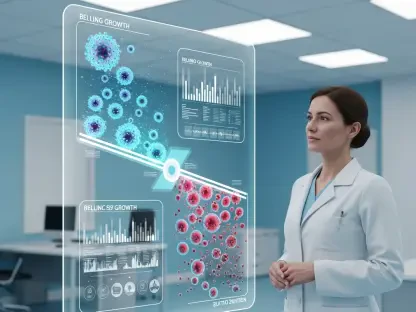
The adoption of artificial intelligence within emergency departments is no longer a theoretical projection; it is a rapidly accelerating market reality. Current industry data suggests a significant surge in the AI-cardiology sector as healthcare systems prioritize technologies that reduce door-to-balloon times. This growth is fueled by a fundamental shift in medical philosophy, moving away from rigid, ST-elevation-dependent protocols toward more fluid, AI-enhanced OMI detection. Recent presentations at major cardiovascular congresses have underscored this transition, revealing that traditional methods often miss up to half of all acute occlusions.
When examining diagnostic metrics, the disparity between human interpretation and algorithmic performance is profound. In recent clinical evaluations, AI models demonstrated an accuracy of 84% in identifying occlusions in patients who did not present with traditional ST elevation. In contrast, human clinicians following standard protocols achieved an accuracy of only 42% for the same patient subset. This gap highlights a critical vulnerability in current care: the reliance on visual patterns that simply do not appear in every case of total arterial blockage. Furthermore, AI achieved a specificity of 99%, nearly eliminating the risk of false positives that could otherwise overwhelm busy catheterization laboratories.
Real-World Applications: Smartphone-Based Implementation
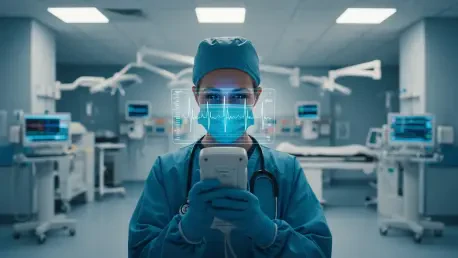
The deployment of CE-certified algorithms in clinical settings, such as the comprehensive research conducted at Central Hospital Bolzano, illustrates the practical utility of these tools. This specific study followed nearly 1,500 patients who presented with symptoms of acute coronary syndrome but lacked the definitive markers of a major heart attack. By utilizing a smartphone-based interface, medical staff were able to obtain an immediate “second opinion” that identified life-threatening occlusions with 77% sensitivity. This level of accessibility ensures that precision medicine is no longer confined to specialized cardiac centers but is available at the initial point of contact in any emergency room.
Transitioning AI tools from mainframe hospital systems to portable, smartphone-based applications represents a democratization of advanced cardiac care. Frontline medical staff, including paramedics and general nurses, can now utilize high-level diagnostic intelligence during the “Golden Hour”—the critical sixty-minute window where intervention is most effective. This mobility allows for a triage process that is both faster and more accurate, ensuring that patients with “silent” occlusions are prioritized for invasive procedures before irreversible damage occurs. The ability to rule out occlusive MI with a 98% negative predictive value provides clinicians with the confidence to manage lower-risk patients without unnecessary invasive testing.
Expert Perspectives on the AI-Clinical Synthesis
Leaders in the field, including Dr. Federico Nani, emphasize that artificial intelligence should be viewed as a sophisticated “second opinion” rather than a replacement for the cardiologist’s intuition. The consensus among medical professionals is that AI excels at detecting morphological nuances in ECG tracings that the human brain is not wired to perceive. However, the synthesis of this data with the patient’s clinical history and physical symptoms remains a uniquely human responsibility. This partnership between machine precision and human empathy is what defines the next generation of cardiovascular care.
The European Society of Cardiology has mirrored this sentiment, placing digital transformation at the forefront of its upcoming strategic initiatives. The prevailing theme emphasizes the power of AI to support disease management across the entire spectrum of care, from acute diagnosis to long-term recovery. However, experts also caution that widespread adoption must be tempered with rigorous multi-center validation. While initial results are promising, the medical community requires evidence that these algorithms perform consistently across diverse patient populations and varying clinical environments. Establishing ethical frameworks for machine-led diagnoses remains a priority to ensure transparency and accountability in automated decision-making.
The Future of AI-Driven Cardiovascular Care
Looking forward, artificial intelligence is poised to redefine the very diagnostic definition of a “heart attack” by moving beyond the binary classification of ST-segment changes. Future diagnostic criteria will likely focus on the presence of occlusion as identified by algorithmic pattern recognition, rather than a single electrical marker. This shift could significantly reduce the incidence of “missed” heart attacks and lead to a more nuanced understanding of coronary pathology. As algorithms become more refined, they will likely be integrated into universal clinical guidelines, though this will require navigating complex regulatory hurdles and ensuring robust data privacy protections.
The implications for rural and under-resourced medical facilities are particularly profound. In areas where specialized cardiologists are not readily available on-site, AI-ECG tools can bridge the expertise gap, providing life-saving diagnostic support to general practitioners. Beyond the acute setting, the evolution of these tools will likely extend into long-term remote monitoring and preventative diagnostics. Wearable devices equipped with medical-grade AI could alert patients to subtle cardiac changes days before a major event occurs, transforming heart care from a reactive emergency response into a proactive, preventative discipline.
A New Standard in Heart Attack Detection: Moving Beyond the ST-Segment
The collective research and clinical evidence demonstrated that AI-ECG algorithms provided a superior method for identifying cardiac occlusions that remained invisible to the human eye. By achieving high accuracy and sensitivity in non-ST elevation cases, these tools filled a dangerous gap in emergency protocols. The study at Central Hospital Bolzano confirmed that integrating machine learning into the initial triage phase significantly reduced diagnostic delays. This technological shift represented a move away from legacy systems that relied on a single, often absent, electrical marker of heart distress.
Medical professionals and regulatory bodies realized that the convergence of machine learning and clinical practice was the only viable path toward universal cardiac safety. The validation of these algorithms proved that diagnostic accuracy could be scaled across different levels of medical facilities, regardless of the immediate availability of a specialist. As the healthcare industry moved forward, the implementation of AI became the primary strategy for reducing mortality rates associated with occlusive myocardial infarction. These advancements successfully established a new gold standard where technology served as the silent, vigilant partner to the clinician.