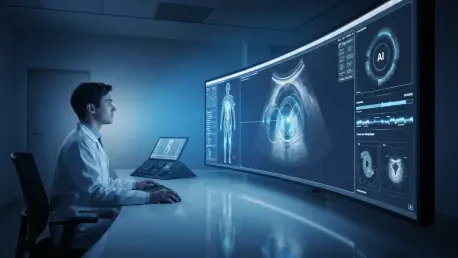

A strategic partnership expansion between global med-tech leader Siemens Healthineers and the world-renowned Mayo Clinic is set to forge a new path in healthcare, directly addressing some of the most persistent challenges in modern medicine. This powerful collaboration aims to harness cutting-edge artificial intelligence, advanced medical imaging, and novel therapeutic platforms to revolutionize the diagnosis and treatment of complex conditions such as neurodegenerative diseases, prostate cancer, and metastatic liver tumors. By combining Siemens Healthineers’ engineering prowess with Mayo Clinic’s deep clinical and research expertise, the initiative is poised to accelerate the development and integration of precision medicine. The core objective is to create more effective, highly personalized, and less invasive patient care pathways, moving beyond a one-size-fits-all approach to treatments that are tailored to the unique biological and anatomical characteristics of each individual, heralding a new era of data-informed healthcare.
Redefining Diagnostics with Artificial Intelligence
A New Frontier in Neurology
The collaboration is making significant strides in neurology, where the early and accurate diagnosis of neurodegenerative diseases remains a formidable challenge. A central pillar of this effort involves the development of sophisticated, AI-enhanced magnetic resonance imaging (MRI) protocols designed to identify subtle structural and functional changes in the brain that are often imperceptible with conventional methods. These advanced machine learning models are trained on vast datasets of neurological images, empowering them to detect the earliest pathological markers associated with conditions like Alzheimer’s and Parkinson’s disease. This capability not only facilitates a much earlier diagnosis but also provides clinicians with a dynamic tool for meticulously monitoring disease progression and a patient’s response to therapy. By enabling more timely and effective clinical interventions, this technology promises to transform patient outcomes and deepen the scientific understanding of these complex disorders.
A New Frontier in Oncology
In the realm of oncology, the partnership is focused on overcoming the limitations and discomfort associated with traditional diagnostic methods, particularly for prostate cancer. The initiative is exploring innovative AI-driven strategies aimed at reducing the reliance on invasive biopsies, which carry risks of complications and cause significant patient anxiety. By synergizing advanced imaging modalities with intelligent algorithms, clinicians aim to non-invasively detect and characterize prostate tumors with a much higher degree of accuracy and confidence. This intelligent, image-based approach is designed to streamline the entire diagnostic process, making it safer, more efficient, and more comfortable for the patient. The integration of AI allows for a more detailed analysis of tumor characteristics without physical tissue sampling, promising to mitigate procedure-related issues and provide a clearer path for subsequent treatment planning, ultimately making the patient journey less arduous.
Transforming Treatment with Advanced Therapeutic Platforms
From Virtual Rehearsal to Precision Intervention
This strategic alliance extends its innovative reach beyond diagnostics to fundamentally transform therapeutic procedures, placing a strong emphasis on minimally invasive techniques and enhanced surgical planning. A truly groundbreaking aspect of the collaboration is the application of digital twin technologies in surgical care. This involves creating highly detailed, dynamic virtual models of individual patients based on their unique anatomical and physiological data derived from advanced imaging. These high-fidelity simulations provide a risk-free virtual environment where surgeons and their teams can meticulously plan and rehearse complex procedures before ever entering the operating room. By optimizing surgical strategies and anticipating potential challenges, this technology aims to significantly reduce surgical risks, streamline operating room workflows, and enhance overall patient safety and clinical outcomes. This forward-thinking approach marks a paradigm shift from conventional surgical preparation to a highly personalized, data-driven rehearsal.
Pioneering Centers for Next-Generation Imaging
To further enhance therapeutic precision, particularly for the treatment of metastatic liver tumors, the initiative is focused on establishing state-of-the-art interventional suites. These advanced clinical environments are designed to integrate real-time, high-resolution imaging directly into the therapeutic process itself. This seamless integration allows interventional radiologists to precisely navigate to and target metastatic lesions with minimally invasive tools, such as those used for ablation. By delivering localized treatments with exceptional accuracy, this image-guided approach maximizes the destruction of cancerous tissue while minimizing collateral damage to surrounding healthy liver parenchyma. The result is a more effective treatment with fewer side effects, leading to better patient outcomes and faster recovery times. This focus on image-guided intervention exemplifies the partnership’s commitment to developing safer, more targeted, and more effective cancer therapies that improve both the quality and duration of life.
Building the Future of Medical Innovation
Pushing the Boundaries of Imaging Technology
To foster rapid technological advancement and ensure a continuous pipeline of innovation, Siemens Healthineers and Mayo Clinic are co-developing dedicated, cutting-edge research and clinical centers. A cornerstone of this effort is the establishment of an Ultra-High-Field MRI Innovation Center. This facility will house MRI scanners with magnetic field strengths significantly greater than those of conventional clinical systems, providing unprecedented spatial resolution and enhanced contrast sensitivity. This technological leap will enable clinicians and researchers to visualize the intricate structures of the brain and other organs with extraordinary clarity. The expected impact is a dramatic improvement in diagnostic precision for complex neurological disorders, a deeper understanding of their underlying mechanisms, and a refinement in the planning for highly intricate neurosurgical procedures, pushing the boundaries of what is possible in medical imaging.
The Dawn of Theranostics
Another pioneering facility, the Whole Body PET/CT and PET/MR Innovation Center, is dedicated to advancing the field of “theranostics,” which uniquely integrates diagnostic imaging and targeted therapy into a single, cohesive process. By combining whole-body Positron Emission Tomography (PET) with either Computed Tomography (CT) or Magnetic Resonance (MR) imaging, clinicians can obtain a comprehensive, simultaneous view of a patient’s anatomy from CT or MR and their metabolic or cellular activity from PET. This integrative imaging is crucial for accurately staging certain cancers, assessing a patient’s response to treatment in real time, and guiding personalized therapies that are designed to target the unique biological characteristics of a patient’s tumor. This center will serve as an incubator for developing novel theranostic agents and techniques, solidifying the shift toward truly personalized oncology care.
A New Era of Collaborative Healthcare
The expanded strategic partnership between Siemens Healthineers and Mayo Clinic represented a formidable, multifaceted effort that successfully addressed some of today’s most complex healthcare challenges. By synthesizing AI, advanced imaging, and innovative therapeutic platforms, the collaboration was poised to set new standards in precision medicine for neurodegenerative diseases and oncology. The clear, technology-driven strategy focused on improving the entire patient journey—from earlier, less invasive diagnosis to safer, more effective, and highly personalized treatments. The development of AI-powered MRI for neurology, non-invasive diagnostics for prostate cancer, digital twins for surgical planning, and image-guided interventions for liver metastases collectively signaled a paradigm shift toward more intelligent and patient-centric care that has begun to reshape clinical practice. The establishment of dedicated innovation centers for ultra-high-field MRI and theranostics created vital incubators for future breakthroughs, ensuring a continuous pipeline of innovation that continues to yield benefits. This robust alliance exemplified how multidisciplinary collaboration could harness technological sophistication to deliver tangible improvements in patient outcomes, heralding a new era of data-informed, precision healthcare.