
The human brain has long been compared to a biological supercomputer, yet for nearly a century, our understanding of its internal wiring was limited to examining the hardware after the power had been cut. This traditional reliance on postmortem tissue provided a static blueprint of the brain’s architecture but offered little insight into the flickering, lightning-fast processes of a mind in mid-thought. A pioneering study has finally bridged this gap, offering a real-time glimpse into the molecular engine that drives human consciousness and behavior.
By capturing the genetic activity of living patients, researchers have mapped the dynamic dialogue between our DNA and our neurons as it happens. This shift from “frozen snapshots” to live observation represents a fundamental change in neuroscience. It allows scientists to move beyond the silence of the morgue and into the vibrant, electrical reality of the operating room, where the true nature of the brain’s “operating system” is being decoded for the very first time.
Moving Beyond the Silence of Postmortem Neurology
For decades, the most intimate secrets of the human mind were locked away in the stillness of postmortem tissue, offering only a frozen snapshot of a machine designed for constant motion. This approach left a massive void in our understanding because it could not account for how genes behave while we are thinking, feeling, or reacting. The study published in Molecular Psychiatry breaks this long-standing silence by capturing the “molecular map” of a functioning brain in real-time.
By shifting the focus from preserved samples to living patients, researchers are witnessing the dynamic interaction between genetic instructions and physiological actions. This transition is essential for understanding the brain’s plasticity and its ability to adapt to its environment. Instead of looking at a historical record of what the brain was, scientists are now observing what the brain is doing at the very moment it performs its most complex functions.
The Limitation of the Postmortem Snapshot in Neuroscience
Historically, the study of brain-wide gene expression relied on tissue donated after death, which provides a valuable but static inventory of biological components. This method fails to capture the rapid “on-off” switching of genes during active neuronal communication, much like trying to understand a complex conversation by looking at a transcript where all the words are scrambled. Without the temporal context of activity, it is nearly impossible to see how the brain’s software responds to its hardware’s demands.
To truly understand conditions like depression or schizophrenia, scientists must see how genetic activity fluctuates during live neurotransmission. The necessity of this real-time data drove the push toward integrating molecular biology with clinical neurosurgery. By observing the living prefrontal cortex in action, researchers are finally able to correlate specific genetic behaviors with the actual electrical pulses that define our mental states.
Merging Transcriptomics and Electrophysiology into a Single Framework
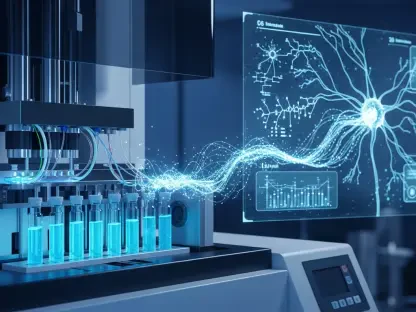
The breakthrough achieved by the Icahn School of Medicine at Mount Sinai relies on a sophisticated dual-track methodology that observes the brain’s software and hardware simultaneously. Researchers analyzed data from over 100 individuals undergoing neurosurgical procedures, pairing transcriptional profiling with real-time electrophysiology. This combination allowed the team to identify which specific genes were active while direct intracranial recordings measured the electrical and chemical signals of firing neurons.
The result was the discovery of a synchronized “transcriptional program,” where specific gene sets fluctuate in perfect rhythm with the brain’s electrical signals. This coordinated activity involves pathways specifically related to excitatory signaling and synaptic function. By documenting this relationship, the study proved that the brain’s genetic code does not just sit in the background; it actively modulates the strength and frequency of the electrical circuits that allow us to process information.
Bridging the Gap Between Genetic Architecture and Electrical Circuitry
Lead researchers, including Dr. Alexander Charney and Dr. Brian Kopell, emphasized that this work provides the first unified framework for understanding the brain’s operational biology. By pairing molecular data with physiological recordings, the study moved past theoretical models to show how the brain’s genetic code directly supports its electrical circuitry. This research confirmed that these gene expression programs were not random or isolated incidents.
Instead, these patterns were reproducible across different patient groups, validating the existence of a standard biological “operating system” for human cognition and communication. This consistency suggested that while every individual is unique, the underlying mechanism for how genes support neural firing is a fundamental trait of the human species. Establishing this baseline was a critical step toward identifying when and where these systems fail in the presence of disease.
Transforming Diagnostic Tools and Precision Neuromodulation
The ability to link specific genetic variations to real-time brain activity opened a new chapter in the treatment of psychiatric and neurological disorders. These findings offered practical strategies for the future of clinical care, particularly in the realm of targeted therapies. By identifying the exact genes involved in disrupted neurotransmission, pharmaceutical development was steered toward drugs that target specific molecular pathways rather than general brain chemistry.
Furthermore, these insights refined techniques like Deep Brain Stimulation by allowing clinicians to understand the genetic environment of the circuits being treated. This research also paved the way for precision diagnostics, moving toward objective, gene-based tools for mental health conditions that had historically relied on subjective symptom reporting. Future efforts were directed toward using these molecular maps to determine how an individual’s unique genetic diversity might make them more or less susceptible to conditions like epilepsy or neurodegenerative diseases.