
The long-standing reliance on subjective self-reporting in mental healthcare has reached a definitive turning point as clinical practice begins to embrace the objective precision once reserved for physical medicine. For decades, the psychiatric field operated within a unique silo where practitioners were forced to rely on patient narratives and observable behavior rather than lab results or imaging. This diagnostic isolation created a landscape where two patients with identical symptoms might receive different labels, or conversely, two individuals with the same diagnosis could share zero overlapping symptoms. As of 2026, the arrival of precision psychiatric diagnostics marks the end of this era, introducing a sophisticated suite of tools that utilize molecular biology, digital behavioral markers, and advanced computational modeling to quantify the invisible complexities of the human mind.
The Shift Toward Biological Psychiatry
Modern psychiatry is currently undergoing a structural transformation that mirrors the historical transition of oncology from symptom-based descriptions to molecular-based classifications. Traditional diagnostic models, such as those found in standard classification manuals, were designed to provide a common language for clinicians, yet they often lacked a foundation in the underlying biological mechanisms of disease. This subjectivity created a glass ceiling for treatment efficacy, as medication was frequently prescribed through a process of trial and error rather than targeted biological reasoning. The current shift toward biological psychiatry seeks to break this ceiling by identifying the specific physiological signatures—biomarkers—that drive mental health conditions.
This evolution is fundamentally rooted in the recognition that mental disorders are not discrete “on/off” states but are instead part of a complex, dimensional spectrum of biological dysfunction. By moving beyond the surface-level observation of behavior, researchers are now able to investigate how neural circuits, genetic predispositions, and inflammatory pathways interact to produce psychopathology. The relevance of this change cannot be overstated; it represents a move from “what” a patient feels to “why” they feel it. This objective grounding allows for a level of diagnostic accuracy that was previously impossible, paving the way for a healthcare model where psychiatric interventions are as precisely calibrated as a dose of insulin or a targeted chemotherapy regimen.
Multimodal Diagnostic Frameworks and Technologies
Alternative Conceptual Architectures (RDoC, HiTOP, and Network Models)
To facilitate this biological transition, the field has developed new conceptual frameworks that rethink the very nature of mental illness. The Research Domain Criteria (RDoC), for instance, bypasses traditional diagnostic labels entirely to focus on functional units like “reward processing” or “arousal” across various levels of analysis, from genes to circuits. This architecture is unique because it treats the brain as a set of interacting systems rather than a collection of distinct diseases. By analyzing how a specific circuit, such as the amygdala’s response to threat, functions across different individuals, clinicians can identify the exact “machinery” that has malfunctioned, regardless of whether the patient is officially diagnosed with anxiety, depression, or post-traumatic stress.
Complementing this is the Hierarchical Taxonomy of Psychopathology (HiTOP), which organizes symptoms into broad, data-driven dimensions rather than narrow boxes. This model acknowledges that symptoms like social withdrawal or irritability often cut across multiple disorders, providing a more accurate map of a patient’s overall psychological state. Meanwhile, Network Models offer a revolutionary perspective by suggesting that mental disorders are not caused by an underlying “hidden” disease, but are instead a self-sustaining system of symptoms that reinforce one another. For example, in this view, insomnia causes fatigue, which leads to cognitive impairment, which then triggers low mood; the “disorder” is the network itself. These frameworks are essential because they provide the necessary structure to organize the vast amounts of biological and digital data now being collected.
Molecular and Genomic Biomarkers
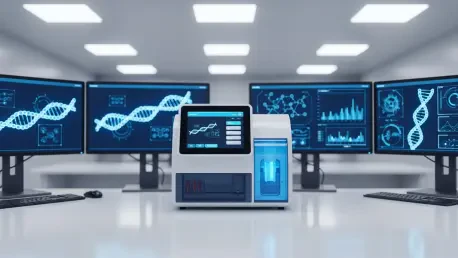
The technical core of precision diagnostics lies in the exploration of the body’s internal chemistry through genomics and proteomics. Genome-wide association studies (GWAS) have identified hundreds of genetic loci that contribute to the risk of major psychiatric disorders, but the real breakthrough lies in understanding how these genes influence biological pathways. Instead of looking for a single “depression gene,” scientists now use polygenic risk scores to calculate an individual’s cumulative genetic liability. This data is invaluable because it reveals the molecular “machinery” at play, such as dysfunctions in calcium signaling or synaptic pruning, which can be targeted by specific pharmacological agents before symptoms even become severe.
Proteomics and transcriptomics add another layer of depth by measuring the actual expression of these genes in the form of proteins and RNA. Proteomic panels are particularly useful because they provide a “real-time” snapshot of the body’s physiological state, capturing markers of inflammation, metabolic function, and neuroplasticity that a genetic test alone might miss. This implementation is unique because it bridges the gap between innate risk and current clinical status. By identifying specific protein imbalances in the blood, clinicians can differentiate between subtypes of depression—such as those driven by immune system overactivity versus those rooted in neurotransmitter depletion—and select treatments that address the specific underlying pathology.
Digital Phenotyping and Wearable Integration
While molecular markers provide a biological baseline, digital phenotyping offers a continuous, high-resolution look at a patient’s daily life and behavior. Through the integration of smartphones and wearable sensors, researchers can collect “passive” data on circadian rhythms, physical activity, and social interaction without requiring any active input from the patient. This technology is a significant departure from traditional methods because it captures behavior in the patient’s natural environment, avoiding the “snapshot bias” of a brief clinical interview where a patient might struggle to remember their mood over the previous month.
The patterns extracted from this data—such as changes in sleep architecture, speech velocity, or geolocation variability—serve as powerful real-time clinical insights. For instance, a sudden decrease in social communication and a shift in physical movement patterns can act as early warning signs for a depressive relapse or a manic episode in bipolar disorder. This continuous stream of data allows for a proactive rather than reactive approach to mental health. Instead of waiting for a crisis to occur, the “laboratory in the pocket” provides clinicians with the data needed to intervene at the earliest sign of deviation from a patient’s personalized behavioral baseline.
Clinical Staging and Temporal Modeling
Borrowing a successful strategy from oncology, the use of clinical staging in psychiatry allows for the tracking of illness progression through distinct phases. This temporal modeling is crucial because it recognizes that a “first episode” of psychosis requires a fundamentally different intervention than a chronic, multi-year condition. Staging models categorize patients based on the severity and duration of their symptoms, as well as their biological markers, allowing for a more nuanced prognosis. This approach matters because it prioritizes early intervention, aiming to prevent the “neuroprogressive” damage that often occurs when mental illnesses are left untreated for long periods.
By applying temporal modeling, clinicians can identify individuals in “at-risk” states who show subtle biological or behavioral changes but have not yet met the criteria for a full-blown disorder. This unique focus on the trajectory of the illness, rather than just its current state, enables the development of preventative strategies. If a patient’s biological data suggests they are moving from a stage of “vulnerability” to “early symptoms,” the intensity of their treatment can be adjusted accordingly. This model transforms psychiatry from a discipline focused on managing end-stage symptoms into one focused on preserving long-term brain health and cognitive function.
Innovations in Computational Psychiatry and AI
The sheer volume and complexity of multimodal data—spanning genetics, brain imaging, and digital signals—require the sophisticated processing power of Artificial Intelligence. Recent developments in computational psychiatry have seen the emergence of Transformer architectures, the same technology behind advanced language models, which are uniquely capable of synthesizing diverse data streams into actionable intelligence. Unlike simpler algorithms, these models can identify non-linear relationships and temporal dependencies across millions of data points, allowing them to detect subtle “signatures” of illness that are invisible to the human eye. This implementation is unique because it treats psychiatric data as a complex, evolving narrative rather than a static list of symptoms.
Machine learning is now being used to create “decision-support systems” that help clinicians navigate the complexity of personalized care. These systems can analyze a patient’s unique biological and digital profile to predict which medication is most likely to be effective or which patients are at the highest risk for self-harm. However, the true innovation lies in moving away from simple prediction toward explanation. By using advanced computational models, researchers can simulate different treatment scenarios, allowing for a more experimental and data-driven approach to psychiatry. This computational “twin” of a patient’s mental state provides a sandbox for testing interventions, significantly reducing the risks associated with the traditional trial-and-error prescribing methods.
Real-World Applications of Precision Diagnostics
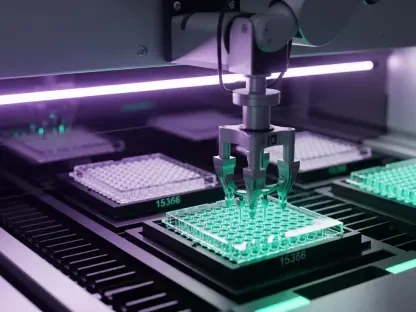
The transition from laboratory research to clinical reality is already visible in specialized neuropsychiatric centers across the globe. These facilities are deploying integrated diagnostic models that combine traditional psychiatric evaluations with advanced laboratory testing and digital monitoring. For example, some centers now utilize the “VeriPsych” proteomic panel, a blood-based test designed to assist in the diagnosis of schizophrenia by measuring a specific set of biomarkers associated with the disorder’s underlying biology. This move toward validated blood tests represents a massive leap forward, providing an objective “second opinion” that can confirm a clinician’s observations and reduce the likelihood of misdiagnosis.
Another striking application is the use of “EDIT-B” RNA tests, which have reached the clinical validation stage for differentiating between unipolar depression and bipolar disorder. This distinction is notoriously difficult to make based on symptoms alone, yet it is critical for patient safety, as prescribing antidepressants to a bipolar patient can trigger dangerous manic episodes. By identifying unique RNA-editing signatures in the blood, these tests provide a level of diagnostic clarity that symptoms alone cannot offer. These real-world use cases demonstrate that precision psychiatry is no longer a futuristic concept; it is an emerging clinical standard that is already saving lives by ensuring patients receive the correct treatment from the very first day of their diagnosis.
Barriers to Widespread Implementation
Despite its profound potential, the widespread adoption of precision diagnostics faces significant hurdles, primarily regarding reproducibility and the “black-box” nature of many AI algorithms. Many promising biomarkers discovered in a controlled laboratory setting fail to replicate when applied to diverse, real-world populations. This “reproducibility crisis” highlights the need for more standardized datasets and larger, more inclusive studies that account for differences in ethnicity, geography, and socioeconomic status. Without a robust, reproducible foundation, these diagnostic tools risk providing inaccurate results that could lead to improper care.
Furthermore, the high infrastructure costs and regulatory complexities associated with these technologies present a barrier to entry for many healthcare systems. Implementing genomic testing and high-frequency digital monitoring requires significant investment in both laboratory equipment and data security. There is also the challenge of “Explainable AI” (XAI); clinicians are often hesitant to trust an algorithm if they cannot understand the underlying reasoning for its recommendation. Ongoing development efforts are focused on making these models more transparent and intuitive, ensuring that the AI acts as a partner to the clinician rather than a replacement. Standardizing data privacy protocols is also essential to ensure that sensitive biological and behavioral data is protected from misuse.
The Future of Psychiatric Methodology
The long-term trajectory of psychiatric methodology points toward a complete transition from “categorical” to “dimensional” diagnosis. In this future, the rigid boundaries between different mental disorders will likely dissolve, replaced by a fluid system that describes a patient’s mental health through a series of biological and behavioral coordinates. Breakthroughs in polygenic risk scoring will eventually allow for the routine use of genetic screening in primary care, enabling doctors to identify children and adolescents with high vulnerabilities and provide them with preemptive support long before a clinical crisis emerges. This shift represents a move toward “proactive mental maintenance” rather than “reactive crisis management.”
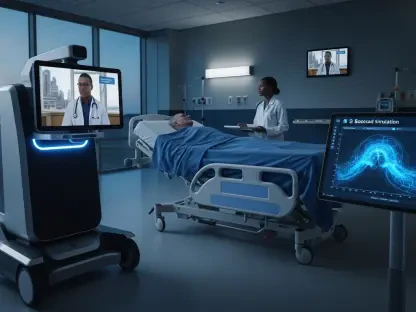
Moreover, the integration of biological and digital data into routine clinical care will lead to a more personalized and dynamic treatment experience. Future diagnostic systems will likely involve a “living” profile for every patient, one that is continuously updated with data from wearables and periodic lab tests. This will allow for the real-time adjustment of treatment plans—a process known as “closed-loop” psychiatry. For example, if a patient’s digital markers indicate a rise in stress levels, their smartphone could automatically trigger a therapeutic intervention or alert their clinician to schedule a check-up. This level of responsiveness will redefine the relationship between patients and the healthcare system, making mental health support a constant, supportive presence rather than an occasional appointment.
Summary of Clinical Evolution
The transition toward precision diagnostics represented a fundamental shift from an era of expert consensus to one of biological validity. This review found that the integration of genomic data, digital phenotyping, and AI-driven analysis provided a far more accurate and nuanced understanding of mental health than traditional symptom checklists ever could. These technologies demonstrated a remarkable capacity to reduce the trial-and-error approach to prescribing, offering a path toward more efficient and effective patient care. By quantifying the biological drivers of mental illness, the field moved closer to the standards of objective rigor found in other medical specialties, finally addressing the “paradox of subjectivity” that had constrained psychiatric progress for over a century.
As these tools became more refined, the focus shifted toward ensuring that the benefits of precision psychiatry were accessible across the global healthcare landscape. The move toward explainable algorithms and lower-cost diagnostic panels suggested that the high-tech innovations of elite research centers were becoming increasingly viable for broader clinical use. This evolution was not about replacing the human element of psychiatry, but rather about empowering clinicians with the data needed to make more informed, compassionate decisions. Ultimately, the successful deployment of these diagnostic models redefined the boundaries of mental healthcare, establishing a future where the complexities of the human mind were met with the full power of modern scientific precision.