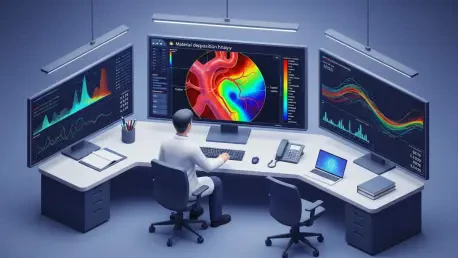

The traditional boundaries of clinical diagnostics are being redrawn as photon-counting computed tomography transitions from a promising laboratory concept into a cornerstone of modern radiology departments. For over fifty years, the medical community has relied on conventional CT scanners that integrate the total energy of X-ray beams, a process that inherently sacrifices fine detail to manage radiation exposure. This long-standing compromise is finally being addressed through the implementation of direct-conversion detectors that possess the capability to count individual X-ray photons as they pass through human tissue. By measuring the specific energy levels of each particle, these systems provide a level of spatial and spectral resolution that was previously thought to be physically impossible within the constraints of a clinical setting. As regulatory bodies continue to grant clearances for these next-generation scanners, the shift toward photon-counting technology is becoming less of an experimental luxury and more of an essential standard for high-precision medicine.
This evolution in imaging hardware represents a fundamental change in how medical professionals interpret the internal structures of the body, moving the focus from simple grayscale anatomy to data-rich spectral analysis. In the current landscape of 2026, healthcare facilities are increasingly looking toward these systems to solve complex diagnostic puzzles that have historically required invasive procedures or multiple follow-up scans. The precision of photon-counting detectors allows for the identification of subtle pathological changes at a much earlier stage, potentially altering the treatment trajectory for patients with chronic or life-threatening conditions. By removing the noise and artifacts that have plagued traditional imaging for decades, this technology offers a clearer window into the human body, ensuring that every millisievert of radiation contributes directly to a more accurate and actionable diagnosis.
Overcoming the Structural Limits of Conventional CT Technology
The limitations of traditional CT imaging are largely rooted in the physical design of energy-integrating detectors, which have served as the industry standard for several generations. These systems utilize a two-step conversion process where X-ray photons strike a scintillating material, such as gadolinium oxysulfide, to produce flashes of visible light. This light must then be captured by a photodiode and converted into an electrical signal to form an image. This indirect method is inherently lossy because the light tends to scatter, necessitating the use of opaque reflective walls known as septa to keep the signals separate. These septa occupy a significant portion of the detector’s surface area, creating “dead zones” that do not contribute to the final image. Consequently, a portion of the radiation dose delivered to the patient is essentially wasted, and the physical presence of these walls prevents the reduction of pixel size beyond a certain threshold, placing a hard cap on the maximum possible spatial resolution.
Beyond the physical constraints of detector geometry, conventional systems suffer from an inability to distinguish between different photon energy levels, a phenomenon often described as being “energy-blind.” When an energy-integrating detector receives a signal, it simply sums up the total energy deposited over a specific timeframe, which means high-energy photons naturally dominate the resulting data. This is problematic because lower-energy photons often carry the most critical information regarding soft tissue contrast and material density. Because the system cannot separate these signals or distinguish them from background electronic noise, the final images often lack the necessary contrast to identify small lesions or subtle vascular changes. This lack of discrimination forces clinicians to rely on higher radiation doses or increased amounts of contrast media to compensate for the inherent inefficiencies of the hardware, a trade-off that is becoming increasingly unacceptable in a modern era focused on patient safety and personalized care.
The Technical Mechanics of Direct Conversion Detectors
The transition to photon-counting technology is driven by the use of advanced semiconductor materials, such as cadmium telluride or high-purity silicon, which facilitate a direct conversion of X-rays into electrical pulses. Unlike the scintillators used in older systems, these semiconductors do not require a visible light stage; when an X-ray photon enters the material, it immediately creates a cloud of electrons that can be measured as a distinct voltage pulse. This streamlined process allows for the removal of the bulky septa used in traditional detectors, enabling the creation of much smaller pixels and eliminating the “dead space” that previously led to radiation waste. The result is a dramatic increase in spatial resolution, allowing radiologists to see microscopic anatomical structures, such as the fine bony details of the inner ear or the intricate branching of peripheral blood vessels, with a clarity that was once reserved for ex vivo pathological examinations.
At the core of this technological leap is the ability of the system’s application-specific integrated circuits to sort each detected photon into specific “energy bins” based on the height of its electrical pulse. This happens in real-time at incredibly high speeds, allowing the scanner to categorize the energy of every single X-ray particle that reaches the detector array. By setting specific energy thresholds, the system can effectively filter out low-level electronic noise, which significantly improves the signal-to-noise ratio and allows for the generation of much cleaner images at lower radiation doses. Furthermore, this energy-sorting capability provides a secondary layer of data known as spectral information. Instead of just seeing a density map of the body, clinicians can now analyze the chemical characteristics of different tissues and materials, making it possible to distinguish between iodine, calcium, and other substances based on their unique interaction with X-ray energy.
Unlocking Advanced Spectral Capabilities and Material Analysis
The practical application of spectral data through photon-counting CT allows for a process known as material decomposition, which is fundamentally changing the workflow in diagnostic radiology. Because the system can identify the specific energy signatures of various substances, it can digitally isolate or remove them from the final image. For instance, a radiologist can choose to “subtract” calcium from a scan of the coronary arteries, allowing them to see through calcified plaques that would otherwise obscure the lumen of the vessel. This capability also enables the creation of virtual non-contrast images, where the computer removes the signature of an injected contrast agent from a completed scan. This effectively provides the clinician with both a contrast-enhanced and a non-contrast view from a single radiation exposure, sparing the patient from the need for multiple scans and significantly reducing the total time spent in the imaging suite.
Furthermore, the integration of K-edge subtraction imaging provides a highly specialized tool for identifying specific contrast agents or heavy metals within the body. Every element has a specific energy level, known as the K-edge, where its X-ray absorption increases dramatically; by focusing the detector’s energy bins around these points, PCCT can pinpoint the exact location of agents like gadolinium, bismuth, or gold nanoparticles. This precision is particularly useful in complex cases where traditional imaging might struggle to differentiate between a kidney stone and a contrast-filled blood vessel. When these hardware-level advancements are combined with modern iterative reconstruction algorithms, the system can reduce image noise by more than 35% while maintaining ultra-high resolution. This synergy ensures that the massive amounts of data generated by the detector are processed into images that are not just sharper, but also more informative, providing functional insights that go far beyond basic structural mapping.
Transforming Patient Care through Targeted Clinical Innovation
The clinical impact of photon-counting CT is most profound in areas where traditional imaging has historically reached its limits, particularly in the fields of cardiovascular health and oncology. In cardiac imaging, the phenomenon of “blooming artifacts”—where high-density calcium plaques appear artificially enlarged and mimic significant arterial blockages—has long led to over-diagnosis and unnecessary invasive procedures. Photon-counting technology effectively suppresses these artifacts, allowing for a much more accurate measurement of the arterial lumen and a better evaluation of the integrity of coronary stents. Similarly, in lung cancer screening and management, the ability to produce high-resolution images at a fraction of the typical radiation dose is a major breakthrough. Patients who require frequent longitudinal monitoring can now undergo scans with a significantly reduced cumulative radiation risk, all while providing clinicians with the clarity needed to detect small nodules or assess changes in tumor vascularity.
In the specialized field of pediatric imaging, the benefits of photon-counting technology are perhaps the most vital. Children are naturally more susceptible to the long-term risks associated with ionizing radiation, and their smaller, more complex anatomical structures—such as neonatal cardiac valves or delicate pulmonary branches—require the highest possible resolution for an accurate diagnosis. The efficiency of direct-conversion detectors allows for the visualization of these features at ultra-low doses that were previously insufficient for diagnostic-quality images. Additionally, the high sensitivity of these detectors often allows for a reduction in the volume of iodine contrast required for pediatric studies, which lowers the risk of contrast-induced nephropathy and other complications. By moving toward a more precise and data-rich imaging model, healthcare providers are now able to tailor diagnostic protocols to the individual needs of the most vulnerable patients, ensuring that the next steps in their care are based on the clearest possible information.
Strategic Implementation and Future Diagnostic Considerations
As the medical community continues to integrate photon-counting CT into standard clinical workflows, the focus is shifting toward the infrastructure and training required to maximize its potential. The sheer volume of data produced by multi-energy, high-resolution scans requires robust computational power and sophisticated storage solutions that go beyond the capacity of many legacy systems. For healthcare administrators, the move toward this technology involves not just the purchase of new hardware, but a comprehensive rethink of how imaging data is managed and analyzed. This includes the adoption of advanced artificial intelligence tools designed to assist radiologists in navigating the complex spectral datasets that these scanners produce. By automating the identification of material signatures and highlighting subtle anomalies, AI can help clinicians process the increased information density without sacrificing diagnostic speed or accuracy.
The transition to photon-counting standards also necessitates a shift in the education and technical training of radiologists and technologists. Understanding how to manipulate energy bins and interpret virtual monoenergetic images requires a deeper grasp of the physics of X-ray interactions than traditional grayscale imaging demanded. As these systems become more prevalent in 2026 and beyond, the development of standardized protocols for material decomposition and low-dose pediatric scanning will be essential for ensuring consistent outcomes across different institutions. The path forward involves a collaborative effort between manufacturers, researchers, and clinicians to refine these techniques and demonstrate their cost-effectiveness through large-scale clinical trials. Ultimately, the successful adoption of photon-counting technology will be measured by its ability to provide more definitive answers in shorter timeframes, reducing the need for invasive follow-ups and ushering in a new era of proactive, data-driven medical care.