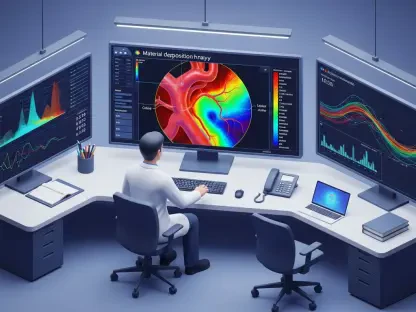

A foundational challenge within medical imaging has long been the delicate balance between capturing high-resolution diagnostic images and minimizing the patient’s exposure to ionizing radiation. This trade-off is particularly pronounced in fields like pediatric and cardiac radiology, where vulnerable populations or the need for repeated scans makes dose reduction a paramount concern. The pursuit of a solution that can break this compromise has driven innovation for decades. A recent study investigating high-pitch cardiac computed tomography (CT) integrated with advanced photon-counting detector (PCD) technology now offers a compelling path forward, demonstrating that it is possible to significantly lower the radiation dose without sacrificing the essential quality of the resulting images, potentially heralding a new era of safer diagnostic procedures for patients of all ages. This development addresses a critical need, suggesting that technological advancement can directly translate to enhanced patient safety.
A Technological Leap in Diagnostic Precision
The central finding from a pivotal study conducted by Narum, Yu, and McCollough represents a significant breakthrough for the field of radiology. Their research definitively showed that a CT system equipped with advanced photon-counting detectors can achieve a substantially lower radiation dose while maintaining the contrast-to-noise ratio (CNR) at a level equivalent to that of conventional energy-integrating detector systems. This crucial result was achieved under rigorous conditions where the spatial resolution of both systems was meticulously matched, thereby ensuring a fair and direct comparison of their inherent capabilities. This evidence-based conclusion moves the conversation beyond theoretical benefits, providing concrete data that supports the technology’s potential to redefine imaging protocols and significantly enhance patient safety without compromising diagnostic confidence.
The remarkable dose reduction is made possible by the fundamental superiority of photon-counting detector technology. Unlike traditional detectors, which measure the cumulative energy of all X-ray photons that strike them, PCDs possess the unique ability to detect and count each individual photon and ascertain its energy level. This process yields a much more precise and efficient quantification of the X-ray signal, resulting in intrinsically lower electronic noise, higher potential spatial resolution, and an improved CNR. It is this heightened level of precision at the most basic level of image formation that empowers the system to generate diagnostically robust images with a reduced photon flux, directly translating to a lower radiation dose for the patient. This innovation addresses the source of image degradation, rather than merely compensating for it with post-processing techniques, marking a true paradigm shift.
Redefining Patient Safety in Critical Care
The implications of this research are particularly profound and immediately applicable within pediatric radiology. Children are inherently more susceptible to the long-term stochastic and deterministic effects of ionizing radiation due to their developing tissues and longer life expectancy, making any opportunity for dose reduction a critical priority in their medical care. The findings present a tangible solution for safer cardiac evaluations in young patients, who often require complex or serial imaging studies to manage congenital or acquired heart conditions. By providing a method to acquire high-quality diagnostic images with significantly less radiation, this technology promises to substantially improve the safety profile of essential CT scans, alleviating a major concern for clinicians and parents alike while ensuring children receive the best possible diagnostic information.
Beyond the pediatric sphere, the benefits of dose reduction extend significantly to adult cardiology, a field with a growing reliance on CT for the diagnosis, monitoring, and treatment planning of cardiovascular diseases. The escalating prevalence of cardiac conditions means that more patients are undergoing CT scans, leading to increased cumulative radiation exposure over their lifetimes. The ability to lower the dose for each scan could enhance patient compliance with recommended follow-up imaging, encourage more widespread and earlier screening for at-risk individuals, and ultimately contribute to improved long-term health outcomes. This advancement directly aligns with the broader healthcare trend toward patient-centered care, where minimizing procedural risk is considered as important as maximizing diagnostic yield, thereby empowering a more proactive and safer approach to managing heart health.
Charting the Course for Clinical Integration
Despite the promising outcomes and clear clinical benefits, the journey toward widespread adoption of photon-counting CT is not without its challenges. The technology’s transition from a research breakthrough to a mainstream diagnostic tool will require overcoming several practical hurdles. Significant capital investment is needed to acquire the new systems, and healthcare institutions must also account for the costs associated with specialized training for radiologists and technologists to ensure they can fully leverage the technology’s advanced capabilities. Furthermore, integrating these new scanners and their unique data output into existing clinical workflows and picture archiving and communication systems (PACS) presents a logistical challenge that demands careful planning and execution to ensure a seamless and efficient transition.
To build upon the foundation laid by this initial research, further validation through extensive, large-scale, and multi-center clinical trials is essential. Such studies are necessary to confirm the efficacy, safety, and dose-reduction benefits of photon-counting CT across diverse patient populations, a wide range of clinical scenarios, and different institutional settings. This body of evidence will be crucial for establishing robust clinical guidelines and convincing regulatory bodies and professional health organizations to re-evaluate and potentially update their recommendations concerning radiation dose limits in medical imaging. Establishing this broad base of scientific support will be instrumental in building the confidence needed for widespread investment and adoption, solidifying the technology’s place as a new standard of care in modern radiology.
A Vision for Safer Imaging Realized
The work by Narum, Yu, and McCollough ultimately served as more than a mere technical validation; it encapsulated a progressive vision for the future of medical imaging. The study acted as a catalyst for renewed innovation and vital discussion within the medical community, encouraging radiologists and physicists to remain at the forefront of advancements that could fundamentally improve patient care. It reinforced the principle that the ultimate goal of technological development in healthcare is not just to see more clearly, but to do so more safely. The findings provided a clear, scientifically-backed pathway toward mitigating one of the primary risks associated with an indispensable diagnostic tool, shaping a new perspective on what could be achievable in the pursuit of both diagnostic excellence and patient safety.