
The relentless pursuit of surgical precision has entered a new era with the integration of cutting-edge imaging technology into modern operating rooms across the globe. The strategic alliance between OMNIVISION and ATL Medical represents a significant leap forward, as they combine the OVMed® OH0131 Image Signal Processor with the PREVOYANCE® Complete Imaging System to redefine the standards of endoscopic and arthroscopic surgery. This collaboration bridges the gap between high-end semiconductor innovation and practical medical device manufacturing, offering a robust turnkey solution for the healthcare industry in 2026. By combining sophisticated imaging algorithms with a modular hardware design, the two companies are providing a pathway for medical device firms to deploy advanced visualization tools without the traditional overhead of lengthy development cycles. This synergy ensures that clinicians have access to high-fidelity imagery that is essential for navigating the intricate anatomical structures encountered during complex surgical maneuvers.
Advancing Visual Precision in Minimally Invasive Procedures
Technical Foundations of High-Fidelity Medical Imaging
The heart of this technological advancement lies in the specialized capabilities of the OVMed® OH0131 Image Signal Processor, a component engineered specifically for the stringent demands of surgical environments. This processor does not merely capture images; it actively enhances them using advanced algorithms that optimize brightness, contrast, and saturation in real-time. Such precision is vital when surgeons are working within confined spaces where lighting conditions can vary drastically and unpredictable elements like blood or smoke often obscure the field of view. By utilizing this dedicated hardware, the system maintains high color fidelity and sharpness, ensuring that every detail is rendered with professional-grade accuracy. Furthermore, the low-latency processing inherent in the OH0131 ISP minimizes the delay between the camera’s capture and the display output. This instantaneous feedback loop is critical for the hand-eye coordination required during delicate maneuvers, effectively reducing the risk of procedural errors while improving efficiency.
Overcoming Environmental Obstacles in the Operating Room
Beyond basic image enhancement, the integrated system specifically targets the environmental challenges frequently encountered in the modern operating room. Surgical procedures often involve reflections from metallic instruments or shadows cast by internal structures, both of which can lead to visual fatigue or misinterpreted data if not properly managed. The sophisticated logic within the ISP works to suppress specular reflections and mitigate the impact of shadows, creating a balanced and consistent visual output. Additionally, the technology is designed to handle visual interference from smoke and fluids, which are common byproducts of electrosurgical tools and irrigation during surgery. This level of automated feature extraction allows the imaging system to adapt dynamically to the shifting conditions of the surgical site. Consequently, medical professionals are empowered with a more reliable visual guide, allowing them to focus on the technical execution of the surgery rather than struggling with poor visibility throughout the procedure.
Streamlining Market Entry Through Modular Architecture
Modular Engineering for Accelerated Device Development
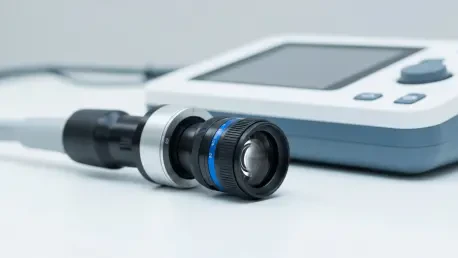
The PREVOYANCE® Complete Imaging System utilizes a sophisticated “white label” framework designed to accelerate the timeline from concept to commercialization for medical providers. At the center of this architecture is a dual-board configuration consisting of a kernel board and a host board, which facilitates a seamless flow of high-resolution data. The kernel board, developed by OMNIVISION, is responsible for the heavy lifting of raw data processing via the OH0131 ISP, ensuring that the foundational image quality is maintained at the highest level. Complementing this, the host board designed by ATL Medical manages the display output, providing standard HDMI connectivity for integration with a variety of medical monitors and display systems. This modular approach allows the camera control unit to function as a standalone device or be embedded directly into existing surgical platforms. By adopting this pre-configured Chip-on-Tip® technology, companies avoided the massive R&D costs typically associated with developing custom imaging hardware.
Strategic Implications for the Future of Surgical Visualization
Stakeholders in the medical device sector recognized that adopting such integrated solutions became a necessity for maintaining a competitive edge in an evolving market. The collaboration between OMNIVISION and ATL Medical demonstrated how specialized partnerships could effectively de-risk the development of sophisticated surgical tools. Manufacturers who shifted toward these modular platforms realized significant improvements in time-to-market and operational efficiency. Moving forward, clinical teams prioritized the adoption of hardware that supported real-time data handling and automated visual optimization as standard requirements for surgical suites. Industry leaders also looked toward expanding these capabilities into adjacent fields such as robotic surgery and diagnostic imaging, where high-fidelity visualization is equally paramount. To capitalize on these trends, companies began auditing their current imaging pipelines to identify areas where turnkey modular systems could replace aging architectures, ensuring they remained at the forefront of technology through 2028.