
We are joined today by Ivan Kairatov, a biopharma expert with deep insights into the technological innovations shaping the future of medicine. We will be exploring the recent expansion of a groundbreaking protein discovery platform into Asia, discussing its installation at two leading Taiwanese universities, National Taiwan University and National Cheng Kung University. Our conversation will delve into the strategic vision behind this move, the practical impact of this technology on drug discovery for diseases like lung cancer, its unique combination of cell-free expression and digital microfluidics, and the exciting potential of integrating it with artificial intelligence to design next-generation therapeutics.
Your first Asian installations are now operational at two leading Taiwanese universities. What specific criteria made NTU and NCKU the ideal partners for this expansion, and how does this move fit into your broader global strategy for accelerating protein research? Please elaborate on the partnership.
This expansion into Taiwan is a pivotal moment, and the choice of NTU and NCKU was incredibly deliberate. These aren’t just any universities; they are powerhouses in complementary fields, from NTU’s College of Medicine and Department of Chemistry to NCKU’s Center for Bioscience and Biotechnology. We see this not just as a sale, but as the foundation of a collaborative ecosystem. The vision and generous donation from Show Chung Ho of YFY Academy were the catalysts that brought this all together. He didn’t just want to place machines; he wanted to build a platform that ensures Taiwan remains synchronized with the fastest-moving developments in protein drug discovery. For our global strategy, after establishing a strong presence in the UK and Europe, this move into Asia via Taiwan is a critical beachhead. It signals a growing worldwide demand for tools that break down the traditional barriers to protein access, and these institutions provide the perfect environment to demonstrate that power.
NTU plans to screen drug candidates for diseases like lung cancer using this new system. Could you walk me through the practical workflow for this process, from initial design to identifying a viable candidate, and explain what specific research bottlenecks this technology removes?
Absolutely. Let’s imagine a researcher at NTU targeting a specific protein implicated in lung cancer. Traditionally, the first step—just producing a usable, functional version of that protein for study—could take months of painstaking trial and error. It’s a huge bottleneck. With the eProtein Discovery system, that entire process is revolutionized. The researcher can now, on a single benchtop instrument, screen a vast array of conditions for protein expression and purification in a matter of days. The system provides clear, actionable data on which conditions yield the best protein. Once they have that high-quality, functional protein, they can immediately move to the next stage, which NTU has highlighted: developing protein microarrays for high-throughput screening of peptide drug candidates. This dramatically shortens the experimental cycle, removing the crippling uncertainty and time sinks from the front end of the discovery pipeline. It allows scientists to fail faster and, more importantly, succeed much, much faster, accelerating the journey toward a viable therapeutic that could ultimately benefit patients.
The eProtein Discovery system combines cell-free expression with novel digital microfluidics. For researchers unfamiliar with this, could you explain in simple terms how this unique combination allows them to identify optimal protein conditions much faster than traditional methods? Please provide a specific example.
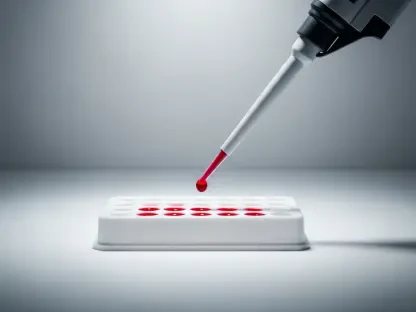
Think of it like trying to find the perfect recipe for a complex dish. The traditional method is like baking one cake at a time, changing one ingredient, baking another, and so on. It’s slow and resource-intensive. Our system is different. The “cell-free expression” part is like having a pre-packaged kit with all the essential molecular machinery for making proteins, but without the complexity and limitations of a living cell. The “digital microfluidics” is the magic that makes it fast. It’s like having a grid of thousands of microscopic test tubes on a single chip. We can use it to mix tiny, precise droplets of our cell-free system with different genetic instructions and conditions, essentially running thousands of unique experiments simultaneously. For example, a researcher trying to produce a tricky enzyme can test hundreds of different temperatures, pH levels, and additives all in one run, overnight. The system generates a complete map of what works and what doesn’t, giving them the optimal “recipe” for their protein in a fraction of the time. It replaces months of manual lab work with a single, automated experiment.
NCKU intends to integrate artificial intelligence with the system for enzyme design. Can you describe how the high-throughput data from the eProtein Discovery system will fuel your AI models, and what new possibilities this combination unlocks for targeted therapeutic development?
This is where the future gets really exciting. Artificial intelligence, especially in a field like enzyme design, is incredibly data-hungry. To effectively design a new enzyme or therapeutic protein, an AI model needs to learn from vast amounts of data about what protein sequences and conditions lead to specific functions. The problem has always been generating that data. The eProtein Discovery system is a high-throughput data engine. Because it can run so many experiments so quickly, it generates precisely the kind of rich, high-quality datasets that AI models thrive on. NCKU’s researchers can use the system to test thousands of protein variants, feeding the performance data directly into their AI. This creates a powerful feedback loop: the AI designs new enzyme candidates, the system rapidly tests their real-world function, and the results are fed back to the AI to make it smarter. This synergy unlocks the ability to move beyond discovery and into true “de novo” design, engineering proteins with highly specific functions for targeted therapies that were previously unimaginable.
As the benefactor, Show Chung Ho envisioned a collaborative platform between NTU and NCKU. What was your primary motivation for this donation, and what is your long-term vision for how this platform will position Taiwan at the forefront of international protein drug development?
The motivation behind the donation from Show Chung Ho was profoundly strategic and visionary. It wasn’t merely about providing equipment; it was about investing in national capability and fostering a collaborative spirit. The primary goal was to create an integrated research platform, a nexus where two of Taiwan’s leading academic institutions could pool their expertise and resources. By breaking down institutional silos, the vision is to create a powerful engine for innovation in protein drug development. The long-term goal is to elevate Taiwan from being a participant in this field to being a leader. This platform is designed to be a magnet for talent and a hub for pioneering research, ensuring that Taiwanese scientists are not just keeping pace with international progress but are actively defining it. It’s about building an ecosystem that will pave the way for new discoveries and solidify Taiwan’s position on the global biotech map.
What is your forecast for protein drug discovery?
My forecast is that we are on the cusp of a radical acceleration, driven by the convergence of high-throughput automation and artificial intelligence. For decades, the primary bottleneck in drug discovery was the sheer difficulty of producing and purifying functional proteins for study. Platforms like the eProtein Discovery system are effectively solving that problem. The bottleneck is now shifting. The future isn’t about if we can make a protein; it’s about which protein we should make. The next five to ten years will be defined by how well we can integrate the massive datasets from these systems with predictive AI models. We will see drug development timelines, which traditionally span over a decade, shrink significantly. This will lead to an explosion in targeted and personalized protein-based therapeutics, moving from broad-stroke treatments to highly specific interventions engineered for a particular disease pathway or even an individual patient. The lab of the future is automated, data-rich, and AI-driven, and it will bring life-saving therapies to patients faster than ever before.