
With a rich background in biopharmaceutical research and a keen eye for technological innovation, Ivan Kairatov stands at the forefront of digital health. He offers a unique perspective on how wearable technology is evolving from a wellness accessory to a critical clinical tool, particularly in the complex and often isolating journey of patient rehabilitation. Today, we explore with him the nuances of a groundbreaking smartwatch application designed to track social engagement in stroke survivors, delving into the science behind its development, its real-world implications for personalized care, and its potential to reshape recovery for patients with neurological conditions. This conversation will unpack how tracking acoustic patterns can measure the vital, yet often overlooked, element of human connection in healing, the challenges of translating hospital-validated tech into at-home use, and the future of using such data to enhance the quality of patient care.
Research has shown that social isolation can lead to worse physical outcomes for stroke survivors. Why is tracking social engagement so crucial for recovery, and what are the practical, step-by-step actions a family member or caregiver could take if an app notified them of potential isolation?
It’s absolutely crucial because we have concrete evidence that socializing is one of the most powerful, non-pharmacological tools we have to maximize recovery. Previous research has clearly shown that stroke survivors who become socially isolated experience worse physical outcomes at both the three and six-month marks post-stroke. What this new technology allows us to do is move from knowing this fact to actively managing it. If an app like this sent a notification to a family member, the first step would be a simple, non-intrusive check-in—perhaps a phone call or a video chat. The next step would be to coordinate with other friends or family to schedule regular, short visits. It’s not about overwhelming the patient but creating a consistent rhythm of interaction. The caregiver could also use this data to speak with the healthcare team, asking if social withdrawal is a known risk and if it could be integrated into the rehabilitation plan, perhaps by encouraging group therapy sessions.
The SocialBit app was designed to capture acoustic patterns rather than specific words, a feature that proved highly effective for patients with aphasia. Could you elaborate on how this sound-based approach works, and what technical challenges you overcame to ensure the algorithm could accurately distinguish conversations from background noise?
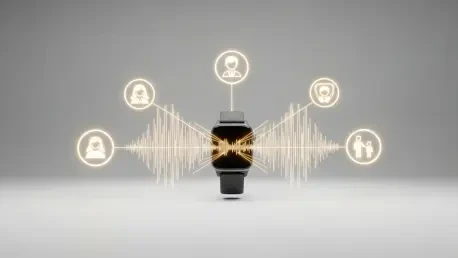
This sound-based approach is really the core of its innovation. Instead of using natural language processing to transcribe words, which would be a privacy nightmare and useless for patients with aphasia, the machine learning algorithm is trained to recognize the specific acoustic signatures of human speech. It listens for the cadence, pitch, and rhythm that characterize a conversation, whether it’s one person speaking or a back-and-forth exchange. The primary challenge was filtering out the cacophony of a hospital environment. We had to ensure the algorithm could maintain its accuracy despite a television blaring in the background or the incidental chatter of a side conversation down the hall. This was achieved by training the model on thousands of hours of audio from these exact settings, teaching it to isolate the proximate, engaged speech patterns of the patient and their visitors from ambient, non-interactive noise. That it worked so well across different environments and even different smartwatch models speaks to the robustness of the training.
The app demonstrated a 94% accuracy rate when compared to human observers in a hospital setting. What are the biggest hurdles to validating this technology for at-home use, and how might the data collected be used to personalize therapies like speech or occupational therapy after a patient is discharged?
Achieving that 94% accuracy in a controlled hospital setting is a phenomenal first step, but the home environment presents an entirely new set of variables. The biggest hurdle is the sheer unpredictability of daily life. A hospital has a certain rhythm, but a home has pets, children, different types of media playing, and a much wider range of acoustic events. Validating the technology at home will require a new phase of research where the app’s data is again compared to human-logged diaries or other ground-truth measures in a real-world setting. Once validated, this data becomes incredibly powerful for personalizing therapy. A speech therapist could see objective data showing a patient interacts verbally for only 20 minutes a day, prompting them to design exercises that can be done with family. An occupational therapist could see that a patient is most social in the morning and schedule more demanding functional tasks for that time, leveraging their higher state of engagement.
A key challenge in a hospital is differentiating between social interactions with family and procedural conversations with the care team. How might this technology evolve to distinguish between these different types of engagement, and what could that data reveal about the quality of care in various facilities?
That’s a critical distinction and represents the next frontier for this technology. Currently, the app registers all conversations as social interaction. The evolution would likely involve multi-modal data fusion. For instance, the app could integrate with a patient’s calendar or use location-based beacons to know when a scheduled therapy session is happening versus an unscheduled family visit. You could also train the algorithm to recognize patterns—clinical conversations are often shorter, more structured, and monologue-driven, whereas familial chats are typically more dynamic and reciprocal. If we can successfully parse this data, it could become a powerful metric for quality of care. A facility where patients have high levels of non-clinical social interaction might be one that fosters a more healing, supportive environment. Conversely, a hospital where interaction is almost exclusively with staff could indicate a system that is procedurally efficient but perhaps lacking in human-centered care.
The study found that for each one-point increase on a stroke severity scale, social interaction dropped by about 1%. Can you explain the significance of this metric and how an objective tool like this could help clinicians identify at-risk patients for social withdrawal much earlier in their recovery process?
That 1% drop is a very telling statistic. It provides a direct, quantifiable link between the neurological damage from a stroke and its immediate impact on a patient’s social life. The NIH Stroke Scale is a standard clinical assessment, so connecting it to an objective behavioral metric like this is incredibly valuable. It means a clinician looking at a patient with a higher stroke severity score can now anticipate a measurable risk of social withdrawal. This tool transforms a subjective concern into an objective data point. Instead of waiting for a patient to report feelings of loneliness or for a family member to raise a concern, the data can flag a patient as ‘at-risk’ from day one. This allows for proactive intervention, enabling the care team to implement a social engagement plan right alongside physical and speech therapy, long before the negative effects of isolation can take hold.
Beyond stroke recovery, potential applications have been suggested for other brain injuries and even healthy aging. Could you provide a specific example of how tracking social interaction might help manage another neurological condition, and what would be the first step in adapting and testing the app for that new purpose?
A perfect example would be in managing early-stage dementia or mild cognitive impairment. Social engagement is known to be a key factor in maintaining cognitive function and delaying decline in these patients. An app like this could provide an objective measure of their daily social activity, serving as an early warning system for withdrawal, which is often a precursor to depression and more rapid cognitive decline. The first step in adapting the app would be to conduct a baseline study in this new patient population. We would need to establish what a ‘normal’ level of social interaction looks like for these individuals and how it correlates with their cognitive scores. This would involve a pilot program, similar to the stroke study, where the app’s data is validated against human observation or detailed patient diaries to ensure it is accurately capturing their unique social patterns before it could be deployed as a monitoring tool.
What is your forecast for the use of wearable technology in post-stroke care?
My forecast is that within the next decade, wearable technology will become as standard in post-stroke care as a blood pressure cuff is today. We are moving beyond simple metrics like step counts and into a new era of capturing nuanced, behavioral data that is directly linked to clinical outcomes. These devices will create continuous data streams from the hospital to the home, flagging risks like social isolation, tracking adherence to therapy, and providing objective measures of recovery that were previously invisible. This will empower clinicians to deliver truly personalized and proactive care, allowing them to intervene earlier and more effectively. The result will be a healthcare system that doesn’t just treat the initial injury but actively manages the holistic, long-term well-being of the survivor, ultimately leading to better cognitive outcomes and a significantly higher quality of life.