
A comprehensive analysis of an individual’s drug exposure is a critical yet often elusive goal for doctors and researchers, as the true chemical history of a person is frequently obscured by incomplete and potentially misleading information. The conventional methods for gathering these details, such as patient interviews or reviews of medical records, are fraught with limitations. This knowledge gap arises from numerous factors, including patients inadvertently forgetting medications, failing to report the use of common over-the-counter drugs, or being unintentionally exposed to pharmaceutical compounds through their diet and environment. Consequently, significant drug exposures can be entirely missed, posing a substantial problem as these unaccounted-for substances can exert unexpected and profound effects on a person’s biology.
The Challenge of Uncovering an Individual’s True Drug Exposure
For decades, the pursuit of a complete picture of an individual’s drug history has been a central challenge in medicine and public health. Clinicians and researchers have relied heavily on self-reported data and official medical charts, which serve as the primary sources for understanding what substances a person has consumed. However, these methods are inherently flawed and often paint an incomplete portrait of an individual’s true chemical exposure.
The unreliability of these sources stems from the complexities of human memory and behavior. Patients may unintentionally omit medications they have taken, especially if the treatment was short-term or occurred in the distant past. Furthermore, the widespread use of non-prescription medications, herbal supplements, and leftover prescriptions from previous ailments often goes unreported. This discrepancy between reported use and actual exposure creates a significant blind spot, preventing a full understanding of how various chemicals may be interacting within the body and influencing health outcomes.
A Groundbreaking Solution in Chemical Fingerprinting
Addressing this critical challenge, a collaborative team of researchers, led by scientists at the University of California San Diego, has developed a groundbreaking and publicly accessible resource: an online reference library containing the detailed chemical “fingerprints” of thousands of drugs. This extensive database, named the Global Natural Product Social Molecular Networking (GNPS) Drug Library, represents a major leap forward in accurately assessing an individual’s total chemical exposure. It moves beyond subjective, self-reported data to provide a precise biological record.
This powerful new tool functions by enabling researchers to compare the chemical profiles of unknown compounds found in a patient’s biological samples—such as blood, urine, or skin swabs—against the library’s vast repository. As detailed in a study published on December 9, 2025, this comparison can reveal a far more comprehensive and accurate record of drug exposure than what is typically available in a standard medical chart. By matching the unique chemical signature of a substance in a sample to a known drug in the library, scientists can identify medications that were never recorded, offering an unprecedented window into a person’s complete pharmacological history.
Research Methodology, Findings, and Implications
Methodology
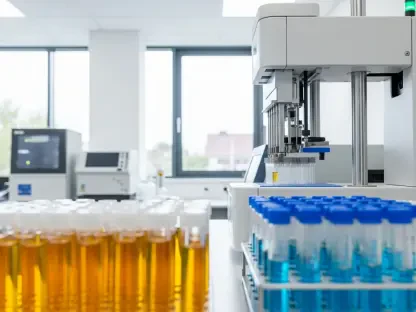
The construction of this powerful library was a meticulous process rooted in the advanced analytical technique of mass spectrometry. The research team employed this method to systematically analyze each drug, creating a unique and reproducible chemical fingerprint for every substance. The process involves applying an electrical charge to the drug’s molecules, allowing them to be sorted based on their mass-to-charge ratio. Following this sorting, the molecules are fragmented, generating a distinctive pattern that serves as a definitive identifier. To enhance its utility, every entry in the GNPS Drug Library is extensively annotated with crucial metadata, including its origin, pharmacological class, and mechanism of action.
To rigorously validate the library’s efficacy in real-world scenarios, the researchers utilized a specialized mass spectrometry approach known as untargeted metabolomics. This sophisticated method is designed to analyze thousands of molecules simultaneously within a biological sample, enabling the identification of a wide spectrum of drug metabolites and other chemical compounds. This technique is incredibly versatile and comprehensive, capable of detecting the full range of chemicals present in any given sample, whether it be urine, breast milk, or even an environmental water sample.
Findings
The validation studies produced compelling results that confirmed the library’s accuracy and clinical relevance. Analyses of samples from patients with conditions like inflammatory bowel disease and Kawasaki disease consistently revealed a high frequency of various antibiotics, which directly corresponds to the standard treatment protocols for these illnesses. In another compelling example, skin swabs taken from individuals with psoriasis were frequently found to be rich in antifungal agents, a finding that reflects the common use of such therapies to manage skin lesions associated with the disease.
The library was further tested on a massive scale using samples from nearly 2,000 participants in the American Gut Project. This broad analysis successfully detected 75 different drugs, and the list of these substances closely mirrored the most commonly prescribed medications in the United States, Europe, and Australia. The study also uncovered intriguing demographic and geographic trends, revealing that U.S. participants carried a higher number of detectable drugs per individual compared to their counterparts. Furthermore, it noted that painkillers were more frequently detected in female participants, while erectile-dysfunction medications were predominantly found in males.
Beyond confirming known treatments, the library proved adept at uncovering medication use for co-existing conditions. In samples from Alzheimer’s disease patients, the tool detected cardiovascular and psychiatric medications consistent with treatments for comorbidities that often accompany the neurodegenerative disorder. A similar pattern emerged in a study of individuals with HIV, where the library identified not only the expected antiviral therapies but also drugs for heart disease and depression. This capability allowed researchers to accurately stratify participants based on the medications they were truly taking, leading to the discovery that certain HIV drugs were associated with specific changes in molecules derived from the gut microbiome.
Implications
The practical impact of this technology on precision medicine is profound. By providing a clear window into how different individuals metabolize medications, the library can help explain why not all patients respond to treatments in the same way. This deeper understanding could pave the way for optimizing and personalizing drug therapies, leading to more effective treatments and improved patient outcomes. It offers a direct way to connect drug exposure to biological responses, a critical step toward tailoring medicine to the individual.
The library’s value extends far beyond the clinic, offering significant potential for public health and environmental science. The research team demonstrated this by testing over 3,000 food products, where they identified antibiotics in various meat products and a pesticide in vegetables that is also used as a human medication. This capability suggests the library will be an invaluable tool for detecting pharmaceutical contaminants in the food supply, reclaimed water, and other environmental sources, providing a new method for monitoring our collective chemical exposures.
Reflection and Future Directions
Reflection
The successful creation of the GNPS Drug Library marks a pivotal moment in the study of chemical exposure. As the first resource of its kind, it provides a foundational tool for investigating the complex interplay between drugs, the human microbiome, and overall health outcomes. It bridges a long-standing gap in medical research by replacing fallible human memory with precise, verifiable biochemical data.
The project stands as a testament to a meticulous and collaborative effort in building, annotating, and validating a massive chemical database. Its proven efficacy in diverse, real-world scenarios—from clinical cohorts to large-scale population studies—confirms its readiness to support a new generation of research. The library not only works in theory but has demonstrated its practical utility in uncovering hidden exposures and generating novel biological insights.
Future Directions
The research team plans to continually expand this comprehensive resource to include an even wider array of pharmaceuticals, environmental chemicals, and their metabolites. To manage this growth, they are exploring the use of cutting-edge technologies, including large language models and generative artificial intelligence, to help curate and integrate new data efficiently. This forward-thinking approach will ensure the library remains a state-of-the-art tool for the scientific community.
To maximize its impact, the library is accompanied by a user-friendly online data analysis application. This tool is designed to empower clinical and public health researchers, even those without specialized expertise in mass spectrometry, to analyze their own datasets. With a simple interface, investigators can upload their data and, with a single click, receive a comprehensive report on the drugs present, complete with figures and plots to aid interpretation. This accessibility promises to democratize the study of drug exposure and accelerate discoveries across many fields.
Revolutionizing Our Understanding of Chemical Exposure
In summary, the development of the GNPS Drug Library successfully addressed the critical and long-standing challenge of tracking an individual’s complete drug history. By moving past the limitations of self-reporting and medical records, this innovative tool provided a scientifically rigorous method for identifying the true spectrum of chemicals present in a biological sample. The findings from its application across diverse human and environmental samples confirmed its accuracy and revealed previously invisible patterns of exposure.
The implications of this work are set to transform multiple scientific domains. The library armed researchers with an unprecedented ability to link specific chemical exposures to health outcomes, which promised to advance personalized medicine by explaining variations in treatment responses. Moreover, its capacity to detect pharmaceutical contaminants in food and the environment established it as a vital instrument for public health surveillance. This technology has delivered a clear and comprehensive window into our true chemical world, fundamentally changing how we understand the relationship between what we consume and our well-being.