
Artificial intelligence has made remarkable strides in recognizing human emotions from facial expressions and tone of voice, but a groundbreaking new framework is now aiming for a far more ambitious goal: computationally modeling how emotions are formed in the first place. Researchers in Japan have developed a novel AI system that moves beyond simple classification to explore the very construction of emotional concepts, paving the way for machines that possess a more nuanced and human-like understanding of our inner worlds. This innovative approach, which draws heavily from modern psychological theory, represents a fundamental shift from teaching AI to identify pre-defined feelings like “sadness” or “joy” to enabling it to learn and categorize these complex states from raw physiological and sensory data, much like the human brain itself does. The success of this model opens up new possibilities for the future of human-AI interaction and assistive technologies.
A Paradigm Shift in Affective Computing
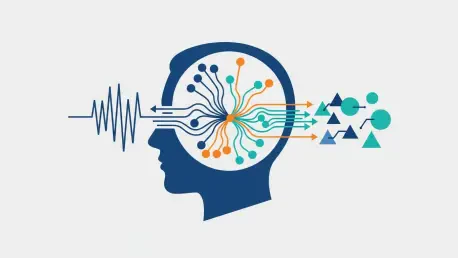
At the heart of this research is a departure from traditional AI approaches, grounding the new model in the “theory of constructed emotion.” This influential psychological theory posits that emotions are not innate, pre-programmed reflexes that are simply triggered by external events. Instead, it suggests that emotions are actively and continuously built by the brain in the moment. According to this view, the brain acts as a sophisticated prediction machine, constantly synthesizing a torrent of information to create a coherent emotional experience. It integrates internal physiological signals from the body, such as changes in heart rate or breathing (a process known as interoception), with external sensory data from the environment, like what is being seen and heard (exteroception). The goal of the research team was to build a computational system that could replicate this intricate integration process, thereby creating a model that learns to form emotional concepts organically rather than having them dictated.
To bring this complex theory into the digital realm, the scientists employed a sophisticated probabilistic model known as multilayered multimodal latent Dirichlet allocation, or mMLDA. A crucial feature of this architecture is that it operates in an unsupervised manner, meaning the model was not provided with any pre-defined emotional labels to guide its learning. Instead of being taught what “happiness” or “fear” looks like, the AI was tasked with discovering these concepts on its own from a rich, unlabeled dataset. This data was meticulously collected from 29 human participants who were shown a series of 60 emotion-evoking images. As the subjects viewed the images, researchers recorded a comprehensive set of multimodal data, including their physiological responses, their visual inputs, and their own free-form verbal descriptions of how they were feeling. This allowed the AI to learn from the same kinds of information streams that the human brain uses to construct emotion.
Validating the Computational Model
The primary achievement of the study was the model’s remarkable ability to independently identify and categorize distinct emotional concepts from the raw, unlabeled data. When the emotion categories generated by the AI were systematically compared against the self-reported evaluations from the human participants, the results showed an agreement rate of approximately 75%. This figure is not only impressive but also statistically significant, as it is far higher than what would be expected by random chance alone. This strong correlation suggests that the computational process unfolding within the AI closely mirrors the cognitive mechanisms that humans use to form emotional concepts. By successfully integrating diverse streams of information—physiological, visual, and linguistic—the model demonstrated an emergent ability to organize subjective human experiences into coherent and recognizable categories without any prior instruction on what those categories should be, providing strong validation for the underlying computational approach.
The success of this framework establishes a vital computational bridge between abstract psychological theory and concrete empirical validation, directly addressing the long-standing scientific question of how emotions are actually formed. By demonstrating that a machine can derive human-like emotional concepts from multimodal data, the research provides tangible evidence for the theory of constructed emotion. The model’s capacity to synthesize disparate data types to create holistic conceptual understandings marks a significant advancement for artificial intelligence, pushing it beyond simple pattern matching and toward a more genuine form of conceptual construction. This breakthrough not only validates a key theory of human cognition but also provides a powerful new tool for exploring the intricate relationship between mind, body, and environment. The research effectively opens the door for developing AI systems that can potentially understand the foundational building blocks of subjective human experience.
Pioneering New Frontiers for Human-AI Interaction
The practical implications of this work are extensive and could redefine the landscape of human-computer interaction. By modeling the underlying formation of emotion rather than just its outward expression, this framework could enable the development of far more nuanced, empathetic, and context-sensitive AI systems. For instance, interactive robots and virtual assistants could be equipped with a deeper understanding of a user’s emotional state, allowing them to respond not just to explicit commands but also to the subtle, unspoken feelings behind them. This would lead to interactions that feel significantly more natural, intuitive, and supportive. Imagine assistive technologies that can discern when a person is feeling overwhelmed, anxious, or content by integrating physiological and environmental cues, thereby adapting their behavior to provide more effective and compassionate support. Such advancements promise to make technology a more seamless and helpful partner in our daily lives.
The potential applications of this sophisticated emotional modeling extend profoundly into healthcare and assistive technology. The system’s ability to infer emotional states by integrating data that may be difficult for an individual to articulate could be transformative for mental health support, enabling continuous and non-invasive monitoring that provides clinicians with deeper insights into a patient’s well-being. Furthermore, this technology offers significant promise for creating advanced assistive tools for individuals with conditions such as dementia or developmental disorders, where communication can be a challenge. An AI capable of understanding emotional construction could help caregivers better recognize the needs and comforts of those they care for. This research provides a foundational computational framework that successfully bridges psychological theory with applied AI development, charting a course toward machines that can more genuinely comprehend and respond to the complex tapestry of human emotion.