
Today we’re joined by Ivan Kairatov, a biopharma expert at the forefront of integrating artificial intelligence into oncology. His team’s latest work, leveraging data from the landmark TAILORx trial, has produced an AI model that significantly refines our ability to predict long-term recurrence risk in the most common form of breast cancer. We’ll explore the clinical challenges that sparked this innovation, the intricate process of teaching an AI to think like a multidisciplinary tumor board, and what this leap in prognostic accuracy could mean for millions of patients navigating their long-term health after a cancer diagnosis.
Your research highlights the Oncotype DX score’s limitations in forecasting recurrence after five years. Could you detail the specific clinical challenges this creates and explain how that problem directly inspired the multimodal approach of integrating imaging, clinical, and expanded molecular data for the new AI model?
Absolutely. The central challenge is a deeply human one. For patients with HR-positive, HER2-negative breast cancer, the five-year survival mark is a major milestone, but it’s also a point of unnerving uncertainty. This isn’t a cancer where you can simply close the book after five years; in fact, at least half of all recurrences happen after that point. The standard tool, the Oncotype DX score, has been invaluable for guiding chemotherapy decisions early on, but its prognostic power fades significantly over time. It leaves doctors and patients in a difficult position, essentially navigating the future with an outdated map. This specific gap was the driving force behind our work. We knew we couldn’t rely on a single data stream anymore. The only way to get a clearer, longer-range forecast was to build a model that could see the tumor from multiple angles simultaneously—the way it looks under a microscope, its unique genetic signature, and its clinical context within the patient.
The ICM+ model integrates pathomic imaging, clinical information, and an expanded molecular panel from the TAILORx trial. Can you walk us through the process of combining these diverse datasets? What was the most significant technical hurdle or surprising insight you gained while merging these different information streams?
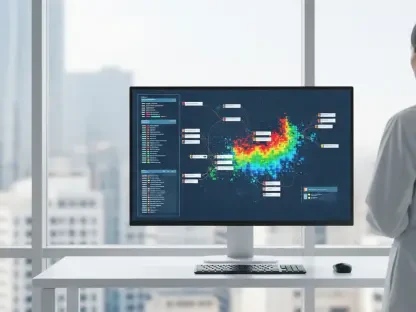
The process began by gathering the three essential pillars of data from over 4,400 tumor samples. First, we had the high-resolution digitized images of the pathology slides, which hold a wealth of visual information. Second, we had the rich clinical data for each patient. Third, and this was a key step, we developed an expanded molecular panel that went beyond the standard 21 genes to get a deeper biological profile. The most significant hurdle was teaching the AI to synthesize these fundamentally different types of information. It’s like asking someone to read a pathology report, a genetic sequence, and a patient’s chart all at once and then produce a single, coherent risk assessment. You have to train the model to weigh each piece of information appropriately. The most profound insight for me was realizing just how much prognostic power was locked away, hiding in plain sight, on those routine pathology slides. We’ve been looking at them for decades, but the AI could see subtle patterns in cellular architecture and organization that were invisible to the human eye but highly correlated with long-term outcomes.
The C-index jump for late recurrence was dramatic—from ODX’s 0.527 to your model’s 0.705 in the validation set. Beyond statistics, could you share a hypothetical patient scenario illustrating how this enhanced prognostic accuracy might concretely alter long-term monitoring or treatment discussions with an oncologist?
Those numbers represent a monumental shift from uncertainty to clarity. A C-index of 0.527 is barely better than a coin flip, which is a terrifyingly imprecise tool when you’re making decade-long health decisions. Now, imagine a 55-year-old woman who is six years past her initial diagnosis. Using the old score, her oncologist might say, “Your risk of late recurrence is low-ish, but it’s hard to be certain. Let’s just continue with standard follow-ups.” It’s a passive, wait-and-see approach. With our ICM+ model, we can generate a much sharper risk profile. If her score comes back high, the entire conversation changes. The oncologist can now say, “Our new analysis shows your specific tumor biology gives you a significantly elevated risk of recurrence between years 8 and 12. Let’s discuss a more intensive monitoring schedule, and perhaps explore the benefits of extending your endocrine therapy.” It transforms the plan from reactive to proactive, empowering both the patient and the physician with the foresight to act before a potential recurrence ever happens.
You mentioned that AI-based pathomic tools could analyze slides captured with widely available scanners, potentially at minimal cost. What are the practical steps required to bring this new diagnostic test into routine clinical practice, and what challenges must be overcome to ensure its accessibility in community oncology settings?
This is one of the most exciting aspects of the technology—its potential for democratization. The first practical step is, of course, regulatory validation and approval to ensure it meets the highest clinical standards. But the bigger challenge is logistical and educational, not technological. We’ve designed this so that it doesn’t require a community clinic in a rural area to buy a million-dollar piece of equipment. They are already preparing the necessary tissue slides. The key is building a simple, secure, HIPAA-compliant pipeline where a technician can scan that slide—even with a high-quality scanner or a specially adapted smartphone—and upload the image to a central cloud-based AI for analysis. The report would then be sent back to the oncologist. The main hurdles will be establishing these digital pathways and, just as importantly, training oncologists to understand, trust, and integrate these new, data-rich reports into their patient conversations. We need to ensure it feels like a supportive tool, not another complicated layer of technology.
What is your forecast for the role of multimodal AI models in oncology? How might these tools evolve over the next decade, moving beyond prognostication to potentially address current limitations like predicting chemotherapy benefit or guiding extended endocrine therapy?
My forecast is that these tools will become the standard of care, fundamentally reshaping precision oncology. What we’ve built with ICM+ is a powerful prognostic engine—it’s very good at telling you the “what” and “when” of recurrence risk. The next decade will be all about building predictive engines that can tell us “what to do about it.” The current limitation of our model is that it wasn’t designed to predict who will benefit most from chemotherapy or from staying on endocrine therapy past five years. That is precisely where the next generation of these AIs is headed. I envision a future where an AI model can run thousands of simulations based on a patient’s unique imaging, molecular, and clinical data to say, “For this specific tumor, the data suggests a 75% chance of response to this chemotherapy regimen, but only a 10% chance with extended endocrine therapy.” It will move from being a risk-assessment tool to an indispensable treatment-planning partner for every oncologist.