
For more than half a century, the medical community relied on a single mathematical shortcut to estimate the primary driver of heart disease, even as that shortcut failed millions of patients with complex metabolic profiles. Low-density lipoprotein cholesterol, or LDL-C, is the most frequently analyzed biomarker in preventive cardiology, yet its measurement has historically been an exercise in approximation rather than precision. The emergence of machine learning versions of the Martin-Hopkins equation marks a definitive shift from these static, 1970s-era formulas toward a dynamic era of cardiovascular diagnostics. This technology does not simply calculate a number; it interprets the unique chemical interplay within a blood sample to provide a personalized risk assessment that was once reserved for expensive and time-consuming research techniques.
This review examines the transition from the legacy Friedewald equation to modern machine learning models, specifically the optimized Martin-Hopkins approach. In an era where clinical guidelines demand lower and more precise treatment targets for high-risk patients, the inaccuracy of old methods is no longer a minor inconvenience but a significant barrier to effective care. By leveraging massive datasets and sophisticated algorithms, this technological advancement promises to standardize high-accuracy lipidology across the globe. The following analysis explores how this digital transformation works, why it outperforms existing standards, and what its widespread adoption means for the future of heart disease prevention.
The Evolution of Precision Lipidology
The shift toward machine learning in lipidology is born out of a critical necessity to align laboratory results with aggressive modern treatment goals. For decades, the Friedewald formula served as the global standard, but its reliance on a fixed ratio between triglycerides and very-low-density lipoprotein (VLDL) cholesterol made it notoriously unreliable at the extremes of the lipid spectrum. As clinicians began targeting LDL-C levels below 70 mg/dL or even 55 mg/dL for high-risk individuals, the inherent errors in the Friedewald equation became increasingly dangerous. A discrepancy of just 10 mg/dL can now be the deciding factor in whether a patient receives intensive therapy or is incorrectly deemed to be at a safe “goal.”
Modern cardiovascular medicine requires a level of precision that static math cannot provide. Machine learning fills this gap by replacing fixed assumptions with adaptive algorithms that recognize the complex, non-linear relationships between different lipid components. This movement is part of a broader technological landscape where clinical tools are becoming more transparent and accessible. The evolution is not just about a better formula; it is about moving toward a decentralized, open-access diagnostic environment where the highest standard of care is available to any laboratory with a basic computer system, regardless of their budget for specialized hardware.
Precision lipidology also addresses the changing demographic of cardiovascular risk. With the global rise of metabolic syndrome and type 2 diabetes, the “average” patient’s lipid profile is becoming more complex. These patients often present with high triglycerides and low LDL-C, the exact scenario where legacy equations are most likely to fail. By utilizing dynamic data patterns, machine learning provides a robust solution for these vulnerable populations, ensuring that their risk is not underestimated due to the limitations of twentieth-century arithmetic.
Technical Framework of the ML Martin-Hopkins Model
From Fixed Ratios: Dynamic Data Patterns
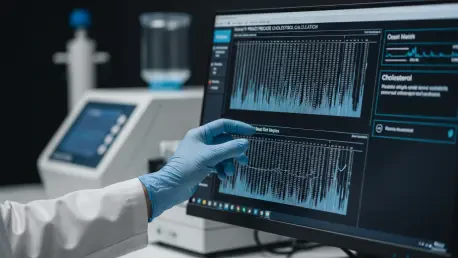
The primary innovation of the machine learning Martin-Hopkins model lies in its rejection of the fixed “one-size-fits-all” factor. In traditional methods, triglycerides are divided by a constant—usually five—to estimate VLDL cholesterol, which is then subtracted from other values to find LDL-C. However, this factor of five is rarely accurate across diverse patient populations. The machine learning version replaces this static number with a dynamic approach that selects from a vast matrix of thousands of different factors based on the patient’s specific non-HDL and triglyceride levels. This allows the algorithm to tailor its calculation to the unique biochemical environment of each individual sample.
This mathematical flexibility allows the model to maintain high performance even when triglyceride levels are elevated, a traditional “danger zone” for lipid estimation. By identifying subtle patterns in the data that a simple linear equation would miss, the machine learning model ensures that the resulting LDL-C value is a reflection of the patient’s actual biology rather than a mathematical average. This leap from fixed ratios to dynamic patterns is what differentiates modern AI-driven diagnostics from the tools that preceded them, offering a level of nuance that was previously only possible through physical separation of cholesterol components.
Large-Scale DatTraining and Validation
Building a model capable of such precision required an unprecedented scale of data. The researchers utilized the “Very Large Database of Lipids,” which contains millions of patient samples, to train and refine the algorithm. This massive dataset provided the statistical power necessary to account for nearly every possible biological outlier, ensuring the model’s reliability across different ages, genders, and health conditions. During the training process, the algorithm “learned” to identify the precise conversion factors that yielded the most accurate results when compared to the research gold standard of ultracentrifugation.
Validation was equally rigorous, involving millions of additional samples that were not used during the initial training phase. To ensure the model would hold up in real-world clinical settings, it was also tested against datasets from major clinical trials where patients were taking potent lipid-lowering drugs. These “external” tests proved that the machine learning model remains accurate even when a patient’s lipid levels are drastically altered by medication. This level of validation gives clinicians the confidence that the software-generated results are equivalent to what would be found in a high-end research facility.
Innovations in Diagnostic Accessibility and Transparency
The most significant recent development in this field is the intentional move away from “black box” technology. In the past, advanced diagnostic algorithms were often protected as proprietary intellectual property, requiring laboratories to pay expensive licensing fees for their use. In contrast, the machine learning Martin-Hopkins model has been released as open-access code. This transparency allows any laboratory director or IT specialist to inspect the logic behind the results, fostering a sense of trust and facilitating much faster global adoption. It ensures that the technology can be implemented in resource-limited settings where proprietary costs would be a barrier.
Furthermore, the industry is witnessing a shift toward “plug-and-play” software solutions that integrate directly into existing Laboratory Information Systems (LIS). Instead of requiring new physical machinery, labs can simply update the software logic that handles the lipid panel calculations. This ease of integration is vital for the modernization of healthcare, as it allows for immediate improvements in patient care without the years of delay typically associated with medical hardware procurement. These software-based innovations are leveling the playing field between small community clinics and large academic medical centers.
These advancements align perfectly with the push for standardized care in cardiovascular medicine. By providing a uniform, high-accuracy method that is easily accessible, the technology helps eliminate the “zip code lottery” of diagnostic quality. Whether a patient is in a rural clinic or a major metropolitan hospital, the machine learning approach ensures they are evaluated using the same rigorous standards. This movement toward transparency and accessibility is setting a new benchmark for how digital health tools should be developed and distributed in the public interest.
Clinical Implementation in Cardiovascular Medicine
The practical application of machine learning LDL-C estimation is most apparent when identifying patients who require intensive intervention. For example, patients who might benefit from PCSK9 inhibitors or high-dose statins often have LDL-C levels that hover around critical thresholds. If an inaccurate equation underestimates their levels, they may be denied coverage for these expensive but effective treatments. The machine learning model provides the precise data needed to justify clinical decisions and secure insurance approvals, ensuring that the right patients get the right drugs at the right time.
One of the most valuable use cases for this technology involves patients with metabolic syndrome or type 2 diabetes. These individuals frequently present with a specific lipid profile characterized by high triglycerides, which often causes legacy equations to significantly underestimate the amount of “bad” cholesterol present. The machine learning model acts as a “stress test” for these profiles, maintaining its accuracy where other methods fail. By providing a more truthful representation of the cholesterol burden in these high-risk groups, the technology directly influences preventive strategies and potentially prevents future cardiac events.
In preventive cardiology, the influence of accurate estimation extends to the long-term management of patient health. When a clinician can trust that a minor change in a patient’s LDL-C is a real biological shift rather than a mathematical fluke, they can fine-tune dosages with much greater confidence. This leads to better patient outcomes and fewer side effects, as medication levels are optimized rather than estimated. The real-world impact of this technology is a more nuanced, responsive approach to heart health that prioritizes the specific needs of the individual over generalized population averages.
Addressing Barriers to Global Adoption
Despite its clear advantages, the widespread adoption of machine learning LDL-C estimation faces several hurdles. The most prominent is the technical inertia within large laboratory networks. Updating the core logic of an LIS is often viewed as a high-risk endeavor, requiring extensive testing and downtime. Many institutions are hesitant to move away from the Friedewald formula simply because it has been the standard for five decades, and “good enough” is often the enemy of “better.” Overcoming this resistance requires not only technical proof but also a cultural shift toward valuing diagnostic precision over institutional tradition.
Regulatory landscapes also present a challenge, as different geographic regions have varying requirements for the validation of software-based medical devices. While the open-access nature of the ML Martin-Hopkins model helps, navigating the bureaucracy of national health systems can be a slow process. There are also concerns about whether a model trained primarily on large datasets from specific regions can be perfectly generalized to every ethnic population. Ongoing research must continue to validate the algorithm across a wider range of diverse global cohorts to ensure that no group is left behind by the digital transition.
Implementation obstacles are further complicated by the need for standardized reporting. For the technology to reach its full potential, every lab in a network must use the same updated logic to ensure consistency in a patient’s longitudinal health record. If one lab uses the legacy formula and another uses the machine learning model, the results will not be comparable, leading to confusion for both patients and physicians. Standardizing these updates across the entire healthcare continuum is a massive logistical task that requires coordinated efforts between laboratory directors, IT departments, and medical boards.
The Future: AI-Driven Cardiovascular Risk Assessment
Looking ahead, the integration of machine learning into lipid panels is likely just the beginning of a broader movement toward multi-marker risk algorithms. Future developments could see this estimation tool combined with other data points—such as genetic markers, inflammatory indicators like C-reactive protein, and even patient lifestyle data from wearables. By synthesizing these diverse streams of information, AI could provide a comprehensive “cardiovascular health score” that is far more predictive of heart attacks and strokes than any single biomarker could ever be on its own.
We are also moving toward a future where these diagnostics are integrated into real-time electronic health record dashboards. Instead of a static laboratory report, physicians will see dynamic projections of a patient’s risk trajectory based on different treatment scenarios. This would allow a doctor to show a patient exactly how their risk score would drop if they achieved a specific LDL-C target or improved their triglyceride levels. This interactive approach to diagnostics could significantly improve patient engagement and adherence to treatment plans, transforming the laboratory result from a confusing number into a powerful motivational tool.
The long-term impact of these accessible, high-precision diagnostics will be a significant reduction in the global burden of atherosclerotic disease. As more laboratories adopt machine learning tools, the “silent” risk factors that previously went undetected due to poor measurement will finally be identified and treated. This shift toward proactive, data-driven prevention represents a fundamental change in the way we approach public health, moving the focus from treating heart attacks after they happen to preventing them with surgical mathematical precision.
Final Assessment of the Technology
The shift toward machine learning for LDL-C estimation represented a significant victory for evidence-based medicine. The technology demonstrated that the legacy formulas used for half a century were no longer sufficient for the high-precision requirements of modern cardiovascular care. By replacing static ratios with a dynamic, data-driven framework, the ML Martin-Hopkins model provided a level of accuracy that was previously unattainable in routine clinical practice. It successfully addressed the most difficult challenges in lipidology, particularly the estimation of risk in patients with complex metabolic profiles who were previously underserved by existing standards.
The open-access nature of this advancement ensured that it was not just a tool for elite institutions but a global solution for improved diagnostics. It bypassed the traditional barriers of cost and proprietary secrecy, favoring a model of transparency that allowed for rapid integration into laboratory systems. The technology proved that software-based solutions could match the performance of specialized laboratory hardware, offering a scalable way to upgrade the standard of care without massive capital investment. The focus on accessibility made it possible for clinicians worldwide to make better-informed decisions regarding statin therapy and advanced lipid-lowering treatments.
Ultimately, the transition to AI-driven cholesterol assessment paved the way for the next generation of personalized medicine. It taught the medical community that even the most established protocols should be re-evaluated when new technology offers a clear path to better patient safety. By providing a more truthful measurement of a patient’s cardiovascular risk, this technology empowered both physicians and patients to take more effective action against heart disease. The widespread adoption of these models served as a cornerstone for a more accurate, equitable, and effective approach to global heart health, ensuring that preventive cardiology remained at the cutting edge of scientific innovation.