
Ivan Kairatov is a distinguished expert in biopharmaceutical informatics with a deep-seated passion for merging high-tech innovation with practical research and development. With years of experience navigating the complexities of laboratory environments, he has become a leading voice in the transition toward autonomous, AI-driven scientific workflows. In this conversation, we explore how the integration of agentic AI, cloud-native architectures, and digital twins is reshaping the industry, focusing specifically on how these advancements reduce human error and accelerate the journey from the bench to the market.
Many laboratories are moving toward autonomous environments to reduce routine workloads. How do AI agents specifically orchestrate complex tasks within a management system, and what metrics should leaders track to measure efficiency?
In an autonomous environment, AI agents act as the central nervous system of the laboratory, moving far beyond simple automation to true orchestration. For example, when a batch of samples arrives, these agents can automatically assess the priority, check the availability of calibrated equipment, and assign the task to the most appropriate workstation without human intervention. To measure the success of this shift, leaders should track metrics such as sample turnaround time, the ratio of automated versus manual data entries, and the overall reduction in re-test rates due to procedural errors. In a typical day, a lab might see its throughput increase significantly as agents handle the “logic” of the workflow, allowing the physical testing to proceed in a continuous, self-optimizing loop that keeps instruments running at peak capacity.
Transitioning to new informatics platforms often carries risks of downtime or system instability. How does a cloud-native, multi-tenant architecture allow for rapid AI updates without disrupting existing laboratory workflows?
The beauty of a cloud-native, multi-tenant architecture lies in its ability to decouple the core laboratory functions from the advanced analytical layers. Because the AI engine lives in a scalable SaaS environment, we can push updates, refine machine learning models, and introduce new features in the background without touching the validated state of the local LIMS. I recall a scenario where a facility was burdened by a rigid legacy system; by implementing a cloud-native bridge, they could experiment with new AI tools in a “sandbox” mode while their primary operations remained stable. This approach eliminates the “big bang” upgrade fear, providing a low-risk migration path where updates feel as seamless as a mobile phone app refresh rather than a month-long IT project.
Real-time environmental monitoring and predictive maintenance are now possible through IoT and digital twin technologies. How do these tools interact to prevent equipment failure, and what specific actions does a scientist take when the system identifies a discrepancy?
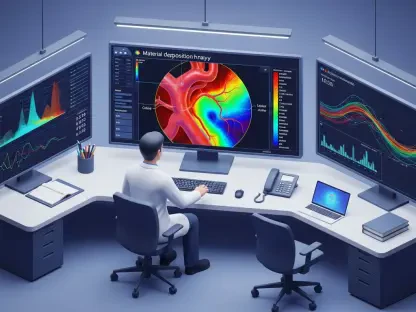
By integrating IoT sensors with digital twins, we create a virtual mirror of the physical lab that constantly compares real-time performance against historical “healthy” data. If a digital twin detects a subtle vibration pattern in a centrifuge that deviates from the norm, it triggers an alert before the machine actually breaks down. Instead of walking into the lab to find a failed experiment, a scientist receives a proactive notification on their dashboard and can choose to reroute samples to a secondary instrument. This shift from reactive “fixing” to proactive management ensures that critical research remains on track, saving both expensive reagents and months of scientific effort.
Manual data entry for stability studies and compliance monitoring frequently leads to human error. How do automated assistance tools streamline protocol creation while ensuring adherence to FDA or ISO standards?
Automated assistance tools act as a digital safety net, ensuring that every protocol is built on a foundation of regulatory compliance from the very first click. When creating a stability study, the AI can automatically suggest sampling intervals and storage conditions that align with FDA or ISO requirements, drastically reducing the mental load on the scientist. I have seen situations where AI-enabled worksheet assistance fundamentally changed a lab’s culture by flagging data discrepancies in real-time, preventing the entry of “out of specification” results caused by simple typos. This move toward “compliance by design” means that when it comes time for an audit, the reporting is already 100% accurate and ready for submission.
Research facilities aim to accelerate the path to market by automating routine sample management and data analysis. In what ways does process simplification free up personnel for discovery-led tasks, and what time-saving results have been observed?
Process simplification is the ultimate catalyst for innovation because it returns the gift of time to the smartest people in the building. When you automate repetitive sample logging and preliminary data cleaning, you effectively remove the “clutter” that occupies up to 30% or 40% of a scientist’s day. We have observed that labs adopting these intelligent tools can move products through the pipeline much faster, as personnel are no longer bogged down by administrative chores and can focus on interpreting results and designing the next breakthrough. This operational improvement doesn’t just save hours; it creates an environment where scientific discovery is the primary activity rather than a secondary one.
What is your forecast for AI-driven laboratory operations?
I believe we are entering an era of the “self-optimizing laboratory” where AI will transition from a helpful assistant to a core strategic partner. My forecast is that within the next two years, over 75% of laboratories will have successfully implemented AI and machine learning to manage their daily operations. We will see the rise of semantic capabilities where the system truly understands the context of the data it processes, leading to an autonomous ecosystem that scales effortlessly. Ultimately, this will result in a global acceleration of scientific advancement, where the time from a laboratory concept to a life-saving product on the market is shortened more than we ever thought possible.