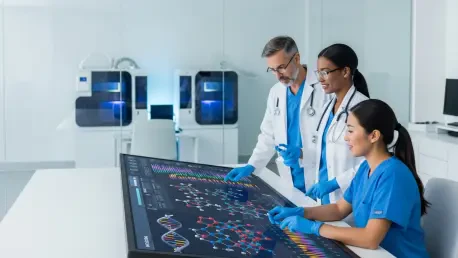

The diagnostic odyssey for patients with rare diseases has historically been a grueling marathon characterized by years of uncertainty, misdiagnosis, and invasive testing that often yielded no actionable results for families in distress. In the current medical landscape of 2026, the shift from experimental sequencing to integrated clinical application has fundamentally altered this trajectory, turning raw data into a lifeline for millions. While high-throughput technologies generate vast amounts of information, the primary challenge remains the translation of these complex datasets into timely medical interventions. This transition requires a sophisticated synthesis of advanced bioinformatics, clinical expertise, and a reimagined diagnostic workflow that prioritizes iterative analysis over a single-point test. By moving beyond a linear model of testing, health systems are now recognizing that the true value of genomic tools lies in their continuous re-evaluation within a clinical context that values phenotypic detail and deep family history. This patient-centric approach ensures that the billions of base pairs sequenced in the laboratory are contextualized by the unique biological realities of the individual, leading to more accurate and meaningful clinical outcomes.
The Necessity: Why Multidisciplinary Reanalysis Matters
Raw genetic data provided by large-scale sequencing programs does not automatically result in a clear diagnosis, as the presence of a variant does not always equate to a functional understanding of a disease. Recent findings from localized pilot projects indicate that a hospital-driven, multidisciplinary approach can more than double the original diagnostic rate when compared to centralized, automated pipelines. This improvement is largely attributed to the synergy between clinicians who understand the patient’s physical symptoms and bioinformaticians who can navigate the nuances of genomic architecture. By combining these distinct perspectives, teams are able to identify subtle pathogenic markers that automated filters might dismiss as noise. This collaborative framework relies on the inclusion of broader family recruitment and sharper phenotypic characterization, allowing for a more holistic view of how specific genetic variations manifest across different individuals within the same lineage. Consequently, the interpretation of data becomes a dynamic conversation between the laboratory and the clinic rather than a static report.
Building on this foundation, it is becoming increasingly clear that the diagnostic journey is no longer a simple, linear path but an iterative process where re-evaluating historical data is just as important as the initial test. As scientific knowledge expands and new gene-disease associations are discovered, datasets that were previously deemed inconclusive can be mined for fresh insights. This shift toward longitudinal genomic management ensures that patients are not left behind as the field progresses, allowing for “cold cases” to be reopened and solved through updated algorithmic tools and expanded reference databases. Furthermore, this iterative model encourages a culture of continuous learning within the medical community, where every solved case contributes to a deeper collective understanding of rare pathologies. The integration of this feedback loop into standard hospital protocols represents a significant maturation of the field, moving away from a “once and done” mentality toward a more sustainable and patient-focused diagnostic architecture that evolves alongside the technology itself.
Evaluating the Effectiveness: Choosing Between Sequencing Modalities
A major point of discussion in healthcare management is the choice between exome sequencing and whole-genome sequencing, a decision that has significant implications for both clinical outcomes and health system budgets. Recent large-scale trials involving over a thousand families have shown that the diagnostic success rates for both methods are nearly identical in a variety of standard clinical presentations. These findings suggest that for many patients, the choice between the two is not about one being inherently better in terms of raw yield, but rather which one is most appropriate for the specific symptoms being investigated at the point of care. While whole-genome sequencing is frequently praised for its ability to capture non-coding regions and complex structural variants, the practical utility of this additional data is often limited by our current ability to interpret it. Therefore, exome sequencing remains a robust and highly targeted tool that delivers equivalent results for the majority of patients whose conditions reside within the protein-coding regions of the human genome.
For health systems managing limited budgets in 2026, this comparative evidence is vital for developing sustainable procurement strategies and clinical guidelines. It shows that while whole-genome sequencing is often seen as the ultimate tool because it covers the entire genetic code, exome sequencing remains a powerful and cost-effective alternative that can be deployed more broadly. The focus of the industry is now moving toward choosing the right technology for the right patient population, ensuring that resources are used efficiently without sacrificing the quality of care or the speed of diagnosis. This nuanced approach allows for the strategic allocation of higher-cost whole-genome tests to cases where initial exome results are negative or where complex chromosomal rearrangements are suspected. By adopting a tiered or phenotype-driven testing strategy, medical institutions can maximize their diagnostic reach while maintaining fiscal responsibility. This pragmatic shift reflects a broader trend toward precision resource management, where the goal is to provide the highest level of care to the greatest number of people.
Clinical Standards: Improving Care and Early Detection
Beyond the first diagnosis, genomic tools are becoming essential for monitoring complex treatments, such as allogeneic hematopoietic stem cell transplants, where precision is a matter of survival. By establishing standardized guidelines for laboratory testing and chimerism monitoring, medical centers can ensure that patient care is consistent and reliable across different regions and specialties. This move toward precision monitoring allows doctors to use evidence-based metrics to track donor engraftment and catch potential complications, such as graft-versus-host disease or early relapse, much earlier than was previously possible. Integration of these genomic benchmarks with measurable residual disease testing has transformed post-transplant care into a data-driven discipline that prioritizes proactive intervention over reactive treatment. As these technical standards become more refined, they provide a blueprint for managing other high-risk procedures, ensuring that the benefits of genomic monitoring are applied consistently across both adult and pediatric patient populations to improve long-term survival rates.
General practitioners also play a critical role in this evolving ecosystem because they are usually the first to see patients presenting with the vague symptoms of rare conditions. Many genetic diseases, such as those affecting the liver or metabolic pathways, often present with non-specific signs like fatigue or mild enzyme elevations that can lead to long delays in specialist referral. By empowering primary care doctors with better screening tools and a higher index of suspicion, the medical community can identify at-risk patients and their family members before irreversible organ damage occurs. This democratization of genomic medicine involves providing generalists with clear pathways for cascade testing and genetic counseling, effectively moving the starting point of the diagnostic journey closer to the patient’s home. This proactive approach not only saves lives through early intervention but also reduces the overall burden on the healthcare system by preventing the complications associated with late-stage disease. The transition toward a “genomics-aware” primary care sector is a fundamental step in ensuring that rare diseases are caught in their earliest, most treatable phases.
Global Equity: Addressing Diversity and Public Health
A historical limitation of genomic research is that it has largely focused on populations of European ancestry, which has created significant gaps in our understanding of how rare diseases manifest in other groups. Current efforts are working to fix this imbalance by studying diverse populations on a global scale, which has already led to the discovery of new genetic markers for inflammation, blood clotting, and liver physiology. Ensuring that research includes people from all ancestral backgrounds is a scientific necessity that makes precision medicine more accurate and effective for everyone, regardless of their heritage. By identifying variants that are unique to specific populations, researchers can develop more inclusive diagnostic panels and targeted therapies that address the needs of a global patient base. This commitment to diversity is not only a matter of ethical equity but also a strategy for improving the sensitivity of genomic tools, as insights gained from one population often shed light on biological processes that are universal to all humans, regardless of their geographical origin.
The expansion of newborn screening into the genomic era represents the next frontier in public health, offering the potential to screen infants for hundreds of treatable rare diseases at the very start of life. While the technology now exists to perform this screening efficiently, the transition brings complex ethical and logistical challenges that must be addressed with care. Balancing the promise of preventive medicine with the need for clear clinical benefits and ethical rigor is the primary goal for health systems as they look toward the future of pediatric care. This involves developing robust consent models that respect parental autonomy while ensuring that the infrastructure is in place to provide follow-up care for every positive result. The goal is to move toward a model of “preventive genomics,” where the early identification of genetic risk leads to immediate life-altering treatments, effectively ending the diagnostic odyssey before it even begins. As these screening programs scale, they will serve as the foundation for a new era of proactive healthcare that prioritizes early detection and lifelong wellness for all newborns.
Strategic Directions for Integrated Diagnostics
The medical community successfully transitioned from identifying rare diseases to managing them through a unified framework of genomic integration and clinical standard-setting. Leaders in the field established multidisciplinary review boards as the standard of care, ensuring that every patient benefited from the collective intelligence of specialists rather than relying on a single laboratory report. Healthcare administrators implemented tiered sequencing protocols that balanced the comprehensive nature of whole-genome data with the cost-efficiency of targeted exome panels, allowing for broader access across diverse socioeconomic groups. This shift was supported by the development of clear, evidence-based guidelines for long-term patient monitoring, which significantly reduced the incidence of post-treatment complications in complex cases like stem cell transplantation. By prioritizing data re-evaluation and ancestry-inclusive research, the industry moved away from fragmented diagnostic practices toward a more cohesive and equitable global network.
Moving forward, the focus remained on expanding the reach of primary care through the deployment of genomic decision-support tools that assisted general practitioners in identifying rare phenotypes during routine visits. Educational initiatives were launched to train the next generation of clinicians in the nuances of genomic interpretation, bridging the gap between molecular biology and bedside medicine. Public health officials worked to harmonize newborn screening protocols, ensuring that every child had access to life-saving diagnostics regardless of their birth location. These actions created a robust infrastructure capable of handling the increasing volume of genomic data while maintaining the highest ethical standards for patient privacy and informed consent. Ultimately, the successful integration of these tools did not just provide answers for families in need; it established a proactive medical model that utilized the full potential of human genetics to prevent disease and optimize health outcomes on a global scale.