
Modern precision engineering and medical diagnostics often struggle against the inherent tendency of light to scatter and lose focus as it moves through various environments. While traditional laser systems have revolutionized many industries, they remain shackled by the physical law of diffraction, which causes beams to widen and weaken as they travel away from their source. This degradation of intensity and focus prevents scientists from achieving high-resolution results in deep-tissue imaging and limits the efficiency of long-range optical communications. To address this persistent challenge, researchers at Chiba University in Japan, led by Assistant Professor Andra Naresh Kumar Reddy, have pioneered a compact and highly efficient method for generating a “nondiffracting bottle laser.” This technology creates a specialized structure of light that maintains its integrity over long distances, offering an unprecedented level of control and precision. By effectively caging light within a dark interior surrounded by a bright shell, this innovation provides a powerful new tool for tasks ranging from delicate microscopic surgery to the stable manipulation of individual atoms in quantum physics experiments.
Overcoming the Limitations of Standard Laser Propagation
Structural Barriers in Conventional Beam Technology
Most standard laser sources utilized in current technology produce what are known as Gaussian beams, which naturally diverge and lose power density as they propagate through space. This physical constraint is particularly problematic in applications requiring a tight, intense focus over a significant working distance, such as deep-tissue biological imaging or high-resolution material processing. When a laser beam spreads, it not only loses its energy concentration but also introduces noise and reduces the resolution of the resulting data or the accuracy of the physical cut. Scientists have long sought alternatives, such as Bessel beams, which are formed by the self-interference of light to resist diffraction. However, traditional Bessel beams are characterized by complex, unwanted concentric rings known as sidelobes. these secondary rings of light can interfere with the primary beam’s performance, making them difficult to integrate into practical, high-precision settings where clarity and localized intensity are paramount.
The development of sophisticated light structures like “optical bottle beams”—regions of darkness completely encapsulated by intense light—has historically been hindered by the complexity and cost of the necessary optical hardware. Generating these “light cages” typically requires bulky, expensive, and difficult-to-align optical systems that are sensitive to environmental vibrations and thermal shifts. Such setups are often too cumbersome for portable medical devices or streamlined industrial manufacturing units, limiting the technology’s reach to specialized laboratory environments. The inability to produce stable, micron-sized bottle beams in a compact form factor has remained a bottleneck for advancing fields like nanotechnology, where trapping and moving microscopic particles requires a highly controlled and localized electromagnetic field. Without a way to simplify the production of these complex beams, the potential for using light to manipulate matter at the atomic scale remained largely theoretical for many practical applications.
Engineering the Next Generation of Optical Control
A significant breakthrough arrived when the research team at Chiba University introduced a streamlined, two-step transformation process using a binary axicon and a flat multilevel diffractive lens. This innovative approach begins with a standard Gaussian beam, which is passed through the binary axicon to transform the light into a modified zero-order Bessel beam. This specific modification is crucial because it effectively suppresses the unwanted sidelobes that traditionally plague Bessel beam structures, resulting in a much cleaner and more usable light profile. By eliminating the interference from secondary light rings, the researchers ensured that the beam remains concentrated and predictable. This first stage of the transformation sets the foundation for a beam that can travel without immediate spreading, providing the necessary raw material for the creation of more complex “caged” light structures that can be used in sensitive environments.
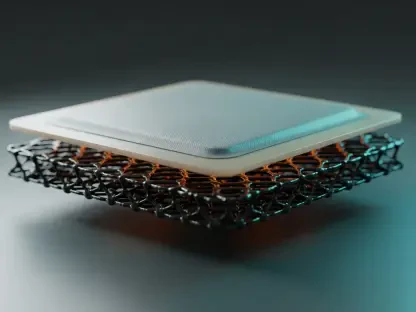
Following the initial transformation, the beam is directed into a flat multilevel diffractive lens (MDL), which is a remarkably thin disc composed of concentric rings only a few micrometers wide. Unlike traditional curved lenses that are bulky and heavy, the MDL uses an inverse-design approach to manipulate the phase and amplitude of the light with extreme precision. The lens is engineered to focus the incoming Bessel beam into a series of dark regions encapsulated by bright light, creating what is known as a laser chain beam. These “light cages” are only microns in size but remain stable over a working distance of approximately 20 centimeters. This setup offers superior control over diffraction efficiency compared to conventional refractive optics, all while maintaining a compact and scalable footprint. The result is a robust, portable system capable of generating highly sophisticated light structures that were previously only possible with massive laboratory equipment.
The Technical Evolution and Practical Utility of Light Cages
Enhanced Resilience and Imaging Capabilities
The most transformative characteristic of these new nondiffracting bottle beams is their remarkable “self-healing” property, which allows the light structure to reconstruct itself after encountering an obstacle. Because the beam is formed by controlled longitudinal interference, the light waves can navigate around small particles or through turbulent media and reform their original shape on the other side. This capability is a game-changer for medical imaging, particularly when trying to observe structures deep within biological tissues where light usually scatters and degrades rapidly. By maintaining a sharp, nondiffracting focus in these “random media,” the bottle beam allows clinicians to obtain high-resolution images that were previously obscured by the internal complexity of the body. This resilience ensures that the integrity of the data remains intact, even when the beam passes through moving fluids or dense cellular structures.
Beyond biological applications, the stability of these beams provides a significant advantage for long-range communication and sensing in unpredictable environments, such as a turbulent atmosphere. Traditional lasers often suffer from “beam wander” or atmospheric scintillation, where air pockets of different temperatures distort the light path. The nondiffracting nature of the bottle beam, combined with its ability to self-heal, ensures that the signal remains focused on its target with minimal loss of information. This leads to more reliable data transmission and more accurate remote sensing capabilities. As industries move toward more automated and interconnected systems, the ability to maintain a stable optical link through adverse conditions becomes a critical requirement. The Chiba University research demonstrates that by rethinking the fundamental structure of the laser beam, it is possible to bypass environmental limitations that have historically hindered optical performance.
Advancing Nanotechnology and Quantum Physics
The creation of micron-sized “light cages” opens up extraordinary possibilities in the realms of quantum physics and nanotechnology, specifically regarding the manipulation of matter. These bottle beams act as highly stable optical tweezers, capable of trapping individual atoms or microscopic particles within their dark interiors. Because the particles are surrounded by high-intensity light walls, they are held in place with unprecedented precision, allowing scientists to study atomic interactions without the interference of external forces. This level of stability is essential for the development of quantum computers and advanced sensors, where the position and state of single particles must be controlled with extreme accuracy. The compact nature of the MDL-based system makes it easier to integrate these optical traps into existing semiconductor manufacturing processes, potentially leading to faster and more efficient production of next-generation electronic components.
Furthermore, the compatibility of this technology with ultrafast lasers suggests a new frontier for high-harmonic generation and the production of extreme ultraviolet light or X-rays. By focusing intense light-matter interactions within the controlled environment of a bottle beam, researchers can drive physical processes that require immense energy density. This has direct implications for micromachining, where the ability to deliver precise bursts of energy to a localized area allows for the fabrication of complex three-dimensional structures at the nanoscale. The durability and efficiency of the MDL system ensure that these high-energy applications remain cost-effective and scalable for industrial use. By combining the self-healing nature of structured light with the precise focusing power of flat optics, the scientific community has gained a practical solution for the future of optical manipulation and high-energy physics.
Implementation and Future Strategic Adoption
The transition from traditional Gaussian optics to nondiffracting bottle beams was characterized by a shift toward integrated, flat-optic solutions that prioritize portability and efficiency. Industries involved in precision manufacturing and medical diagnostics successfully integrated these multilevel diffractive lenses into their existing hardware to reduce the footprint of their optical assemblies. This adoption facilitated the development of handheld diagnostic tools capable of performing deep-tissue scans that once required large, stationary machines. Organizations focused on quantum computing utilized the stability of these light cages to scale up their qubit arrays, benefiting from the reduced alignment sensitivity of the MDL-based systems. The move toward these advanced light structures allowed for a more robust approach to photonics, where environmental interference no longer dictated the limits of optical performance or accuracy.
Moving forward, the focus should remain on the mass production and standardization of multilevel diffractive lenses to ensure widespread access across different scientific sectors. Researchers and engineers would benefit from developing open-access design libraries for MDLs, allowing for the customization of bottle beam profiles to suit specific industrial needs, such as varying focal lengths for different types of micromachining. It is also recommended to explore the integration of these beams with artificial intelligence to dynamically adjust the light structure in real-time, further enhancing the self-healing capabilities in highly volatile environments. By prioritizing the scalability of this technology, the global optical community ensured that the benefits of nondiffracting light were not confined to the laboratory but were actively utilized to solve complex engineering and medical challenges.