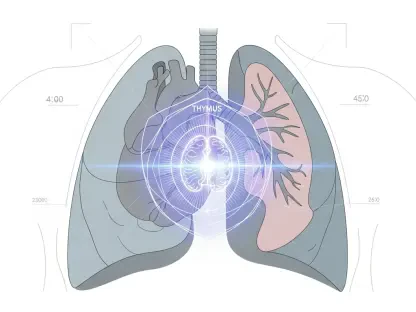

The invisible particles swirling through the European atmosphere carry a lethal potential that is dictated far more by regional economic vitality than by the mere chemistry of the emissions themselves. While atmospheric science has long documented the physical pathways of nitrogen dioxide and particulate matter, a massive longitudinal study encompassing 31 nations and over 500 million people has revealed that the ultimate consequence of exposure is intrinsically tied to a population’s wealth. This research, spearheaded by the Barcelona Institute for Global Health and the Barcelona Supercomputing Center, analyzed nearly two decades of mortality data to uncover a disturbing trend where wealth acts as a primary shield against environmental death. It is no longer enough to measure the parts per million in the air; one must also measure the gross domestic product of the community breathing it. The findings suggest that the struggle for clean air is actually a struggle for economic equity across the entire continent.
The Geography of Economic and Environmental Disparity
Analyzing the Divide: Public Health Outcomes
The research highlights a stark geographic and economic chasm, with Northern and Western Europe generally enjoying better health outcomes than the South and East. Regions with high GDP per capita, lower poverty rates, and longer life expectancies consistently show significantly lower mortality risks associated with pollutants like nitrogen dioxide and fine particulate matter. In these affluent areas, robust healthcare systems and advanced public health initiatives provide a safety net that effectively mitigates the physiological stress caused by poor air quality. Wealthier regions possess the administrative capacity to implement sophisticated monitoring networks and rapid response protocols for high-pollution days, ensuring that the most vulnerable citizens receive timely warnings. Furthermore, the higher standard of living in these nations often correlates with better housing quality and superior indoor air filtration systems, which further insulate the population from the hazardous outdoor environment during peak pollution events.
In sharp contrast, disadvantaged regions in Southern and Eastern Europe face mortality risks that are often double those of their wealthier counterparts, even when pollutant concentrations are nearly identical. This disparity proves that vulnerability is a product of social and economic infrastructure rather than just environmental exposure. Poorer regions often lack the financial resources to enforce strict environmental regulations or provide the specialized medical care necessary to treat chronic respiratory and cardiovascular conditions exacerbated by pollution. The lack of investment in preventative healthcare means that underlying conditions often go undiagnosed until they reach a critical stage, at which point the added stress of atmospheric toxins becomes fatal. This economic gravity pulls these regions into a cycle where poor health outcomes drain financial resources, preventing the very infrastructure improvements that could break the link between pollution and death. The data underscores that living in a lower-income region is a biological risk.
Socioeconomic Resilience: Healthcare and Infrastructure
A critical component of this divide is the difference in regional healthcare infrastructure and its ability to absorb the shock of environmental health crises. Wealthier European territories have successfully integrated environmental health data into their primary care models, allowing doctors to preemptively treat patients during seasons of high ozone or particulate matter. These systems are supported by a tax base that allows for continuous equipment upgrades and the hiring of specialized medical personnel who focus on the long-term effects of environmental toxins. Conversely, in regions with lower economic output, healthcare facilities are often overburdened and underfunded, focusing primarily on acute care rather than the subtle, long-term degradation caused by air pollution. This structural weakness means that a spike in nitrogen dioxide levels leads to a much higher fatality rate in a Bulgarian city than in a Swedish one, simply because the Swedish system is better equipped to manage the sudden influx of respiratory distress cases.
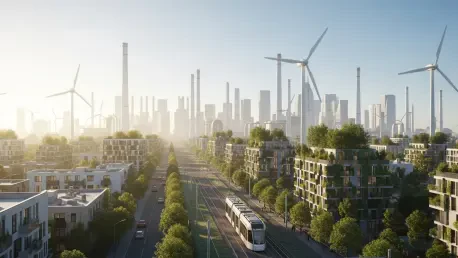
Moreover, the physical layout and urban planning of wealthy cities reflect a long-term investment in public health that poorer regions cannot yet afford. Affluent metropolitan areas have prioritized the relocation of heavy industry far from residential centers and have invested heavily in pedestrian-friendly zones that reduce the localized concentration of vehicle exhaust. These regions also tend to have a higher density of green spaces, which serve as natural filters and temperature regulators, further reducing the mortality risks associated with both pollution and extreme heat. In contrast, many lower-income regions still feature residential areas in close proximity to industrial zones or major transit corridors where fossil-fuel-dependent logistics are most active. Without the capital to redesign these urban environments, these populations remain trapped in high-exposure zones. This lack of spatial justice means that poverty is physically mapped onto the landscape, creating pockets of high mortality that persist regardless of national air quality trends.
The Role of Energy Transitions in Saving Lives
Evaluating the Impact: Renewable Adoption on Mortality
The transition to renewable energy serves as a dual-action solution for public health by both clearing the skies and strengthening community resilience. Data shows that the shift toward clean energy during the 21st century has directly triggered massive reductions in air pollutants, leading to a 12% to 52% decrease in mortality depending on the specific particle type. This shift is most pronounced in wealthier nations that have the capital to overhaul their energy grids and invest in sustainable infrastructure. The rapid decommissioning of coal-fired power plants in favor of wind and solar arrays has removed the primary source of fine particulate matter in many Northern European corridors. This energy evolution does more than just lower the background concentration of toxins; it signals a broader societal shift toward prioritizing health and sustainability over short-term industrial output, creating a cleaner baseline for the next generation of urban residents.
Beyond simply lowering emission levels, the adoption of renewables often coincides with broader urban improvements, such as cleaner public transit and expanded green spaces. These systemic changes reduce population vulnerability by creating healthier living environments that make citizens more resilient to the pollutants that remain. However, because this progress is tied to economic power, countries like Italy and Poland remain more dependent on fossil fuels, leaving their populations more exposed to health risks. The financial barriers to entry for large-scale renewable projects mean that poorer nations are often forced to extend the life of aging, high-emission infrastructure. This economic reality creates a delay in the health benefits that renewable energy provides. While a wealthy nation might see an immediate drop in hospitalizations following a green energy subsidy, a less affluent country may wait decades for the same results. The energy transition is thus a primary driver of the widening health gap between the various regions.
Environmental Justice: The Speed of Transition
The pace of the energy transition is intrinsically linked to the availability of international and domestic financing, which further exacerbates the divide between the European East and West. Wealthy nations have been able to leverage private investment and government bonds to fast-track the development of carbon-neutral technology, effectively buying their way into a healthier future. In these regions, the public health savings—measured in reduced hospital admissions and increased labor productivity—often justify the initial high costs of the transition. However, for nations with lower credit ratings or higher existing debt burdens, the upfront cost of shifting from coal to renewables is often prohibitive. This creates a scenario where the populations most in need of the health benefits of clean energy are the ones least likely to receive them in a timely manner. The result is a form of environmental stagnation where the poor continue to breathe the remnants of a fossil-fuel-driven economy.
Furthermore, the transition to renewables often triggers a secondary wave of economic development that further bolsters public health. Green energy sectors create high-paying jobs and stimulate local economies, providing the very tax revenue needed to improve the healthcare systems mentioned earlier. This positive feedback loop is currently concentrated in regions that already possess a strong economic foundation. In contrast, regions that are slow to transition miss out on these economic boons, remaining stuck with both high pollution and low economic growth. This disparity suggests that the green transition is not just an environmental necessity but a critical tool for social and health equity. Without a concerted effort to provide financial assistance and technology transfers to Southern and Eastern Europe, the health benefits of the renewable revolution will remain geographically isolated. The challenge lies in ensuring that the clean energy grid reaches those who are currently paying the highest price in lives lost to pollution.
Bridging the Gap Through Strategic Policy
Addressing Inequality: Environmental Protection Efforts
The widening gap in health equity between 2003 and 2026 underscores the fact that technological progress does not automatically benefit everyone. While wealthier regions saw a steady decline in pollution-related deaths, many lower-income areas experienced stagnant or even rising mortality risks. This divergence suggests that without targeted intervention, the benefits of the green revolution will remain concentrated in the hands of the wealthy, leaving vulnerable populations behind. Policymakers have realized that a blanket approach to environmental regulation is insufficient because it ignores the underlying social conditions that make pollution more lethal in certain areas. To be effective, air quality standards must be paired with aggressive social programs that address poverty, housing quality, and healthcare access. Only by strengthening the human element of the equation can the physical reduction of pollutants lead to a true decrease in mortality rates across all demographics regardless of their specific location.
To counter this trend, policymakers must prioritize health equity by directing environmental investments toward the most affected and least resilient regions. Expanding monitoring systems and integrating data into early warning platforms can help protect high-risk groups from lethal pollution spikes. Many regional governments have already begun experimenting with localized alert systems that provide specific health advice to residents of low-income neighborhoods during high-pollution events. These systems go beyond simple air quality indices by incorporating data on local hospital capacity and the prevalence of preexisting conditions in the area. By focusing resources on these hotspots, authorities can maximize the impact of every euro spent on public health. The goal is to create a more granular approach to environmental protection that recognizes the unique challenges faced by disadvantaged communities. Ultimately, the fight for clean air cannot be won without simultaneously addressing the socioeconomic inequalities that leave millions uniquely vulnerable.
Future-Proofing: Urban Health Systems
In the years leading up to 2026, European nations significantly expanded their use of predictive modeling to anticipate the intersection of pollution spikes and socioeconomic vulnerability. These efforts demonstrated that the most effective interventions were those that combined emission controls with direct economic support for the populations living in industrial corridors. This period of research and policy development proved that the mortality gap could be narrowed through targeted healthcare subsidies and the rapid deployment of electric public transportation in underserved areas. Governments that adopted these integrated strategies saw a measurable improvement in life expectancy among their poorest citizens, decoupling wealth from environmental survival. The success of these pilot programs provided a roadmap for other regions to follow, emphasizing that public health is an investment in human capital that pays dividends across the entire economy. The lessons learned during this time have reshaped the continental approach to environmental justice.
Looking ahead, the focus must remain on the integration of environmental and social policy to ensure that no region is left in a state of atmospheric neglect. The expansion of the Forecaster.Health platform and similar early warning systems represents a critical step in providing actionable data to those who need it most. These tools allow for the real-time adjustment of public health resources, ensuring that medical facilities in low-income areas are fortified before a pollution crisis peaks. Furthermore, the continued push for a pan-European energy grid will help redistribute the benefits of clean energy more equitably, reducing the reliance on fossil fuels in the South and East. Future initiatives should focus on the aggressive retrofitting of older housing and the creation of urban green belts in the most densely populated, low-income districts. By prioritizing these structural changes, the global community can move toward a reality where the quality of the air one breathes is a universal right rather than a privilege reserved for the wealthy.