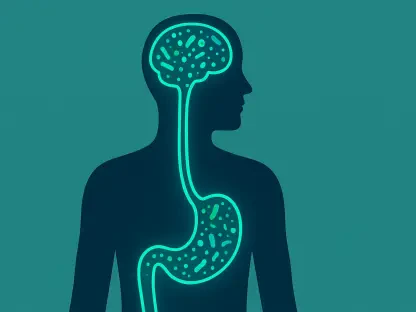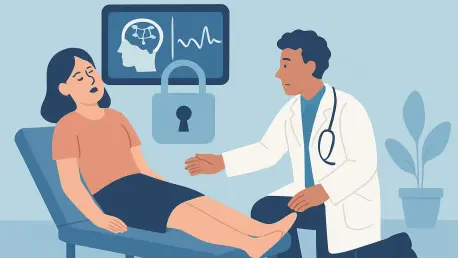

Secure inference through the Cheon-Kim-Kim-Song scheme represents a promising but technically difficult path toward providing cloud-based medical diagnoses. For millions of people across the globe, the sudden and unpredictable loss of consciousness known as vasovagal syncope is more than a medical anomaly; it is a source of chronic anxiety and diagnostic frustration. Patients often find themselves in a cycle of emergency room visits and inconclusive consultations, waiting years for a definitive answer. The current gold standard for diagnosis remains the head-up tilt test, which monitors how a body reacts to being shifted from a supine to an upright position. However, this test is far from perfect, often yielding inconsistent results that leave both patients and clinicians in a state of uncertainty. While artificial intelligence offers a sophisticated solution to interpret these complex physiological signals, the medical community has hesitated to adopt these tools. This reluctance is primarily driven by the sensitive nature of patient cardiovascular data and the inherent “black box” problem of machine learning, where the logic behind a diagnosis is hidden from the very doctors who must act upon it.
Bridging Technology and Clinical Trust
A Multidisciplinary Approach: Secure Diagnostics
To address the mounting concerns regarding data vulnerability and diagnostic opacity, a team of international researchers from Universiti Tunku Abdul Rahman, the University of New South Wales, and other leading institutions developed a specialized machine learning pipeline. This research, recently featured in the journal BioMedical Engineering OnLine, introduces a framework designed to identify syncope signatures with high precision while maintaining rigorous data security. The architecture is built upon three technological pillars: differential privacy, homomorphic encryption, and explainable AI. By integrating these specific technologies, the researchers aimed to create a system that is not only statistically accurate but also mathematically secure against potential data breaches. This approach moves away from traditional, less secure methods and toward a model where patient confidentiality is treated as a foundational requirement rather than an afterthought. The goal is to provide a diagnostic tool that clinical staff can trust, knowing that the sensitive physiological patterns of their patients are shielded from unauthorized exposure throughout the entire analytical process.
This multifaceted methodology serves as a response to the growing demand for cloud-based medical services that do not sacrifice privacy for convenience. As healthcare systems transition more of their processing power to external servers, the risk of exposing personal health information increases significantly. The research team recognized that simply achieving a high accuracy rate in syncope detection was insufficient if the underlying data remained vulnerable to reconstruction attacks or unauthorized access. Consequently, the study emphasizes a holistic view of security, addressing the privacy of the data during the initial training of the model as well as during the subsequent inference phase where new patient data is analyzed. By focusing on vasovagal syncope—a condition that produces highly personal cardiovascular signatures—the study provides a concrete use case for how advanced cryptographic techniques can be applied to real-world medical challenges without degrading the quality of the clinical insights produced by the artificial intelligence model.
Rigorous Methodology: Data Integrity
The research utilized a carefully curated dataset consisting of 137 participants who underwent the standard head-up tilt protocol. Among these individuals, 54 were confirmed positive for vasovagal syncope, while the remaining 83 served as a negative control group. During these tests, sensors recorded continuous electrocardiogram and blood pressure signals, providing a rich stream of raw physiological data. From these streams, the team extracted 54 distinct features that represent the hemodynamic and autonomic signatures of each patient’s unique response to gravitational stress. This extensive feature extraction is critical because syncope is not defined by a single data point but by a complex interplay of heart rate variability and blood pressure fluctuations. By capturing these nuances, the machine learning model can differentiate between a healthy response to standing and the specific physiological failure that leads to a fainting episode, ensuring that the final diagnosis is based on a comprehensive understanding of the patient’s cardiovascular state.
To maintain the highest levels of scientific integrity, the researchers implemented a stratified five-fold cross-validation framework designed to prevent data leakage. In many machine learning studies, information from the testing set can inadvertently influence the training phase, leading to artificially inflated accuracy scores that fail to hold up in real-world clinical settings. The team avoided this pitfall by ensuring that all pre-processing steps, such as feature scaling and the selection of the most relevant variables, were performed strictly within each training fold. This rigorous separation ensures that the performance metrics reported in the study are a realistic reflection of how the model would behave when presented with entirely new, unseen patient data. This commitment to methodological transparency is essential for bridging the gap between laboratory research and hospital deployment, as it provides clinicians with the assurance that the AI’s success is rooted in genuine predictive power rather than statistical coincidences or procedural errors.
Protecting Patient Data Throughout the Pipeline
Implementing Differential Privacy: Model Training
One of the primary innovations in this study is the application of differential privacy during the model training phase. In traditional machine learning, models can sometimes “memorize” specific details about the individuals in the training set, which could potentially allow a malicious actor to reverse-engineer sensitive information. To counter this risk, the researchers employed Differentially Private Stochastic Gradient Descent. This technique protects individual privacy through two main mechanisms: gradient clipping and noise injection. Gradient clipping limits the influence that any single patient’s data can have on the model’s overall learning process, preventing outliers from skewing the results. Meanwhile, the injection of calibrated Gaussian noise obscures the specific contributions of individual records while still allowing the model to learn the broader patterns necessary for accurate diagnosis. This mathematical guarantee of privacy is quantified by a “privacy budget,” which the researchers carefully tuned to ensure a robust balance between data security and diagnostic utility.
The results of this privacy-conscious training were remarkably successful, demonstrating that protecting patient data does not have to result in a significant drop in performance. The differentially private logistic regression model achieved a cross-validated accuracy of 0.833 and an area under the receiver operating characteristic curve of 0.888. These figures are highly competitive with traditional, non-private machine learning models, such as Random Forests or standard Artificial Neural Networks. This finding is significant because it proves that hospitals and research institutions can collaborate on building powerful diagnostic tools using shared datasets without fear of exposing the private medical histories of their patients. By showing that a high level of accuracy is maintainable even with rigorous privacy constraints, the study provides a viable path forward for the development of large-scale, multi-center medical AI projects that comply with the strictest data protection regulations while still delivering life-saving diagnostic capabilities.
The Challenges: Encrypted Inference
While the training phase proved successful, the study also delved into the more complex territory of fully homomorphic encryption for real-time inference. This technology is often considered the “ultimate” in data security because it allows a cloud server to perform computations on encrypted data without ever needing to decrypt it. In a theoretical clinical workflow, a hospital would send a patient’s heart rate data in an encrypted format to a third-party AI provider. The provider’s server would process the data and return an encrypted diagnosis, ensuring that the AI owner never sees the actual medical values. However, the researchers encountered substantial engineering hurdles during this process. Because homomorphic encryption primarily supports simple mathematical operations like addition and multiplication, complex functions like the sigmoid function used in logistic regression had to be replaced with polynomial approximations. This necessary simplification introduced a layer of error that complicated the diagnostic process.
The attempt to perform secure inference under the Cheon-Kim-Kim-Song scheme ultimately led to what the researchers described as an “instructive negative result.” The predictive power of the model dropped significantly when operating within the encrypted environment, with the area under the curve falling to 0.53. This decline was attributed to the cumulative noise inherent in cryptographic arithmetic and the inaccuracies introduced by approximating non-linear functions. Rather than viewing this as a failure, the team highlighted it as a critical technical baseline for the industry. It underscored that while the privacy-preserving training of AI is currently efficient and ready for implementation, the “last mile” of fully encrypted real-time diagnosis requires further cryptographic optimization. This honest appraisal of current technological limits is vital for the field, as it identifies the specific areas where innovation is needed to bridge the gap between theoretical security and practical, high-performance medical applications.
Ensuring Transparency and Medical Validity
Decoding the AI: Explainable Tools
To address the “black box” nature of artificial intelligence, which often obscures the reasoning behind its conclusions, the researchers integrated two powerful explainable AI tools: Local Interpretable Model-agnostic Explanations and SHapley Additive exPlanations. These tools are designed to pull back the curtain on the decision-making process, allowing clinicians to see exactly which physiological markers contributed to a positive or negative syncope diagnosis. In a medical context, this transparency is not just a luxury; it is a clinical requirement. A doctor is unlikely to change a patient’s treatment plan based on a machine’s output if the logic behind that output is invisible. By providing a clear visualization of the features that the model prioritized, the researchers created a “glass box” system that invites human oversight and encourages a collaborative relationship between the AI and the medical professional.
The use of these explainable tools allowed the team to verify that the model was making decisions based on medically sound principles rather than irrelevant noise in the dataset. For instance, the explainable AI analysis consistently showed that variables related to systolic and diastolic blood pressure, along with heart rate variability in specific frequency bands, were the most influential factors in identifying patients prone to fainting. By highlighting these specific hemodynamic signatures, the system provided a form of “digital evidence” that clinicians could cross-reference with their own observations. This level of interpretability ensures that if the model ever produces an unexpected result, a physician can investigate the underlying data points to determine if the AI has identified a subtle pattern or if there is an error in the input. This feedback loop is essential for the iterative improvement of diagnostic tools and for the eventual integration of AI into routine hospital workflows.
Aligning Data Science: Medical Expertise
The final phase of the analysis focused on validating the AI’s internal logic against established medical knowledge regarding vasovagal syncope. The model’s reliance on hemodynamic measurements—such as blood pressure drops recorded during the tilting process—perfectly aligned with the known physiological mechanisms of the condition. In a typical fainting episode, the autonomic nervous system fails to maintain adequate vascular tone when a person is upright, leading to a sudden decrease in cerebral blood flow. The fact that the AI independently identified these exact “red flags” serves as a powerful validation of the machine learning pipeline. It confirms that the algorithms are not merely performing sophisticated curve-fitting on random numbers but are successfully capturing the biological essence of the cardiovascular failure that defines syncope.
This alignment between data science and clinical expertise is the key to overcoming the skepticism that has traditionally hampered the adoption of AI in specialized medicine. When a model’s top predictive features—such as the ratio of low-frequency to high-frequency heart rate variability—match the indicators that cardiologists have studied for decades, it creates a common language between the technologist and the practitioner. This synergy suggests that AI can serve as a highly efficient “second opinion,” processing vast amounts of continuous signal data that might be overwhelming for a human to analyze manually, while still following the same fundamental medical logic. By grounding the technological advancements in proven physiological reality, the study established a credible path for AI to enhance the sensitivity of the head-up tilt test, potentially reducing the time patients must spend in diagnostic limbo before receiving the care they need.
Future Horizons in Healthcare Privacy
Evaluating Study Limits: Ethical Standards
The researchers remained objective about the current scope of their findings, categorizing the work as a feasibility study rather than a final product. One primary limitation noted was the sample size of 137 participants, which, while sufficient for a proof-of-concept, necessitated a cautious interpretation of the results. Because the data was collected from a single medical center, the model must undergo further validation across more diverse populations and different clinical settings to ensure its generalizability. Furthermore, to protect the privacy of the participants, the team strictly adhered to data minimization principles, omitting certain subgroup analyses that could have potentially identified individual patients. This ethical rigor was maintained under the oversight of multiple review committees, ensuring that the study met all contemporary standards for the responsible handling of sensitive human research data.
The study also addressed the trade-off between the depth of privacy protection and the computational resources required. Implementing high-level encryption and differential privacy involves a significant “privacy tax” in terms of processing power and time. In the context of a busy hospital environment, the speed of a diagnostic tool is often as important as its accuracy. The researchers noted that as technology progresses, the goal will be to optimize these cryptographic schemes to reduce latency without lowering the security threshold. By documenting these limitations openly, the team provided a transparent look at the challenges of modern medical AI. This honesty is crucial for setting realistic expectations for hospital administrators and policymakers who are looking to integrate these advanced systems into the broader healthcare infrastructure over the coming years.
A Blueprint: Secure Medical AI
The research established a fundamental baseline for the future of decentralized medical diagnostics by proving that privacy does not have to come at the expense of clinical utility during the model development phase. Although the encrypted inference tests yielded lower predictive results than expected, the study provided a vital roadmap for the types of cryptographic optimizations required to make real-time, secure cloud diagnostics a reality. Researchers demonstrated that the most effective path forward involved a tiered approach where different privacy techniques were applied to specific stages of the data lifecycle. These findings suggested that as compute power continues to scale, the mathematical overhead of homomorphic encryption will likely become less of a barrier, eventually allowing for the seamless integration of high-performance AI in protected environments.
The study served as an essential empirical foundation for moving beyond centralized data silos and toward a more collaborative, secure medical ecosystem. By validating that machine learning could identify identical physiological red flags as human experts, the team paved the way for a generation of diagnostic tools that patients can trust with their most sensitive health data. Future efforts should focus on expanding the dataset through federated learning, where models are trained across multiple institutions without moving the raw data itself. This would address the sample size limitations while maintaining the high privacy standards established in this initial proof-of-concept. Ultimately, the successful detection of vasovagal syncope through a privacy-first AI lens proved that the medical community can embrace the power of cloud-based diagnostics without compromising the ethical mandate to protect patient confidentiality.