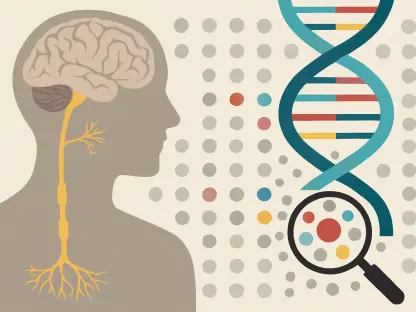

The emergence of ultra-high-throughput sequencing has produced a tidal wave of genetic data that currently exceeds the processing capacity of traditional statistical models used in biological research. While the link between a specific genotype and its resulting phenotype remains the holy grail of personalized medicine and agricultural efficiency, the sheer complexity of these biological relationships often hides behind layers of statistical noise. Recent breakthroughs in computational biology, specifically the introduction of the Automated Interpretable AI Genomic Prediction framework, are finally offering a way to penetrate this complexity without sacrificing scientific clarity. This advancement is not merely about achieving higher accuracy in predicting traits like disease susceptibility or crop yield; it represents a fundamental shift toward making machine learning models transparent enough for clinical validation. By integrating high-performance algorithms with explainable artificial intelligence, scientists can now identify the precise genetic drivers behind observable traits, moving the field from a state of trial-and-error toward a truly predictive and interpretable science.
A Unified Ecosystem for Genomic Analysis
The development of the AIGP platform marks a significant transition from the fragmented landscape of ad-hoc scripts to a standardized, open-source ecosystem that unifies the entire genomic analysis pipeline. Historically, researchers struggled with the inconsistency of data preprocessing and feature selection, which often led to results that were difficult to replicate across different laboratories. This new framework addresses these hurdles by providing a cohesive structure that automates critical stages, such as noise reduction and hyperparameter optimization, ensuring that the model is perfectly calibrated for the specific biological dataset under investigation. By lowering the technical barrier to entry, the platform allows biologists who may lack extensive backgrounds in computer science to leverage sophisticated machine learning tools effectively. This democratization of high-level AI ensures that the focus of genomic research remains on biological discovery rather than the mechanical complexities of software integration.
Beyond individual research projects, the push for a unified ecosystem establishes a much-needed industrial standard for reproducibility in the world of genomics. As data volumes continue to grow from 2026 to 2030, the ability to verify findings across different populations and environmental contexts becomes paramount for the widespread adoption of genomic prediction. The AIGP framework facilitates this by providing a transparent record of every step taken during the analysis, from the initial cleaning of genetic sequences to the final output of the predictive model. This transparency is vital for regulatory bodies and clinical practitioners who require a clear audit trail before implementing AI-driven recommendations in healthcare or large-scale agriculture. By fostering a collaborative environment where methods are standardized and results are comparable, the scientific community can build a more reliable foundation of knowledge. Consequently, this shift toward a rigorous and reproducible standard accelerates the translation of raw genetic data into tangible solutions for global challenges.
Decoding Biological Complexity Through Boosting Algorithms
The comparative analysis within the AIGP research highlights a significant performance gap between traditional linear models and modern boosting algorithms. These machine learning techniques, which function by iteratively combining multiple weak predictors into a single robust model, have proven exceptionally capable of capturing the non-additive effects that characterize biological systems. In many instances, the influence of a particular gene is not a simple summation of its parts but is instead dependent on complex interactions with other genes, a phenomenon known as epistasis. Traditional statistical methods frequently fail to detect these subtle nuances, leading to a “missing heritability” problem where the model cannot fully explain the observed traits. Boosting algorithms, however, naturally identify these non-linear patterns without requiring researchers to manually specify them beforehand. This capability allows for a much more accurate representation of the actual complexity of life, providing a clearer window into how various genetic components work in concert to determine an organism’s physical characteristics.
Despite the power of these advanced algorithms, their success remains deeply tethered to the underlying genetic architecture of the trait being studied. The AIGP framework has revealed that traits influenced by a few major genetic locations are significantly easier for AI to predict with high precision compared to highly polygenic traits. When a characteristic is determined by thousands of tiny genetic variations scattered across the entire genome, even the most sophisticated boosting models face challenges in distinguishing meaningful signals from statistical noise. This realization has led to a more nuanced understanding of the limits of current predictive technology, emphasizing the need for larger and more diverse datasets to crack the code of complex human diseases or environmental adaptations. Identifying these limitations is a crucial step forward, as it helps the scientific community set realistic benchmarks and directs investment toward refining data collection methods. Understanding which traits are currently predictable and which require further foundational research is essential for the effective deployment of AI in genomic science.
Bridging the Gap Between Prediction and Discovery
The most significant contribution of the current wave of interpretable AI is its ability to quantify the exact contribution of specific genetic variants to a predicted outcome. This move toward explainable artificial intelligence effectively peels back the layers of the “black box” that have long made scientists skeptical of deep learning applications in biology. By utilizing advanced interpretation techniques, the AIGP platform can map predictive scores back to specific regions of the genome, allowing researchers to see exactly which nucleotides are driving the model’s decisions. This functionality does more than just provide a sanity check for the AI; it serves as a powerful engine for novel biological discovery by highlighting interactions that were previously unknown to science. When the AI points to a distant region of the genome as a major factor in a trait, it creates a new hypothesis that can be tested in the lab. This synergy between computational prediction and experimental validation is essential for advancing our understanding of the fundamental mechanisms of life and disease.
The practical implications of this transparent approach are already being felt across various sectors, most notably in the efforts to improve global food security and precision medicine. In the agricultural sector, interpretable AI allows breeders to pinpoint the exact genetic markers responsible for resilience against heat and drought, enabling the development of crops that can thrive in changing climates. Similarly, in the medical field, these models are being used to generate highly accurate polygenic risk scores that provide patients with a clear understanding of their genetic predispositions. Unlike previous models that gave a single number without context, interpretable systems can explain which specific pathways are contributing to a patient’s risk profile, potentially leading to more targeted and effective preventative therapies. This ability to link data to actionable biological insights ensures that the benefits of genomic prediction are accessible to everyone, from farmers in developing nations to clinicians in cutting-edge hospitals. The transformation of AI from a mysterious predictor to a transparent partner is the key to unlocking the full potential of genomic information.
Actionable Next Steps for Future Genomic Research
The implementation of the AIGP framework established a critical roadmap for the future of genomic research by emphasizing the necessity of integrating diverse data types. It became clear that genetic information alone was insufficient for capturing the full picture of biological variation, leading to a greater focus on incorporating epigenetic and environmental data into predictive models. This holistic approach required researchers to develop new cross-disciplinary skills, bridging the gap between molecular biology and high-performance computing. Educational institutions began updating their curricula to ensure that the next generation of scientists was proficient in both the laboratory and the terminal. Furthermore, the move toward open-source, standardized platforms encouraged a culture of transparency that favored collective progress over isolated discoveries. By prioritizing the accessibility of these complex tools, the scientific community ensured that the advancements in AI reached a broader audience, fostering innovation in regions that were previously underserved by high-tech genomic resources. This strategic shift paved the way for more inclusive and comprehensive biological studies.
As the technology matured, the focus shifted toward the ethical deployment of interpretable AI to ensure that genomic predictions were used responsibly in both clinical and social contexts. Organizations worked diligently to establish guidelines that prevented the misuse of genetic risk data, while also ensuring that the benefits of precision medicine were distributed equitably across diverse populations. The ability to explain the reasoning behind AI decisions played a central role in building public trust, as patients and farmers could see the evidence supporting the recommendations they received. This era of transparency also facilitated more robust collaborations between public research institutions and private industry, as the standardized nature of the AIGP framework made it easier to share data and insights without compromising proprietary information. Ultimately, the adoption of interpretable AI transformed genomic prediction from a speculative tool into a cornerstone of modern science, providing the clarity needed to solve some of the most pressing biological challenges. The focus remained on refining these systems to account for even greater layers of biological complexity, ensuring a steady progression toward a deeper understanding of life’s blueprints.