
Breast cancer remains one of the most significant health challenges worldwide, where the critical difference between a positive prognosis and a devastating outcome often hinges on the speed and precision of the initial diagnosis. For decades, the medical community has relied on established screening methods such as mammography and ultrasound, which, while foundational, are subject to the inherent limitations of human interpretation. The complexity of breast tissue, the subtlety of early-stage malignancies, and the variability between radiologists can lead to diagnostic errors that have profound consequences for patients. In this high-stakes environment, a new technological ally is emerging from the fields of computer science and data analysis. Artificial Intelligence (AI) is now positioned to fundamentally reshape the landscape of breast cancer diagnostics, offering a powerful toolkit capable of enhancing accuracy, improving consistency, and ultimately providing clinicians with the insights needed to save lives. This shift represents not just an incremental improvement but a paradigm change toward a future of technology-driven precision medicine.
The AI Toolkit: A Three-Pronged Approach to Detection
Laying the Foundation with Machine Learning
The transformative journey of AI in diagnostics begins with the foundational principles of Machine Learning (ML). This methodology involves training sophisticated algorithms on vast and diverse datasets that encompass a wide spectrum of historical medical information, including anonymized patient records, clinical notes, and, most crucially, extensive libraries of medical imagery. The core strength of this approach lies in the algorithm’s capacity to perform a level of pattern recognition that transcends human ability. It can identify intricate, subtle, and complex correlations within the data that signify the potential presence of malignant tissue, details that might be entirely imperceptible to even the most experienced radiologist. This process is not static; as new data is introduced, the system continuously learns, adapts, and refines its predictive models. This dynamic calibration ensures that the diagnostic framework becomes progressively more accurate over time, substantially increasing the likelihood of detecting cancerous growths in their earliest, most treatable stages and providing a robust first line of technological defense.
By leveraging this data-driven approach, ML systems offer a much-needed layer of objectivity and consistency to the diagnostic process. Unlike human interpretation, which can be influenced by factors such as fatigue, experience level, or subjective judgment, an ML algorithm applies the same rigorous analytical standards to every single image it processes. This consistency is vital for standardizing the quality of care and reducing the geographical and institutional disparities that can exist in diagnostic accuracy. The system acts as a vigilant assistant, meticulously scanning for anomalies and flagging areas of concern that warrant closer inspection by a human expert. This ability to sift through massive amounts of information and highlight potential risks allows clinicians to focus their attention more effectively, streamlining their workflow and enhancing their diagnostic confidence. Ultimately, the integration of machine learning into clinical practice aims to create a more resilient and reliable diagnostic ecosystem where the probability of early and accurate detection is significantly elevated for every patient.
Achieving Pinpoint Accuracy with Deep Learning
Building upon the foundational capabilities of machine learning, the implementation of Deep Learning (DL) introduces a far more sophisticated and powerful layer of analysis, particularly through the use of Convolutional Neural Networks (CNNs). These advanced neural networks are architecturally inspired by the neural pathways of the human brain’s visual cortex, making them exceptionally adept at processing and interpreting visual information. When applied to the complex and nuanced imagery of mammograms and breast ultrasounds, CNNs can autonomously identify, classify, and segment suspicious abnormalities with a remarkable degree of precision. The system learns to recognize the specific morphological features of cancerous lesions—such as irregular shapes, spiculated margins, and microcalcification clusters—differentiating them from benign findings and normal breast tissue. This high-fidelity analysis moves beyond simple pattern recognition to a deeper, contextual understanding of the imagery, providing a level of detail that is critical for making definitive diagnostic judgments.
The clinical impact of this heightened precision is profound, as it directly addresses two of the most significant challenges in breast cancer screening: false positives and false negatives. A false positive, where a benign condition is mistakenly flagged as cancerous, can subject a patient to immense psychological distress and lead to unnecessary, invasive, and costly procedures like biopsies. Conversely, a false negative, where an existing cancer is missed, represents a catastrophic failure that can delay life-saving treatment and lead to a much poorer prognosis. Deep learning systems are engineered to drastically reduce the rates of both types of errors. By providing a highly reliable and data-driven “second opinion,” these AI tools empower radiologists to make more confident and accurate assessments. This dual benefit of minimizing unnecessary procedures while simultaneously increasing the cancer detection rate makes deep learning a cornerstone of the next generation of diagnostic medicine, ensuring patient safety and improving clinical outcomes.
Accelerating Progress with Transfer Learning
A significant bottleneck in the development of highly specialized medical AI has traditionally been the immense data requirement. Training a deep learning model from scratch demands vast, meticulously curated, and expertly labeled datasets, which are often scarce in the medical field due to patient privacy regulations and the labor-intensive nature of data annotation. This is where the innovative technique of transfer learning becomes a true game-changer. This approach circumvents the data scarcity problem by leveraging a pre-existing model that has already been trained on a massive, general-purpose dataset, such as an image library containing millions of photographs of everyday objects, animals, and scenes. The foundational knowledge this model possesses—its ability to recognize shapes, edges, textures, and complex patterns—is then transferred and fine-tuned on a much smaller, more specific dataset of medical images, such as mammograms or histopathology slides. This method dramatically accelerates the development lifecycle and reduces the need for extensive computational resources.
The practical advantages of transfer learning extend far beyond efficiency, directly enhancing the model’s performance and reliability in a clinical context. By building upon a robust foundation of pre-existing knowledge, the AI system can achieve a high level of accuracy even with a limited volume of specialized medical data. This allows the model to generalize its findings more effectively, meaning it can apply what it has learned to new, unseen images with greater confidence. This capability is crucial for ensuring the tool is effective across diverse patient populations and different types of imaging equipment. Transfer learning, therefore, not only makes the development of sophisticated medical AI more feasible and cost-effective but also results in a more robust and adaptable diagnostic tool. It democratizes access to advanced AI, enabling research institutions and healthcare providers with smaller datasets to contribute to and benefit from cutting-edge developments in cancer detection, ultimately speeding up the transition from laboratory research to real-world clinical application.
Redefining the Role of AI in Clinical Practice
The New Partnership: Human Expertise Meets AI Precision
It is essential to dispel the notion that these advanced AI systems are being developed to replace the invaluable expertise of clinicians such as radiologists and oncologists. On the contrary, the intended and most effective role for AI in medicine is that of a powerful collaborative partner. The framework is designed to function as an intelligent decision-support system that augments and enhances the capabilities of human medical professionals. In this synergistic model, the AI performs the exhaustive and often repetitive task of meticulously analyzing medical images, sifting through immense volumes of data to detect and flag even the most subtle anomalies that could indicate malignancy. This process of automated preliminary analysis frees clinicians from a significant portion of their routine workload, allowing them to redirect their focus and cognitive energy toward the most complex and ambiguous cases that require sophisticated human judgment, critical thinking, and a deep understanding of the patient’s holistic clinical context.
This human-AI partnership fosters a more efficient, effective, and confident diagnostic environment. By providing data-driven insights and highlighting specific areas of concern, the AI tool sharpens the radiologist’s focus and helps to standardize the interpretation process, reducing variability and the potential for human error. It serves as a tireless digital assistant, ensuring that no potential sign of cancer is overlooked. This streamlined workflow not only increases diagnostic throughput, allowing more patients to be screened in less time, but also enhances the overall quality of care. Clinicians can approach their work with greater confidence, supported by an objective and highly accurate analytical tool. This collaborative dynamic ensures that the final diagnostic responsibility remains firmly in the hands of the human expert, who can integrate the AI’s findings with other clinical information and patient history to make the most informed decision possible, embodying a model where technology empowers, rather than replaces, human expertise.
From Diagnosis to Personalized Treatment
The profound clinical implications of integrating artificial intelligence into oncology extend well beyond the initial phase of detection. While enabling earlier and more accurate diagnoses is a monumental achievement in itself, directly contributing to improved patient outcomes and higher survival rates, the technology’s potential reaches further into the realm of personalized medicine. The same analytical power that identifies cancerous lesions can be used to characterize them in unprecedented detail. AI algorithms can analyze the specific morphological and textural features of a tumor from imaging data and cross-reference this information with vast databases containing genomic data, treatment histories, and patient outcomes. This comprehensive analysis provides a unique “fingerprint” of an individual’s cancer, offering deep insights into its potential aggressiveness, subtype, and likely response to various therapeutic interventions, moving medicine away from a generalized approach.
This capability is instrumental in ushering in a new era of highly tailored treatment strategies. Instead of relying on broad, protocol-based treatment plans that are applied to large patient cohorts, oncologists can use AI-driven insights to devise a therapeutic regimen that is optimized for the individual patient’s specific disease characteristics. For example, the system might help predict whether a tumor is more likely to respond to chemotherapy, targeted therapy, or immunotherapy, allowing clinicians to select the most effective course of action from the outset. This shift from a one-size-fits-all model to truly individualized care represents a significant advancement in the fight against breast cancer. It promises not only to maximize treatment efficacy but also to minimize unnecessary side effects from ineffective therapies, ultimately improving the patient’s quality of life and paving the way for a more precise, predictive, and personalized standard of cancer care.
Navigating the Path to Widespread Adoption
Overcoming Hurdles and Ethical Dilemmas
Despite the immense promise and encouraging results demonstrated in research settings, the journey toward the widespread implementation of AI in routine clinical practice is laden with significant challenges that must be carefully navigated. A primary hurdle is the need for rigorous, large-scale clinical validation. An AI model that performs exceptionally well on a curated dataset from one institution must be proven to be equally reliable and robust when applied to diverse patient populations across different geographic locations, ethnicities, and age groups, as well as with images generated by various types of medical equipment. Furthermore, the seamless integration of these complex AI systems into existing hospital IT infrastructures and established clinical workflows is a major technical and logistical challenge. It requires substantial investment in technology, infrastructure, and comprehensive training programs to equip healthcare professionals with the skills and confidence to use these advanced tools effectively and responsibly in their daily practice.
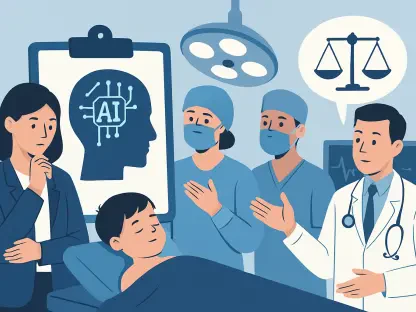
Beyond the technical and logistical barriers, there are paramount ethical considerations that demand attention, chief among them being the “black box” problem of AI. Many deep learning models operate in a way that is not easily interpretable by humans; they can provide a highly accurate prediction without revealing the specific reasoning behind their conclusion. For clinicians to trust and act upon an AI’s recommendation, especially in life-or-death situations, a degree of transparency is essential. This has spurred the development of “explainable AI” (XAI), a field dedicated to creating systems that can articulate the rationale for their decisions, for instance, by highlighting the specific image features that led to a diagnosis. Ensuring algorithmic fairness, protecting patient data privacy, and clearly defining the lines of accountability when an AI-assisted diagnosis is made are other critical ethical dilemmas that must be resolved to foster trust and ensure that these powerful technologies are deployed in a manner that is safe, equitable, and patient-centric.
The Future of AI in Oncology
The progress made in applying AI to breast cancer detection has set a powerful precedent, illuminating a path toward a future where technology plays an even more integrated role in oncology. The evolution of this field is set to accelerate as emerging technologies are incorporated into the diagnostic framework. Natural Language Processing (NLP), for instance, will enable AI systems to analyze vast amounts of unstructured data from sources like clinical notes, pathology reports, and scientific literature. This would allow the AI to construct a more holistic and comprehensive profile of a patient’s condition by synthesizing information that goes far beyond medical imagery. The continuous advancement in imaging techniques, such as digital breast tomosynthesis and contrast-enhanced mammography, will provide AI models with richer, more detailed data, further sharpening their diagnostic acuity and enabling them to detect cancers that are even smaller and more difficult to identify.
This interdisciplinary collaboration, which brought together computer scientists, data analysts, and medical experts to tackle this challenge, demonstrated a successful model for future innovation in medicine. The methodologies developed for breast cancer have since been recognized as a blueprint for creating similar AI-driven diagnostic tools for other types of cancer and complex diseases. The work established the immense potential of a synergistic partnership between human intelligence and artificial intelligence, a collaboration that has redefined the standards of diagnostic accuracy. This technological leap has offered a much brighter outlook for patients worldwide, positioning early, precise, and personalized diagnosis not as a future aspiration but as an emerging standard of care. The advancements achieved have fundamentally transformed the landscape of modern medicine, marking a pivotal step toward conquering one of humanity’s most formidable diseases.