
Ivan Kairatov is a distinguished biopharma expert with an extensive background in cardiovascular research and development. With years of experience navigating the intersection of biotechnology and clinical innovation, he has become a leading voice on how emerging technologies reshape heart rhythm management. His insights are particularly vital as the medical community prepares for significant shifts in how arrhythmias are diagnosed and treated on a global scale.
Heart rhythm disorders are expected to affect up to one-fifth of the population during their lifetime. How are training standards for specialists evolving to meet this demand, and what specific clinical metrics are most useful for evaluating the success of these new educational initiatives?
Training standards are undergoing a radical shift from passive learning to active, immersive competency models to address the fact that one in three to five people will develop these conditions. We are moving toward a framework where specialists must demonstrate proficiency through “Live Cases” performed by international experts and intensive sessions in environments like the Simulation Village. The success of these initiatives is measured by the quality and volume of clinical trials emerging from the field, which saw a 100% increase in scientific submissions between 2025 and 2026. Ultimately, the most useful metrics are the reduction in procedural complications and the speed at which a trainee can achieve surgical mastery in complex ablation or resynchronization therapies.
Artificial intelligence is increasingly used for risk prediction and diagnostic monitoring in cardiology. Could you provide a step-by-step look at how these digital tools integrate into a daily clinical workflow, and what anecdotes illustrate the impact AI has on patient outcomes?
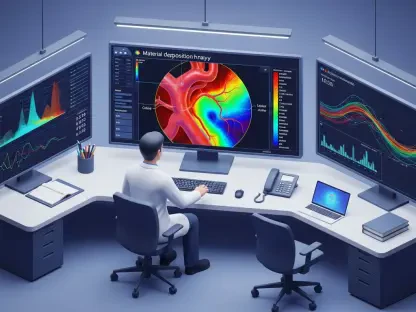
The integration starts with a dedicated “Digital Cardiology track” where AI tools are embedded directly into the daily monitoring systems of patients wearing diagnostic sensors. First, the AI parses massive datasets to provide risk prediction, then it flags specific diagnostic anomalies that a human eye might miss during routine checks. For example, when a patient’s heart rhythm shows subtle deviations, the digital tool alerts the specialist instantly, allowing for an intervention before a major event occurs. This technological synergy ensures that the practitioner is not just reacting to symptoms but is proactively managing the patient’s cardiac health with a data-driven safety net.
High-stakes cardiac procedures often require intensive hands-on practice through simulation and live demonstrations. How do these practical workshops bridge the gap between theoretical knowledge and surgical mastery, and which specific technical skills are currently the most challenging for practitioners to perfect?
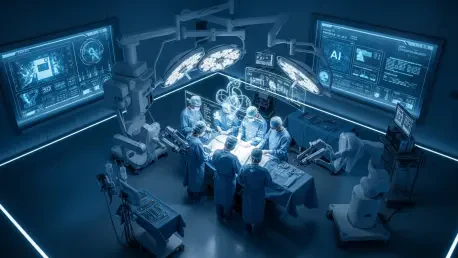
Practical workshops, particularly those in the Simulation Village, allow clinicians to fail and learn in a risk-free environment, which is essential for mastering the tactile nuances of invasive electrophysiology. These sessions bridge the gap by translating theoretical anatomical knowledge into the physical “muscle memory” needed for high-stakes maneuvers. Currently, the most challenging skills involve the precise navigation required for new ablation techniques and the placement of leads for cardiac resynchronization therapy in heart failure patients. Mastery in these areas requires repeated exposure to live demonstrations where international experts show exactly how to handle unexpected anatomical variations.
New ablation techniques aim to treat atrial fibrillation with greater speed and effectiveness. What are the primary trade-offs between procedural speed and long-term patient safety, and what data should clinicians prioritize when managing heart failure patients who require cardiac resynchronization therapy?
The primary trade-off in treating atrial fibrillation is ensuring that the drive for a “faster time” in surgery does not compromise the permanence of the lesion or the safety of surrounding tissues. While speed reduces the time a patient is under anesthesia, clinicians must prioritize late-breaking science data that tracks long-term recurrence rates rather than just immediate procedural success. For heart failure patients, the priority data involves optimizing the specific parameters of cardiac resynchronization therapy to ensure the heart’s chambers are perfectly synchronized. This focus on long-term outcomes over short-term efficiency is what defines the high quality of the 100-plus scientific submissions we are seeing this year.
New standards are being established for using echocardiography imaging from within the heart during invasive procedures. How does this collaborative approach between different cardiac specialties improve procedural accuracy, and what are the practical steps for implementing these imaging standards in a typical hospital?
The collaboration between the European Heart Rhythm Association and the European Association of Percutaneous Cardiovascular Interventions has created a unified language for intra-cardiac imaging. By using echocardiography from within the heart, specialists gain a “bird’s-eye view” of the internal structures, which significantly reduces the margin of error during needle punctures or catheter placement. Implementation in a hospital involves adopting new scientific statements as official protocol and ensuring that imaging specialists and electrophysiologists train together to interpret these live internal views. This cross-disciplinary approach ensures that the “illuminating” of the heart’s anatomy is a shared responsibility, leading to much higher precision.
Clinical discussions are shifting to include more direct input from patients regarding their lived experiences. How does this feedback influence the way healthcare professionals design long-term treatment plans, and what specific changes have you observed in therapy protocols as a result of these patient-centered insights?
Integrating the “patient voice” through dedicated sessions allows us to look beyond the clinical data and understand the psychological and physical burden of living with an arrhythmia. This feedback has shifted therapy protocols to be more holistic, moving away from just “fixing the rhythm” to improving the overall quality of life and reducing treatment-related anxiety. We are seeing changes where treatment plans now include more robust patient education and shared decision-making regarding the choice of devices or ablation. It reminds healthcare professionals that every data point on a monitor represents a person whose daily life is impacted by our technical decisions.
What is your forecast for arrhythmia management?
My forecast is that we are entering an era where arrhythmia management will be characterized by total visibility, both through advanced intra-cardiac imaging and the predictive power of artificial intelligence. We will see a shift where the one in five people at risk are identified years before a clinical event, thanks to the integration of digital cardiology into routine primary care. Furthermore, as ablation techniques become faster and more standardized, I expect these procedures to move from complex surgeries to highly efficient, routine interventions with near-perfect safety profiles. The future of heart health lies in this “bold” combination of human expertise, patient-centered empathy, and cutting-edge digital innovation.