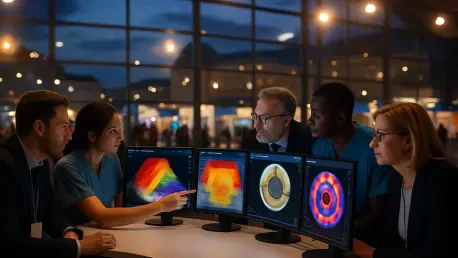

Rising demand, tighter budgets, and complex patients have pushed cardiovascular imaging from supporting act to central protagonist, and that shift is on full display in Vienna as echo, CMR, CT, and nuclear cardiology share one stage from December 11–13. Congress organizers set a clear purpose: gather the full imaging community to align science, daily practice, and training so decisions become faster, safer, and more precise across the care continuum. A unifying program reduces duplication, promotes shared standards, and nudges teams to think in patient pathways rather than modality silos.
Experts across institutions agree that modern cardiology runs on imaging evidence at every age and stage—from diagnosing congenital heart disease to guiding heart failure therapies and atrial fibrillation strategies. Opinion leaders emphasized that images not only confirm disease but refine risk, target therapies, and monitor response, creating a feedback loop that elevates outcomes. Under the leadership of EACVI President and Scientific Programme Chair Dr. Victoria Delgado, the meeting frames this consensus as a practical mandate: blend data, guidelines, and hands-on skills to deliver patient-centered care that stands up to real-world pressure.
Inside the program: a unified, multi-modality playbook for real patients
Choosing the right test, in the right order: integrating echo, CMR, CT, and nuclear
Clinicians from high-volume centers described a consistent playbook: start with echocardiography for rapid functional insight, then layer CMR for tissue characterization, CT for anatomy and device planning, and nuclear techniques for perfusion and metabolism when questions persist. This tiered approach, they argued, avoids blind spots and creates decisive clarity when symptoms, biomarkers, and physical exam do not agree. The consensus was pragmatic—first answer the clinical question that changes management, then escalate only as needed.
Yet the conversation did not gloss over trade-offs. Imaging directors cited data showing that thoughtful sequencing increases diagnostic yield and prognostic accuracy while cutting unnecessary repeats; however, access, cost, and local expertise still shape choices. Some urged against a “one best test” mindset, warning that rigid algorithms can misfire in complex cardiomyopathies or infiltrative disease. Others countered that standardized multimodality pathways tame variability and control resource use. Most landed in the middle: adopt shared protocols, but leave room for clinical judgment.
When cases teach best: complex valve disease and beyond
Case-based discussions drew the strongest reactions, particularly the session “Challenging valvular heart diseases: a task for the fantastic four!” where teams worked through multivalvular disease step by step. Proponents highlighted how CT illuminated annular geometry for TAVR planning, echo guided intraprocedural decisions, CMR quantified regurgitation when echo signals conflicted, and nuclear imaging informed viability in ischemic territories. Skeptics conceded the value but cautioned that integration demands a consistent lexicon and skilled readers to avoid contradiction rather than clarity.
Panelists also weighed operational realities. Coordinated pathways shorten time to therapy and reduce back-and-forth referrals; however, training gaps and inter-site variability can erode these gains. Competition among modalities surfaced in debate, yet many attendees reframed it as complementary expertise—echo for dynamic physiology, CT for structural detail, CMR for tissue, nuclear for perfusion. The take-home message was less about rivalry and more about orchestrating the strengths of each technique to match the problem at hand.
Guidelines to bedside: what new ESC recommendations mean for imaging workflows
Guideline-focused sessions translated updates into action, with faculty stressing earlier CMR for suspected myocarditis or pericarditis to capture edema and scarring before they evolve. CT for left atrial appendage assessment in atrial fibrillation received attention where it speeds pathways and clarifies anatomy for closure strategies. Echo remained the backbone for longitudinal follow-up, particularly when standardizing strain and valve measurements for comparable trends over time. Multimodality risk scores emerged as a bridge between images and decisions.
Participants welcomed the clarity but flagged challenges. Centers must align acquisition protocols, reporting templates, and quality metrics, or else guideline intent will not translate into consistent care. Payers expect evidence of value, which puts pressure on teams to audit outcomes and document efficiency gains. The overriding view held that standardized workflows reduce ambiguity, but implementation succeeds only when clinicians, administrators, and technologists move in lockstep.
People, skills, and tools: hands-on hub, AI track, and expert mentorship shaping daily practice
The new Imaging Training Hub earned praise for simulator-based practice that builds muscle memory without patient risk. Nearly 30 early-career sessions offered scaffolding for readers-in-training and new lab leaders alike, while four Named Lectures and six Meet the Experts dialogues delivered depth on topics like CMR in athletes and arrhythmia imaging. Attendees noted that this blend of fundamentals and niche content reflects daily reality—bread-and-butter questions most days, specialized puzzles often enough to matter.
Artificial intelligence drew pragmatic scrutiny. Data scientists and clinicians converged on a message: integrate AI where it measurably improves speed, reproducibility, or segmentation accuracy, and insist on bias monitoring and external validation. Several lab heads described governance models with human oversight and clear fail-safes, emphasizing that trust grows when tools are transparent and narrow in scope. The program’s inclusive stance—welcoming technologists, anesthesiologists, scientists, and veterinarians—signaled that broad collaboration is no longer optional if imaging is to scale safely and equitably.
How to make the most of EACVI 2025: strategies for attendees and teams
Roundtable contributors distilled three themes. First, multimodality adds measurable value when it answers the next clinical question, not when it chases every possible detail. Second, guideline literacy and reproducible technique remain the biggest levers for outcome improvement. Third, AI augments skilled clinicians by standardizing routine tasks and surfacing edge cases, but it cannot replace clinical synthesis. Those points anchored practical advice that crossed disciplines and facility sizes.
Strategists recommended building a personalized agenda that spans modalities, diseases, and career stages, reserving early slots in the Training Hub, and prioritizing case-based and guideline-driven forums. After the congress, teams can refine local pathways, adopt standardized reporting, pilot vetted AI tools for narrow workloads—such as strain analysis or calcium scoring—and set time-bound goals for quality audits. The consensus favored small, measurable changes that compound, rather than sweeping overhauls that stall under their own weight.
Looking ahead: imaging without silos and the future we’re building in Vienna
The core theme resonated across interviews: imaging has moved from modality-centric pride to a patient-first mindset that blends strengths for precision and efficiency. Cross-disciplinary networks formed on-site are expected to accelerate shared standards, reduce duplication, and make training scalable as technology evolves. That shift supports clearer evidence pathways and helps laboratories demonstrate value to patients and payers alike.
Participants envisioned a steadier cadence of multicenter protocols, common reporting vocabularies, and competency-based training that keeps pace with innovation. With that foundation, daily practice becomes more consistent, and research findings cross the gap into clinics faster. The invitation was simple: join in shaping standards, advance skills, and deliver better outcomes—one patient, one pathway, one team.
This roundup underscored that Vienna brought a whole-field alignment on integrated imaging, grounded by cases, guidelines, and hands-on practice. It highlighted concrete steps—sequenced testing, standardized reporting, targeted AI pilots, and team-based training—that teams could implement immediately. For further reading, attendees pointed to ESC guideline summaries, consensus documents on multimodality pathways, and validation studies for AI tools, which together offered a roadmap for continued improvement after the meeting ended.