
Beneath the surface of our visible world lies an immense, unseen empire of microorganisms whose collective genetic information dwarfs that of all other life on Earth combined, presenting a monumental challenge for scientific analysis. The development of computational tools for microbiome analysis represents a significant advancement in biological and medical research. The field of metagenomics generates vast and complex datasets that overwhelm traditional analytical methods. This review will explore two key open-source tools, TMarSel and scikit-bio, which address these challenges. We will examine their innovative features, the problems they solve, and their impact on scientific discovery. The purpose of this review is to provide a thorough understanding of how these tools are transforming our ability to analyze complex microbial data, making research more accurate, scalable, and reproducible.
The Metagenomic Data Challenge and the Rise of Computational Solutions
The primary obstacle in modern microbiome research is the sheer volume of information produced by high-throughput DNA sequencing. This “data deluge” stems from the ability to sequence genetic material directly from environmental samples, revealing entire communities of previously unknown microbes. However, this powerful technique generates data that is not only massive but also fragmented and complex, creating a significant bottleneck between data collection and biological insight.
This flood of raw data, in its unprocessed state, offers limited value. The critical challenge lies in transforming these billions of genetic sequences into a coherent understanding of which organisms are present, how they relate to one another, and what functional roles they play within their ecosystems. This gap between raw data and meaningful knowledge has necessitated the development of advanced computational tools capable of navigating this complexity and extracting scientifically valid conclusions.
In-Depth Analysis of Key Tools
In response to this growing need, researchers at Arizona State University have developed innovative software solutions that directly confront the hurdles of metagenomic analysis. These tools, TMarSel and scikit-bio, are designed not just to process data but to fundamentally improve the accuracy and scalability of microbiome research. Each offers a unique set of functionalities that target specific, long-standing problems in the field, from constructing evolutionary histories to providing a foundational platform for broad biological data science.
TMarSel Automating Phylogenetic Tree Construction
The construction of phylogenetic, or evolutionary, trees is a cornerstone of microbiology, yet traditional methods have struggled to keep pace with modern data. The conventional approach relied on a small, predefined set of “marker genes” to trace evolutionary relationships. This method proves inadequate when applied to metagenomic datasets, which often contain millions of genomes of varying quality and completeness. Applying a rigid set of markers to such fragmented data can result in unstable and inaccurate evolutionary trees, limiting their scientific utility.
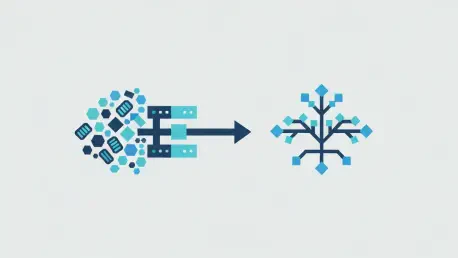
TMarSel, short for Tree-based Marker Selection, offers a transformative solution by automating and optimizing this process. Instead of relying on a fixed gene set, TMarSel intelligently searches through thousands of potential gene families within a dataset. It algorithmically identifies the optimal combination of markers that will build the most robust and informative phylogenetic tree. This data-driven approach evaluates genes on their prevalence, evolutionary signal, and contribution to a stable tree structure, enabling the creation of accurate microbial family trees even from diverse and incomplete genomic data.
Scikit-bio a Foundational Library for Biological Data Science
While TMarSel is a highly specialized tool, scikit-bio serves as a comprehensive, open-source software library for the broader scientific community. It acts as a versatile platform for an extensive range of bioinformatics tasks, addressing the unique challenges posed by biological data. Unlike data in other fields, biological datasets are often characterized by their immense scale, sparseness, and compositional nature, rendering standard analytical programs ineffective.
Scikit-bio provides a robust ecosystem of over 500 functions tailored for microbiome analysis and beyond. It empowers researchers to compare microbial community compositions, calculate ecological diversity metrics, analyze genetic sequences, and prepare complex data for machine learning applications. Its strength is amplified by its community-driven development model, which ensures rigorous testing, thorough documentation, and continuous improvement. As a result, scikit-bio has been adopted widely across disciplines, becoming an indispensable resource in modern biological research.
The Shift Toward Automated and Scalable Data Analysis
The emergence of tools like TMarSel and scikit-bio signifies a broader, essential pivot in biological research. The field is rapidly moving away from manual, small-scale methods that are no longer viable in the age of big data. This trend reflects a necessary adaptation to the ever-increasing volume of genomic information being generated globally.
This transition toward automated, data-driven, and highly scalable computational workflows is not merely a matter of efficiency; it is a prerequisite for continued discovery. Such systems enable researchers to handle datasets of unprecedented size and complexity, ensuring that analytical capabilities keep pace with data generation. This shift allows for more reproducible and transparent scientific inquiries, strengthening the foundations of the entire discipline.
Transforming Research in Health Ecology and Epidemiology
The practical impact of these advanced computational tools extends across critical scientific domains. By enabling more accurate microbial analysis, they are accelerating progress in fields ranging from public health to environmental science. In epidemiology, for instance, more precise phylogenetic trees allow for more effective tracking of how pathogenic bacteria and viruses mutate and spread during an outbreak.
Similarly, in environmental science, these tools help researchers decipher how complex microbial ecosystems, such as those in soil or oceans, respond to pressures like pollution and climate change. In human health, clearer identification of microbes strengthens our understanding of the gut microbiome’s intricate role in digestion, immunity, and overall well-being. These advancements provide deeper insights that are crucial for developing new diagnostics and therapies.
Addressing Core Challenges in Metagenomic Data Analysis
At their core, TMarSel and scikit-bio successfully overcome fundamental technical obstacles that have long hindered metagenomic research. The incomplete, sparse, and complex nature of biological data has traditionally made reliable analysis difficult. These tools provide robust solutions that were previously unavailable, thereby enhancing the integrity of scientific findings.
TMarSel tackles data fragmentation by dynamically selecting the most suitable marker genes for a given dataset, rather than imposing a one-size-fits-all model. Scikit-bio, in turn, offers specialized functions designed to handle the statistical quirks of sparse and compositional data, preventing the erroneous conclusions that can arise from using generic data analysis software. Together, they significantly improve the reliability and reproducibility of microbiome research.
Future Directions and the New Era of Microbial Research
Looking ahead, the continuous improvement in DNA sequencing technology will only amplify the data deluge, further heightening the need for powerful analytical tools. As sequencing becomes cheaper and faster, the volume of microbial data available to the scientific community is set to expand exponentially, making scalable software more critical than ever.
In this context, open-source and accessible platforms like TMarSel and scikit-bio are essential for democratizing research. By providing sophisticated analytical capabilities to scientists worldwide, regardless of their institution’s resources, these tools help level the playing field. They are instrumental in fostering a collaborative and innovative environment, ushering in a new era of discovery in microbiology.
Conclusion Empowering Discovery in the Age of Big Biological Data
The development of TMarSel and scikit-bio strengthens the computational foundations of modern biology, providing researchers with the instruments needed to navigate the complexities of metagenomic data. These tools represent more than just technical achievements; they are enablers of a more rigorous, reproducible, and scalable approach to scientific inquiry.
Ultimately, their impact is measured by the discoveries they facilitate. By empowering scientists to effectively manage the data flood, these platforms transform raw genetic information into profound and actionable knowledge. This capability is essential for addressing some of the most pressing challenges in medicine, ecology, and climate science, marking a significant step forward in our ability to understand the microbial world.