


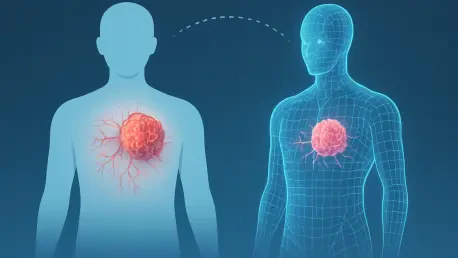

For decades, oncology has relied on a static snapshot of a tumor, a single frame from a complex biological film, to guide treatment decisions. The Cancer Digital Twin Technology represents a significant advancement in personalized medicine and oncology. This review will explore the evolution of the technology, its key features, performance metrics, and the impact it has had on various applications. The purpose of this review is to provide a thorough understanding of the technology, its current capabilities, and its potential future development.
An Introduction to a New Era in Oncology
The cancer digital twin is a predictive, patient-specific computational model that simulates the biological processes of a tumor. It is built by integrating an individual’s unique clinical data into a sophisticated AI framework. This creates a virtual replica that can be used to test the efficacy of various treatments before they are administered to the actual patient, heralding a new, proactive approach to cancer care.
This technology directly addresses a fundamental limitation in traditional oncology: the reliance on static, post-surgical analysis of tumor tissue. Such methods provide only a one-time snapshot of a tumor’s metabolic state, failing to capture the dynamic changes that occur over time or in response to therapy. In contrast, the digital twin enables dynamic, real-time metabolic predictions, offering clinicians a powerful tool to devise personalized treatment strategies based on how a specific tumor is likely to behave.
Core Components and Methodologies
Patient-Specific Data Integration
The construction of a high-fidelity digital twin begins with the integration of three critical data streams from the patient. The first is standard blood draws, which provide a systemic view of the patient’s metabolic state. The second involves direct intraoperative metabolic measurements, a more specialized process where data is collected from the tumor tissue during surgery. Finally, the tumor’s genetic profile is sequenced to understand the underlying mutations driving its growth.
The synergy of these inputs is what gives the model its predictive power. Each data type offers a different piece of the puzzle, and by combining them, the model can generate a comprehensive and nuanced simulation of the tumor’s metabolism. This holistic approach ensures that the resulting digital twin is not a generic model but a precise, personalized representation of an individual’s cancer.
The AI-Driven Predictive Engine
At the heart of the digital twin is a sophisticated deep learning model, specifically a convolutional neural network (CNN). This AI-driven engine is designed to process the complex, multi-modal patient data and identify intricate patterns that would be impossible for humans to discern. The CNN learns the fundamental relationships between a tumor’s genetic makeup, its environment, and its metabolic activity.
The primary output of the model is the calculation of metabolic flux, a critical metric that measures the rate at which cancer cells consume nutrients to fuel their growth and proliferation. By quantifying these metabolic pathways, the digital twin can predict how a tumor will sustain itself and, consequently, how it might respond to therapies that target those specific pathways. This is the first time an AI-based method has been developed to measure metabolic flux directly within patient tumors.
A Rigorous Multi-Stage Validation Process
The model’s reliability was established through a meticulous, multi-stage validation process. Initially, the CNN was trained on a vast dataset of synthetic patient data, which was generated based on established principles of biology and chemistry. This synthetic data was then constrained by real-world measurements from glioma patients, ensuring the model learned from both theoretical knowledge and actual clinical observations.
Following the training phase, the model’s predictive accuracy was tested against different datasets from the same human patients. The digital twins demonstrated a high degree of accuracy in predicting the metabolic activity within these tumors. To further substantiate these findings, the computational predictions were confirmed in mouse models, providing a crucial biological validation that bridges the gap between the simulation and a living system.
Innovations in Predictive Modeling
The most significant breakthrough offered by this technology is the shift from static, observational analysis to a dynamic, predictive framework. By employing an AI-based approach to measure metabolic flux directly within patient tumors, it moves beyond simply describing what a tumor has done to forecasting what it will do under different conditions. This represents a paradigm shift in how metabolic data is utilized in oncology.
This innovation effectively transforms clinical decision-making from a reactive to a proactive process. Instead of administering a treatment and waiting to observe its effect, clinicians can use the digital twin to simulate various therapeutic scenarios. This simulation-based approach allows for the pre-emptive identification of the most effective treatments and the avoidance of those likely to fail, personalizing care in a way that was previously unattainable.
Clinical Applications and Use Cases
Predicting Efficacy of Metabolic Therapies
One of the key demonstrated applications of the digital twin is its ability to identify tumors susceptible to specific metabolic therapies. For instance, some gliomas can be slowed by restricting dietary intake of certain amino acids. However, this strategy fails if a tumor can synthesize those amino acids internally. The digital twin was able to accurately differentiate between tumors dependent on external nutrients and those that were self-sufficient.
Subsequent experiments in mouse models confirmed these predictions. The dietary therapy proved effective only in mice whose tumors the digital twin had identified as being vulnerable. This use case highlights the technology’s potential to guide personalized nutritional interventions, ensuring they are only recommended to patients who are most likely to benefit.
Foreseeing Mechanisms of Drug Resistance
The model has also proven capable of predicting a tumor’s resistance to specific drugs, such as mycophenolate mofetil, which targets DNA synthesis pathways. The digital twin correctly predicted that certain tumors would be resistant because they could activate alternative metabolic “salvage pathways,” allowing them to bypass the drug’s mechanism of action.
This foresight is clinically invaluable, as it can prevent patients from undergoing courses of treatment that are destined to be ineffective from the outset. By identifying these inherent resistance mechanisms, the digital twin enables clinicians to select more suitable drugs or combination therapies, saving valuable time and sparing patients from unnecessary toxicity.
Challenges and Implementation Hurdles
Data Acquisition and Standardization
A primary technical challenge is the consistent acquisition of the highly specific data required to build each digital twin. Obtaining direct intraoperative metabolic and genetic data is not yet a standard part of clinical care and requires specialized procedures and equipment. Establishing a reliable pipeline for this data is a crucial prerequisite for broader adoption.
Furthermore, ensuring the standardization of this data across different hospitals and research centers is essential for scalability. Without consistent protocols for data collection and processing, the reliability and comparability of the digital twin models could be compromised, hindering the ability to build larger, more robust predictive engines.
Clinical Integration and Scalability
Moving the technology from a controlled research environment to widespread clinical practice presents significant logistical obstacles. Integrating the digital twin platform into existing hospital information systems and clinical workflows requires careful planning and collaboration between researchers, clinicians, and IT professionals.
Beyond the technical aspects, there are also regulatory and economic hurdles to overcome. Gaining approval from regulatory bodies for a predictive diagnostic tool involves a rigorous validation process. Moreover, demonstrating the cost-effectiveness of the technology will be critical for securing reimbursement from insurers and justifying the investment for healthcare institutions.
The Future of Personalized Cancer Treatment
The long-term vision for this technology is a clinical workflow where treatments are first simulated on a patient’s digital twin. A clinician could virtually test the effects of various drugs or dietary changes, receiving a ranked list of the most promising options before administering any to the patient. This would represent the pinnacle of data-driven, personalized medicine.
While initially developed for brain cancer, the foundational principles of the digital twin are applicable to a wide variety of other tumor types. The potential exists to expand this technology to cancers of the pancreas, lung, and colon, among others, each with its own unique metabolic vulnerabilities. This expansion could dramatically broaden the impact of predictive oncology.
Efforts are currently underway to move this technology toward commercialization. Securing patent protection and seeking commercial partners are critical steps in translating this powerful research tool into a widely available clinical product that can benefit patients globally. These collaborations will be essential for navigating the complex path from laboratory to bedside.
Concluding Assessment
The development of cancer digital twin technology marks a pivotal moment in oncology. Its demonstrated ability to accurately predict tumor responses to specific therapies by simulating real-time metabolic activity provides clinicians with an unprecedented decision-making tool. The technology successfully moves cancer treatment from a generalized, reactive model to one that is profoundly personalized and predictive.
This innovation was a transformative step toward realizing the full potential of personalized medicine. The rigorous validation process, which spanned from computational modeling to human data and animal experiments, established a robust foundation for its clinical utility. It provided a clear proof of concept for using AI to decode the complex metabolic language of an individual’s tumor.
Ultimately, the platform’s greatest promise laid in its capacity to improve patient outcomes. By foreseeing therapeutic efficacy and mechanisms of drug resistance, it had the potential to spare patients from ineffective treatments and their associated toxicities. This ability to match the right patient with the right therapy at the right time embodied a more intelligent and compassionate approach to cancer care.







