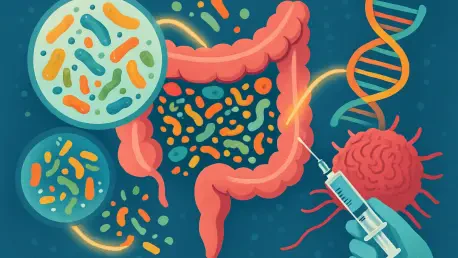

A new frontier in the fight against cancer is emerging from an unexpected source: the trillions of microorganisms residing within the human gut. For years, the medical community has grappled with a persistent challenge in oncology—the fact that powerful immunotherapy treatments, designed to unleash the body’s own immune system against tumors, work remarkably well for some patients but fail completely for others. This inconsistency has puzzled researchers and clinicians, leaving a critical gap in cancer care. Recent groundbreaking research now strongly suggests that the composition of a patient’s gut microbiome may be a pivotal, and modifiable, factor in determining the success of these life-saving therapies. A series of comprehensive clinical trials has provided compelling evidence that altering this internal ecosystem through a procedure known as Fecal Microbiota Transplantation (FMT) can significantly amplify the effectiveness of immunotherapy, potentially turning non-responders into responders and offering new hope for patients with advanced, hard-to-treat malignancies.
A New Alliance in Oncology
Enhancing Immunotherapy in Kidney Cancer
A landmark Phase I study, known as the PERFORM trial, provided one of the first clear signals that modulating the gut microbiome could directly impact clinical outcomes in metastatic kidney cancer. In this trial, patients were administered FMT sourced from healthy donors in conjunction with a standard immunotherapy combination of ipilimumab and nivolumab, two immune checkpoint inhibitors that work by releasing the brakes on the immune system. The results were striking: approximately half of the participants achieved an objective response, meaning their tumors either shrank significantly or disappeared entirely. This figure is particularly noteworthy given the advanced stage of the cancer being treated. The underlying principle is that a healthy, diverse microbiome can prime the immune system for a more robust anti-tumor attack. The transplanted microbes appear to reshape the gut environment, fostering the growth of beneficial bacteria that stimulate immune cells while suppressing signals that would otherwise dampen the body’s defenses, creating a more favorable battleground for immunotherapy to succeed.
Further reinforcing these findings, the randomized Phase II TACITO trial explored a more targeted approach to FMT in the same patient population. Instead of using stool from randomly selected healthy donors, this study utilized material from patients who had previously demonstrated a profound and durable response to immunotherapy themselves. The hypothesis was that these “super responders” possessed a gut microbiome uniquely optimized to synergize with cancer treatments. The results validated this strategy in a dramatic fashion. Patients in the FMT group experienced a median progression-free survival of 24 months, a remarkable improvement over the nine months observed in the placebo group. The objective response rate also surged from 32% to 52%. Crucially, this significant boost in efficacy was achieved without introducing notable new safety concerns, suggesting that transplanting a “responder” microbiome is a potent and viable method for enhancing the therapeutic ceiling of existing immunotherapy drugs for metastatic kidney cancer.
Expanding the Scope to Other Cancers
The promising results seen in kidney cancer prompted researchers to investigate whether this strategy could be applied to other difficult malignancies, leading to the Phase II FMT-LUMINate trial. This study broadened the scope to include patients with non-small cell lung cancer and advanced melanoma, two other cancers where immunotherapy has become a cornerstone of treatment but where response rates can still be limited. Participants received FMT from healthy donors before beginning their standard immunotherapy regimens. The outcomes were highly encouraging, with rates of tumor shrinkage exceeding typical expectations for these patient groups. An impressive 80% of patients in the lung cancer cohort and 75% in the melanoma cohort experienced a reduction in their tumor size. This demonstrates that the beneficial effects of microbiome modulation are not confined to a single type of cancer, suggesting a more universal mechanism by which gut health influences systemic anti-tumor immunity and therapeutic response.
However, the FMT-LUMINate trial also uncovered a critical lesson in the delicate balance required for this combination therapy. While the overall safety profile was manageable, a specific subset of patients—those with melanoma who received the ipilimumab and nivolumab combination—experienced a high frequency of serious side effects. Further analysis linked this increased toxicity to donors whose microbiomes were rich in a particular bacterial genus, Prevotella. This finding underscores a crucial point: the composition of the donor microbiome is not just a driver of efficacy but also a potential mediator of toxicity. It highlights the urgent need for meticulous screening and selection of both donors and patients. The future of this approach will depend not only on identifying microbiomes that boost anti-tumor immunity but also on avoiding those that might exacerbate the inflammatory side effects of powerful immunotherapies, ensuring the treatment’s benefits decisively outweigh its risks.
Charting a Path Forward
The collective evidence from these pivotal trials strongly supported the feasibility of using Fecal Microbiota Transplantation to augment cancer immunotherapy. A clear and consistent trend emerged, showing that a targeted reshaping of the gut microbiome could promote anti-tumor immunity while diminishing the immunosuppressive signals that often allow cancers to evade the body’s defenses. This approach was shown to meaningfully increase response rates and prolong survival across several hard-to-treat cancers, including metastatic kidney cancer, non-small cell lung cancer, and advanced melanoma. The research established FMT not as a fringe concept but as a promising and practical strategy that could be integrated into mainstream oncology care. While generally safe, the studies also provided a nuanced perspective, emphasizing that the therapeutic window is influenced by specific drug combinations and microbiome compositions. The insights gained from these trials laid a robust foundation for the next generation of research, moving the field from a question of “if” to a question of “how best” to harness the microbiome in the clinic.