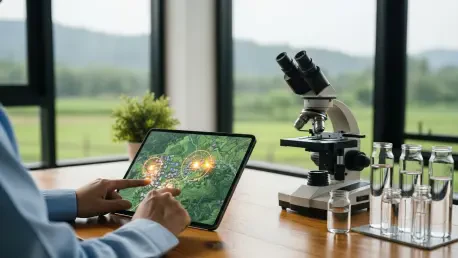

For centuries, the microscopic blood fluke has silently compromised the health of millions, weaving itself into the very fabric of rural life through contaminated water and elusive host snails. While mass drug administration has successfully pushed schistosomiasis to the brink in many regions, the parasite has proven remarkably resilient by retreating into the shadows of individual households. For decades, global health initiatives have treated entire villages as uniform blocks, yet this “carpet-bombing” approach often leaves behind microscopic reservoirs of infection.
A groundbreaking 13-year longitudinal study has recently revealed that as the disease nears elimination, it no longer behaves as a community-wide threat but as a localized domestic one. This shift in transmission dynamics suggests that the final victory against this debilitating parasite won’t be won with broad strokes. Instead, the focus must move toward the surgical precision of household-level mapping to identify exactly where the cycle of infection persists.
The Hidden Stronghold of the Blood Fluke
The persistence of schistosomiasis in areas considered “controlled” highlights a sophisticated survival strategy of the Schistosoma parasite. When infection rates drop, the parasite concentrates in specific clusters where human behavior and environmental conditions intersect perfectly. This retreat into the household represents a dangerous phase where traditional surveillance may overlook a few infected individuals who continue to shed eggs into local water sources. Because these reservoirs remain hidden, they can quickly reignite a community-wide outbreak once mass treatment programs scale back.
Recent findings emphasize that the domestic environment has become the primary battleground for eradication. Factors such as the proximity of a backyard to a small stream or the specific way a family manages waste determine whether the fluke survives. By shifting the lens from the village to the doorstep, health officials can identify these hidden strongholds. This transition is essential because it moves the strategy from general suppression to targeted elimination, ensuring that no family is left behind as a potential source of future resurgence.
Why the Final Mile of Eradication Is the Hardest
Schistosomiasis currently affects approximately 250 million people, causing chronic fatigue, organ damage, and severe developmental issues in children. Despite significant international investment, the “final push” toward total elimination has stalled because the parasite survives in highly specific “hotspots.” These stubborn pockets of infection act as biological springboards, ready to spark a resurgence the moment surveillance drops. The difficulty lies in the fact that these hotspots are often indistinguishable from healthy areas using standard diagnostic tools.
Understanding why these clusters persist is critical because it highlights a shift in global health needs: the world is moving away from needing more drugs to needing better data. If health organizations cannot identify exactly where the snails and the parasites are hiding, total eradication will remain an elusive goal. The challenge is exacerbated by the fact that as prevalence reaches low levels, the cost per case found increases dramatically, making traditional blanket interventions economically unsustainable for many developing nations.
The Mechanics of Precision: Merging AI with Fieldwork
To dismantle these remaining hotspots, researchers are pioneering a synthesis of traditional “shoe-leather” epidemiology and advanced technology. This approach moves beyond general geography to analyze the micro-environments where transmission actually occurs. By mapping road networks and the distance between homes and central hubs, AI can predict how humans move and where they are most likely to encounter contaminated water. These models provide a predictive layer that informs where resources should be concentrated before an outbreak even occurs.
High-precision tools also examine specific land-use patterns and the proximity of individual backyards to the exact snail habitats that fuel the infection cycle. By feeding census data and historical infection rates into sophisticated algorithms, health officials can generate risk maps that identify high-threat households with unprecedented accuracy. This methodological shift allows for a surgical deployment of resources, ensuring that sanitation improvements and treatments are directed exactly where they are needed most. This efficiency is vital for maintaining progress in areas with limited medical personnel.
Expert Perspectives on Sustaining the Elimination Drive
The transition from population management to household elimination requires a fundamental change in how health experts view success. Elizabeth Carlton and her research team emphasized that the “retreat into the household” is the most dangerous phase of the disease, as it gives a false sense of security while maintaining a latent threat. Experts like Christopher Zziwa argued that while precision mapping is a game-changer for countries nearing the finish line, it must be supported by a holistic framework. The consensus among researchers is clear: data alone is not a cure, but it is the essential roadmap for existing tools.
Furthermore, public health advocates suggested that the focus must remain on the integration of data and community action. Mapping provides the target, but local engagement provides the solution. Experts noted that when residents understand why their specific household is at risk, they are much more likely to adopt safe water practices and participate in screening programs. This combination of high-tech surveillance and grassroots involvement is seen as the only way to ensure that the parasite is not just suppressed, but permanently removed from the ecosystem.
A Framework for Implementation in Low-Resource Settings
Implementing high-tech mapping did not necessarily require a massive budget, but it did require a strategic approach to data and local engagement. The framework prioritized the use of current census and national health survey data as the foundational layer for digital maps. By integrating village health teams, local workers were equipped with simple digital tools to collect complementary data on household-level exposures. This allowed for a bottom-up flow of information that kept the high-precision models updated with real-time field observations.
The strategy also emphasized the prioritization of sanitation infrastructure based on mapping results. Instead of building facilities at random, officials used the data to decide exactly where to place pit latrines and safe water points to break the cycle of contamination. Long-term monitoring strategies were established to continue even after infection rates hit zero, preventing a rebound effect from forgotten hotspots. These strategies were customized for different snail hosts and environmental conditions found in Africa and the Americas, ensuring that the precision mapping approach was adaptable to various global contexts and parasite species.