
While psoriasis affects approximately 125 million people globally, the medical community increasingly views the condition as a systemic inflammatory disorder rather than just a localized skin disease. This evolving perspective stems from the recognition that the visible, scaly plaques are symptomatic of a broader immune dysfunction that permeates various organ systems. Patients frequently experience a persistent state of low-grade systemic inflammation, which significantly elevates the risk for comorbidities such as metabolic syndrome, cardiovascular disease, and psoriatic arthritis. As clinical practices in 2026 continue to move away from purely topical interventions, there is an intensified search for therapies that can stabilize the immune system without the detrimental side effects associated with high-dose synthetic drugs. While biologics have transformed the treatment landscape, their high cost and potential for systemic immunosuppression limit their widespread accessibility and long-term utility for every patient demographic. This has necessitated the exploration of natural bioactive compounds, particularly polyphenols, which offer a multi-targeted approach to inflammation management. By integrating these botanical agents with modern nanotechnology, researchers are now uncovering ways to deliver potent, plant-derived therapies directly to affected tissues while maintaining a safety profile that is vastly superior to traditional pharmacological options.
The Complex Biological Pathways: Understanding Skin Inflammation
The “vicious cycle” of psoriatic inflammation is primarily driven by a breakdown in communication between the innate and adaptive immune systems. At the heart of this process lies the IL-23/IL-17 axis, a critical signaling pathway where dendritic cells produce Interleukin-23 to stimulate the differentiation of T#7 cells. These specialized T cells then release Interleukin-17 and Interleukin-22, which act directly on keratinocytes to trigger rapid and uncontrolled cellular division. This hyperproliferation creates the characteristic thick plaques while simultaneously signaling the skin to produce more chemokines, which recruit additional immune cells to the site. This self-sustaining loop ensures that the skin remains in a chronic state of emergency, making it difficult for traditional topical treatments to break the cycle without aggressive intervention. Understanding these specific cytokine interactions is essential because it allows for the development of targeted therapies that can interrupt the inflammatory flow at multiple checkpoints rather than just suppressing the entire immune system.
Beyond extracellular signaling, intracellular master switches like NF-κB and the JAK/STAT pathway play a fundamental role in translating inflammatory signals into cellular action. When these pathways are overactivated, they drive the expression of genes responsible for the persistent redness and swelling associated with the disease. Current high-end biologics are often engineered to target a single point in this complex web, such as a specific cytokine or its receptor. While this “single-key” approach is highly effective for many, it can sometimes lead to compensatory mechanisms where the body activates alternative inflammatory pathways, resulting in treatment resistance or “biologic fatigue” over several years. A more sophisticated strategy involves the use of compounds that can modulate these intracellular switches more broadly. By dampening the activity of NF-κB and JAK/STAT simultaneously, it may be possible to achieve a more balanced and durable state of remission, effectively resetting the skin’s immune environment to its healthy baseline without the risks of severe systemic imbalance.
Natural Polyphenols: Mechanisms and Therapeutic Barriers
Natural bioactive compounds, specifically polyphenols like curcumin, baicalin, and taxifolin, have gained significant traction in dermatological research due to their ability to influence multiple signaling pathways at once. Curcumin, derived from the turmeric plant, is known for its potent ability to inhibit IκB kinase, which effectively prevents the activation of NF-κB and the subsequent production of pro-inflammatory cytokines. Similarly, baicalin has shown the capacity to modulate the JAK/STAT axis, providing a mechanism of action similar to synthetic JAK inhibitors but with a significantly more favorable safety profile for long-term use. These agents do not just act as simple anti-inflammatories; they also serve as powerful antioxidants that neutralize the oxidative stress frequently found in psoriatic lesions. This dual action helps to protect skin cells from DNA damage and reduces the metabolic triggers that often lead to localized flare-ups, offering a comprehensive therapeutic approach that synthetic mono-therapies often lack.
Despite their clear pharmacological advantages, the transition of these natural compounds into reliable clinical medicines is hindered by significant physical limitations. Most polyphenols are characterized by extremely poor aqueous solubility, which means they do not dissolve well in the body’s fluids and are difficult for the skin to absorb effectively. Furthermore, these substances are often chemically unstable, breaking down rapidly when exposed to light, air, or the enzymes present in the human liver. This rapid metabolism ensures that even if a patient consumes or applies a large amount of a natural extract, only a tiny fraction of the active ingredient actually reaches the intended target in the skin. This “bioavailability gap” remains the primary reason why many promising lab results fail to translate into effective treatments for patients. To overcome these hurdles, science must look toward advanced engineering solutions that can protect these sensitive molecules and guide them through the body’s natural defense barriers.
Nanotechnology: The Innovative Vehicle for Precision Delivery
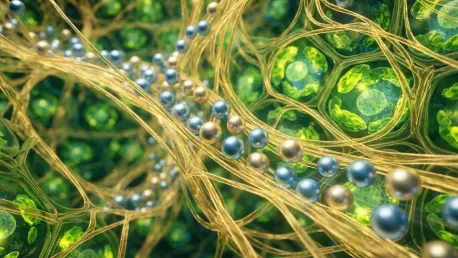
Nanotechnology provides the necessary framework to bridge the gap between natural therapeutic potential and clinical reality. By encapsulating bioactive agents within microscopic carriers, scientists can protect them from environmental degradation and facilitate their passage through the stratum corneum, the skin’s notoriously tough outer barrier. Lipid-based systems, including liposomes and nanostructured lipid carriers, are particularly advantageous in this context because their composition mimics the natural lipid bilayer of human skin cells. This compatibility allows the nanocarriers to merge with the skin tissue, creating a “depot effect” where the medication is released slowly and steadily over an extended period. For instance, betulin-loaded lipid carriers have demonstrated the ability to significantly reduce epidermal thickness and lower systemic markers of inflammation in preclinical models, proving that localized nano-delivery can have a profound impact on the overall disease state.
In addition to lipid systems, researchers are exploring “green” metallic nanoparticles and niosomes to enhance the precision of drug delivery. Silver and gold nanoparticles, synthesized using plant extracts, often possess their own intrinsic anti-inflammatory properties, creating a synergistic effect when combined with a polyphenol payload. These tiny delivery vehicles can be engineered to respond to specific environmental triggers, such as the slightly acidic pH found in inflamed psoriatic skin, ensuring that the medication is only released where it is most needed. This targeted approach minimizes the amount of drug that enters the systemic circulation, which drastically reduces the risk of side effects in distant organs like the liver or kidneys. By utilizing these sophisticated delivery mechanisms, the medical community can finally leverage the full power of nature’s pharmacy, providing patients with a localized treatment that offers the potency of a systemic drug without the associated risks.
Translational Challenges: Bridging Science and Commerce
The journey from a successful laboratory experiment to a standard prescription in 2026 involves navigating a complex landscape of clinical and regulatory hurdles. Currently, a vast majority of the data supporting nano-enhanced bioactives comes from animal models, particularly mice. However, human skin is significantly thicker, has a different follicle density, and possesses a more complex immune structure than that of a rodent, which often leads to a “translational gap” where preclinical success does not always result in human efficacy. There is an urgent requirement for more robust, large-scale human clinical trials that can provide the definitive evidence needed to convince healthcare providers to adopt these new therapies. Without long-term data on how these nanoparticles behave in the human body over several years, the medical community remains cautious about replacing established, albeit more toxic, synthetic standards of care.
Beyond the challenges of clinical validation, the manufacturing and regulatory environments present substantial roadblocks for the widespread adoption of nanomedicine. Producing complex nanoformulations at a commercial scale while maintaining perfect batch-to-batch consistency is an expensive and technically demanding endeavor. Current regulatory frameworks at organizations like the FDA and EMA are still evolving to address the unique complexities of plant-derived nanocarrier systems, which often lack the standardized extraction protocols seen in synthetic drug manufacturing. This regulatory uncertainty can discourage investment from major pharmaceutical companies, who require a clear and predictable path to government approval. For these “green” innovations to reach the general public, there must be a concerted effort to standardize botanical sourcing and develop manufacturing technologies that can produce these advanced delivery systems reliably and affordably for millions of patients.
The Integrated Future: Personalized Strategies and AI Solutions
The next phase of psoriasis management is set to be defined by the integration of artificial intelligence and personalized medicine to optimize the use of nano-bioactives. AI-driven platforms are already being used to predict the most effective combinations of plant compounds and nanocarriers, significantly accelerating the research and development process. By analyzing vast datasets of molecular interactions, these systems can identify which specific polyphenols will work best for different sub-types of psoriasis, allowing for the creation of “smart” formulations that are tailored to the individual patient’s immune profile. This transition toward precision medicine ensures that therapy is not just a one-size-fits-all approach but a targeted intervention that addresses the unique biological drivers of each person’s disease. As biomarkers become more integrated into routine dermatological care, the ability to prescribe a custom-engineered nano-cream based on a patient’s specific cytokine levels will become a reality.
The evolution of nanomedicine suggested that a paradigm shift was occurring in how the medical community addressed chronic inflammation. Researchers discovered that nano-encapsulated natural compounds were best positioned as adjunctive or “steroid-sparing” agents, allowing patients to reduce their reliance on more toxic synthetic medications. This historical shift from heavy-handed immunosuppression toward a more nuanced, multi-targeted strategy provided a sustainable path for long-term disease management. Health providers began to recognize that maintaining skin health required a holistic view that combined the precision of nanotechnology with the inherent safety of bioactive molecules. Ultimately, the successful integration of these technologies demonstrated that the most effective way to manage systemic inflammatory disorders was to respect the body’s natural pathways while using modern science to deliver support exactly where it was needed most. This approach set a new standard for dermatological care that prioritized both immediate relief and long-term systemic wellness.